





Coastal Bedroom Decor Luxury: An Elevated Designer Guide
Coastal bedroom decor luxury is less about decorating with beach motifs and more about shaping a room that feels light, composed, and deeply comfortable. The most elevated schemes translate the coast through softened color, tactile textiles, generous natural light, and a restrained mix of furniture and finishing pieces. The result feels collected rather than themed.
Luxury coastal bedroom decor combines an airy architectural backdrop with refined textiles, quiet tonal contrast, and a few expressive accents. Begin with the room's light and proportions, then build toward the bed, window treatments, seating, and decorative details so every layer supports a calm, polished retreat.
View Lili Alessandra Luxury Bedding Collections
How Do You Create a Luxury Coastal Bedroom Without Making It Themed?
The most sophisticated coastal bedroom begins with atmosphere rather than symbols. Use natural light, soft transitions, tactile surfaces, and a restrained palette to suggest the shoreline. Skip novelty anchors, shells, and overly literal blue-and-white repetition. Let proportion, texture, and negative space create the sense of ease.
Start by deciding what you want the room to feel like when you enter it. A primary suite may call for quiet confidence, while a guest room may welcome a lighter, more informal mood. Either way, the room should have a clear visual hierarchy. The bed can be the focal point, but the architecture, windows, lighting, and surrounding furniture need to support it.
- Establish a calm foundation. Work from ivory, sand, warm white, pale stone, or a softened sea-glass tone rather than a high-contrast nautical palette.
- Choose one grounding material. An upholstered headboard, natural wood, woven texture, or dimensional wall treatment can give the room a sense of permanence.
- Build tactile variation. Combine smooth, softly napped, and visibly textured surfaces so the room feels rich without becoming busy.
- Edit the accents. A small number of decorative pillows, a considered throw, and one sculptural object will usually feel more luxurious than a crowded display.
- Protect the negative space. Leave enough visual breathing room around the bed, windows, and seating so the design retains its quiet character.
This whole-room approach differentiates coastal bedroom decor from a bedding-only refresh. Lili Alessandra's coastal chic bedding guide explores the brand and its luxury textile point of view in greater depth. This guide focuses on the surrounding room decisions that make those textiles feel integrated.
What Colors Make Coastal Bedroom Decor Feel Luxurious?
A luxury coastal palette usually relies on tonal layering instead of sharp contrast. Pair warm ivory or sand with pale mineral, muted sea glass, soft blue, or a deeper mineral accent. Repeating a color in different textures creates depth while keeping the bedroom serene and visually connected.
Color should follow the way light moves through the room. In a bright space, warm ivory and sand can soften the glare while preserving an open feeling. In a room with less natural light, pale stone and muted blue can create atmosphere without making the walls feel cold. Consider the undertone of the flooring, upholstery, and adjoining rooms before choosing the final textile palette.
A refined scheme often has three levels of contrast. Use the guide below to keep the palette balanced.
| Palette role | Examples | Design purpose |
|---|---|---|
| Light foundation. | Warm white, ivory, oyster, pale sand. | Creates airiness across walls, bedding, and larger upholstered forms. |
| Atmospheric middle. | Sea glass, mist blue, pale mineral, soft taupe. | Adds a coastal suggestion through tone without a literal motif. |
| Grounding accent. | Weathered wood, muted charcoal, aged metal, deeper blue. | Defines edges and keeps the room from feeling washed out. |
Use the strongest accent sparingly. It might appear on a single decorative pillow, a narrow trim, a small bench, or an artwork frame. The goal is not to match every surface. It is to create a rhythm that allows the eye to move around the room.
For a softer foundation, consider how European linen bedding introduces relaxed movement. The article on Tencel and Egyptian cotton sheets can also help clarify how a smoother base changes the visual effect of the upper layers.
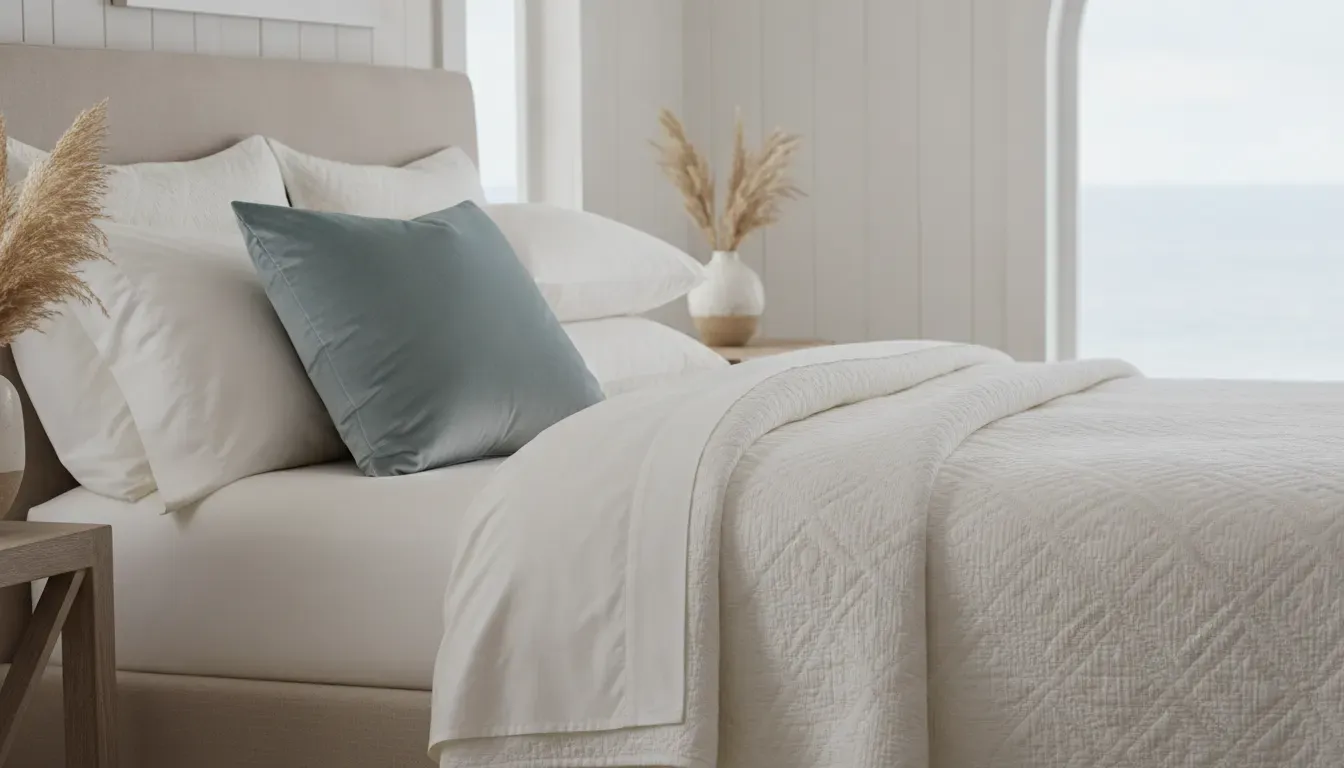
Which Textiles Give a Coastal Bedroom Its Luxury Finish?
Textiles create the sensory depth that makes a coastal bedroom feel luxurious. Use the main bedding as a quiet foundation, add a structured coverlet for dimension, and reserve decorative pillows or a throw for the most expressive texture. A few purposeful layers are more effective than a crowded arrangement.
The bed should feel intentional from across the room and rewarding up close. Begin with a coordinated foundation from the Lili Alessandra bedding collection, then decide where the room needs structure. A coverlet can define the bed's silhouette and give the duvet a finished relationship to the sheets. Explore the coverlets collection when the composition needs a tailored middle layer.
Material selection should support the overall mood rather than compete with the architecture. A dimensional coverlet can introduce relief. A smoother sheet or duvet can provide a visual pause. A velvet accent can add depth in a controlled way. The coverlet guide explains the role of that layer, while the bamboo sheets and coverlets guide offers another perspective on a softly contemporary foundation.
Specific product choices can support different interpretations of the same room. The Urban Bamboo Champagne King Coverlet can suit a warm neutral palette with a modern, quiet presence. The Caribbean Matelasse Coverlet offers a more dimensional cotton direction. Use the details of the room to decide which textile story feels most natural.
Do not give every layer equal visual weight. One surface should lead, one should support, and the remaining pieces should create transitions. For care-oriented planning, reference the bed sheet care guide and keep the maintenance needs of each selected textile in mind.
How Should Lighting, Drapery, and Furniture Shape the Room?
Lighting, drapery, and furniture determine whether coastal bedroom decor feels architectural or merely accessorized. Soften the windows, keep circulation clear, and choose furniture with enough scale to anchor the bed. Layer ambient, task, and accent lighting so the room remains inviting from morning through evening.
Window treatments are one of the most effective ways to make a coastal bedroom feel finished. Drapery panels can filter intense daylight, frame a view, and add vertical movement to a room with low or wide proportions. Consider the full height of the wall, not only the window frame. A generous installation can make the room feel taller and more composed.
Explore the Lili Alessandra Drapery Panels collection when the windows need a more tailored finish. Coordinate the drapery with the bedding palette, but avoid making the fabrics identical. A subtle difference in texture or value will create depth while preserving continuity.
Furniture should make the room feel restful, not overfilled. A substantial headboard can give the bed presence. A bench or upholstered chair can create a useful pause near the window. Nightstands should be scaled to the bed and leave enough surface area for practical lighting. If a piece is visually heavy, balance it with open floor area or a lighter textile nearby.
Lighting completes the emotional quality of the space. Use a central fixture for ambient illumination, bedside lamps for reading, and a low-glow accent source for evening warmth. Warm bulbs, fabric shades, and dimmable controls generally support the calm mood better than a single bright overhead source. Allow daylight to remain part of the design story rather than trying to imitate it with excessive fixtures.
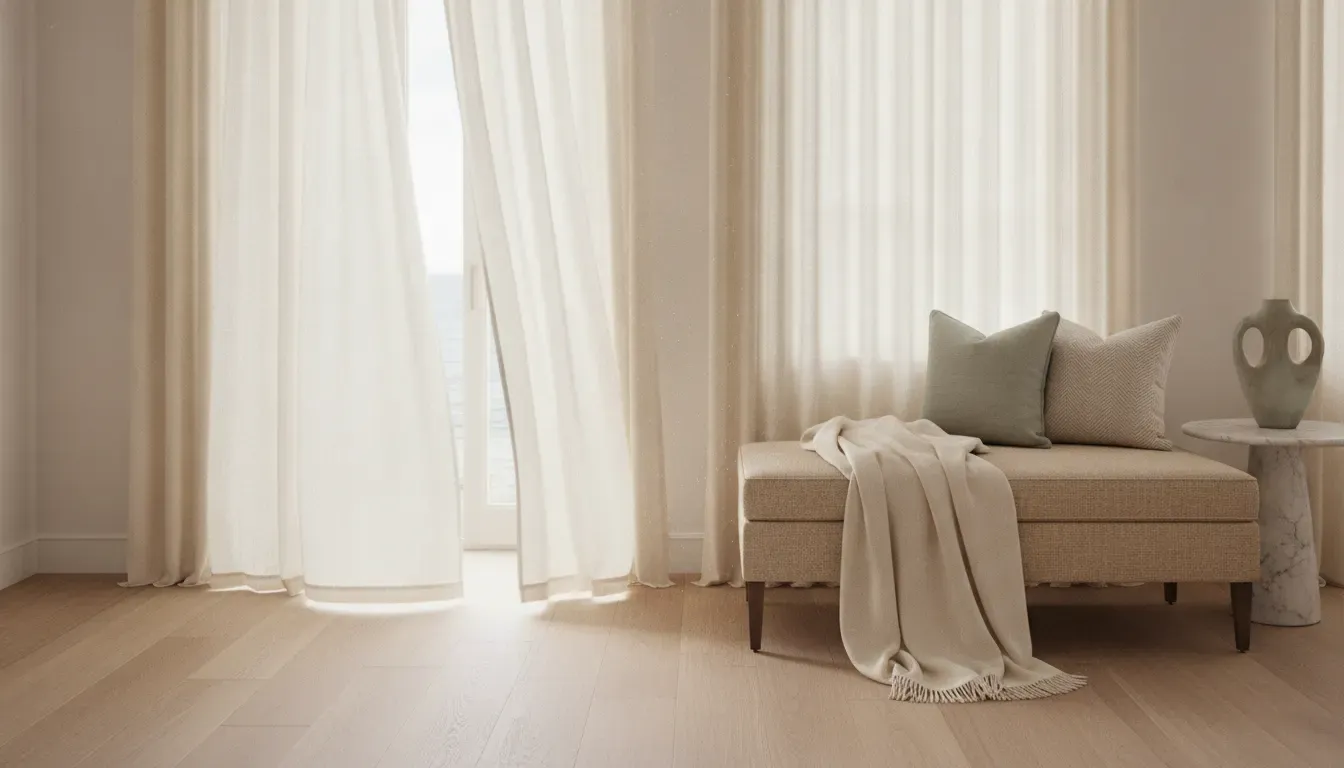
A folded throw can connect the bed to a nearby chair or bench. For proportion ideas, see how to choose a luxury throw blanket. The objective is continuity, not repetition.
Where Should Decorative Accents Make the Strongest Statement?
Decorative accents have the most impact where the eye naturally pauses: at the front of the bed, beside a window, or on a quiet seating area. Use scale and texture before pattern. One expressive pillow or throw can bring more luxury to the room than many small accessories.
Decorative pillows are the jewelry of the bedroom, but they should be edited with the same care as a wardrobe. Start with proportion. Larger shapes can establish a backdrop, while smaller rectangles or squares create a more personal finishing layer. Varying scale often looks more sophisticated than using a full row of identical pillows.
The Must-Have Velvets and Pillows collection gives a coastal room a way to introduce depth without relying on overt nautical pattern. The decorative pillow and sham guide is useful when you need to plan the arrangement, while velvet accent pillow styling can help refine the final contrast.
Place a throw where it looks naturally useful. Across the lower corner of the bed, over an upholstered bench, or on a reading chair can all work. The Lili Alessandra Throws collection offers a way to carry the room's palette into the surrounding furniture. Keep the fold relaxed, but not careless.
Use objects outside the textile story with restraint. A ceramic vessel, a framed piece, a sculptural lamp, or a small natural element can echo the room's coastal ease. Avoid filling every surface with shells, coral, or beach references. Luxury is often communicated through what the room leaves out.
For more ideas on tactile accents, browse luxury velvet throw pillows and queen quilts and coverlets. Each accent should answer a practical or visual need. If it has no clear role, remove it.
How Can Interior Designers Specify a Complete Coastal Bedroom?
Interior designers can specify a complete coastal bedroom by translating the client's desired atmosphere into a coordinated palette, textile hierarchy, window treatment, lighting plan, and furniture scale. Review the room as a system before selecting individual accents. The strongest specifications preserve flexibility while giving every layer a clear purpose.
Begin with the project brief. Confirm whether the room is a primary suite, guest room, hospitality environment, or seasonal retreat. Note the direction of the natural light, the architecture of the windows, the floor finish, and the sightlines from adjacent rooms. These details determine whether the scheme should feel warmer, cooler, more textural, or more tailored.
Next, build a material and color schedule. Select the dominant foundation, the structured bed layer, the accent textile, and the drapery direction before choosing decorative objects. The sequence reduces accidental mismatches and makes it easier to explain the design logic to a client. It also creates a clear path for substitutions if a specific size or color is unavailable.
Lili Alessandra's To The Trade Program is the professional pathway for interior designers and trade buyers seeking dedicated support and exclusive pricing. When a project needs additional direction, the Design Concierge offers a useful point of connection. Plan those conversations early when the bedroom is part of a larger furnishing scope.
Before finalizing the room, review it from three distances. From the doorway, confirm the palette and silhouette. From the bed, confirm comfort and practical access. Up close, confirm the craftsmanship, edge details, and tactile contrast. This three-distance review keeps coastal bedroom decor luxury from becoming only a beautiful photograph. It makes the room feel considered in daily use.
For complementary textile context, explore velvet duvet styling and the luxury bedding brands guide. Use those resources to deepen the bedding specification without losing the whole-room boundary of this article.
Connect with a Lili Alessandra Design Advisor
Frequently Asked Questions About Coastal Bedroom Decor Luxury
What is coastal bedroom decor luxury?
Coastal bedroom decor luxury is a refined approach to a relaxed bedroom. It uses a light, tonal palette, high-quality textiles, considered furniture scale, elegant window treatments, and restrained decorative accents. The look suggests the ease of the coast without relying on novelty nautical motifs or a heavily themed room.
How can I make a coastal bedroom look more expensive?
Prioritize proportion, material contrast, and finish. Use a coordinated bed foundation, one dimensional coverlet, carefully scaled pillows, full-height drapery, layered lighting, and a small number of distinctive accents. Keeping the palette edited and protecting negative space will usually make the room feel more luxurious than adding more objects.
What colors work best in a luxury coastal bedroom?
Warm ivory, sand, oyster, pale stone, muted sea glass, and soft blue create a polished coastal foundation. Add one grounding accent such as weathered wood, aged metal, charcoal, or deeper blue. Repeat colors through different textures rather than matching every textile exactly.
Can coastal bedroom decor be elegant without using blue?
Yes. A coastal bedroom can feel elegant through warm whites, ivory, sand, taupe, pale mineral, natural wood, and layered texture alone. If you want a cooler coastal note, add it through one small accent pillow, a throw, or a subtle drapery detail rather than making blue the dominant color.
How do designers keep a coastal bedroom from feeling cluttered?
Designers create a clear hierarchy and remove pieces that do not serve it. Let the bed establish the main silhouette, allow the windows and lighting to shape the atmosphere, and use decorative pillows, throws, and objects selectively. Leaving visual breathing room is an essential part of a luxury finish.
A beautiful coastal bedroom is ultimately an exercise in editing. Begin with the room's light and architecture, choose textiles that reward touch, and add only the accents that make the space feel more personal. With a calm palette and deliberate proportion, the result can feel relaxed, opulent, and entirely at home.


