





Quilted Coverlet Guide for a Layered Luxury Bed
Luxury layering starts with one disciplined choice: a quilted coverlet with the right weight, texture, and drop. Get that foundation right, and every duvet, throw, and decorative pillow looks more intentional.
Browse Lili Alessandra Quilted Coverlets
A quilted coverlet is the tailored foundation of a layered luxury bed. Choose one by material, mattress size, desired drop, and styling role, then layer it with fine sheets, a folded duvet, decorative pillows, and a tactile throw.
The central question is how to choose a coverlet that supports the whole composition without competing with it. First, we will explore Why a quilted coverlet is the foundation of a layered luxury bed, then build outward from material and fit. The path begins with:
Why a quilted coverlet is the foundation of a layered luxury bed
A quilted coverlet gives a layered luxury bed its clean, tailored starting point. It sits above the sheets and below fuller decorative layers, adding texture without the weight or loft of a duvet. View Lili Alessandra's Luxury Bedding Collections to find a foundation that sets the room's palette and mood.
The tailored base layer
A quilted coverlet creates a smooth field across the mattress and brings quiet detail to the bed. Its stitched surface adds depth, while its close drape keeps the overall shape crisp. That balance lets the coverlet look polished alone or support more expressive pieces.
Unlike a lofty quilt or duvet, a coverlet does not need to be the bed's main source of warmth. It can serve as a light layer in warm weather, then remain in place beneath a duvet during cooler months. This makes it a useful base for a bed that changes with the season.
A framework for decorative layers
A strong foundation gives every accent a clear role. Fold a duvet at the foot to reveal the quilted surface, then arrange shams against the headboard. Add statement pillows and a throw with enough contrast to feel intentional, not busy.
- Color continuity: use the coverlet color to link the sheets, duvet, and shams.
- Pattern echo: repeat one quilted line or shape in a smaller decorative pillow.
- Textural finish: let a velvet or linen throw add a distinct finish at the foot.
The result has depth without losing order. For a more relaxed setting, the same foundation can support softer folds and fewer accents. See how designer coverlets can create an airy look while keeping the bed refined.
Material, drape, and daily use
The right quilted coverlet should feel as considered as its pattern. Cotton matelasse offers a classic textured surface, while linen, bamboo, and silk velvet bring different levels of sheen and softness. Material also shapes how closely the coverlet drapes and how formal the finished bed appears.
Durability matters because this layer often stays on the bed through daily use. New Mexico State University guidance names quilted fabrics among durable choices for home furnishings. It also advises avoiding fabric with excess sizing or coatings, since those finishes may not wear well.
A well-chosen foundation makes future styling simpler. Change the duvet, pillows, or throw, and the quilted coverlet can keep the bed composed. Its steady texture ties each new combination together while preserving a tailored luxury look.
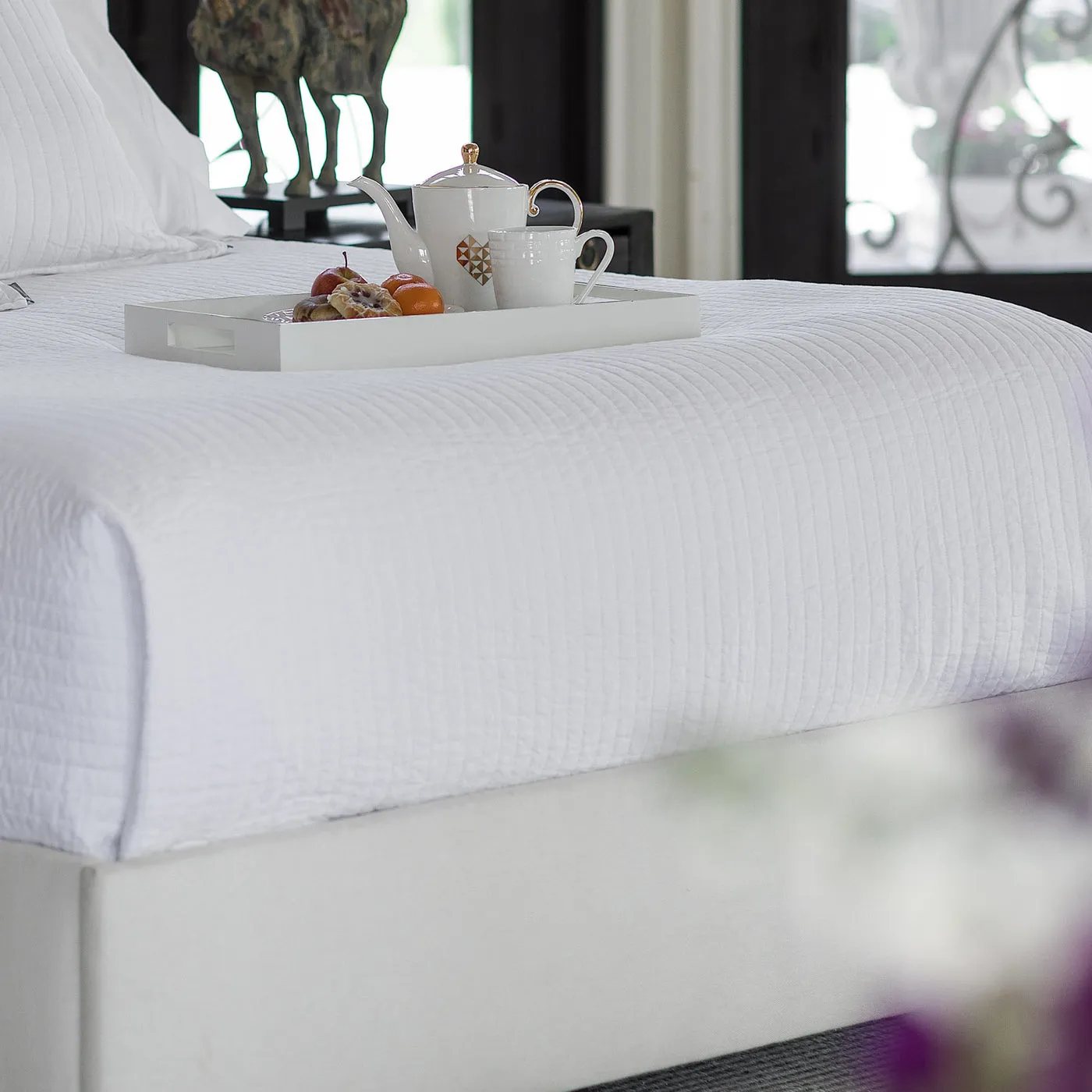
What materials make a quilted coverlet feel luxurious?
A luxurious quilted coverlet pairs a pleasing hand feel with clear texture, graceful drape, and sound construction. The right choice also depends on the room, season, and role the coverlet will play. Material matters, but quilting depth and finishing shape the final effect too.
Premium materials at a glance
Matelasse, cotton, linen, silk velvet, and bamboo each bring a distinct mood to the bed. Matelasse is a woven texture rather than a fiber, and cotton matelasse offers quiet pattern with practical care. Silk velvet creates a richer statement, while linen brings relaxed structure.
| Material. | Look and hand feel. | Season and layering. | Care note. |
|---|---|---|---|
| Cotton matelasse. | Soft, tailored, and softly raised. | Versatile base for layered beds. | Machine washable and wrinkle resistant. |
| Cotton. | Smooth, familiar, and crisp. | Easy to pair with varied textures. | Follow the sewn-in care label. |
| Linen. | Relaxed, textured, and softly structured. | Suited to airy, informal layers. | Expect its natural texture to show. |
| Silk velvet. | Plush, lustrous, and dramatic. | Strong focal layer for a dressed bed. | Professional care may be needed. |
| Bamboo. | Smooth with a fluid hand. | Pairs well with crisp or plush accents. | Check the label before cleaning. |
Construction deserves the same attention as fiber content. New Mexico State University advises against furnishing fabrics with too much sizing or coatings. Such finishes may not wear well. Its fabric selection guidance also names quilted fabrics among durable furnishing choices.
Texture, care, and long-term use
Start with the texture you want to see each day. Raised matelasse can add subtle pattern without making the bed look busy. Silk velvet has more visual weight, so it works well as the main statement. A linen luxury coverlet collection offers a calmer, more relaxed finish.
Care needs can help narrow the choice. Cotton matelasse suits rooms where easy washing matters, while silk velvet may call for professional care. Always check the product label before washing any quilted piece. Heat, detergent, and drying methods can affect both the face fabric and stitched fill.
Material choices for layered beds
A coverlet can serve as the visual foundation instead of the heaviest layer. Pair a softly textured cotton or linen style with a folded duvet and decorative pillows. This approach keeps the bed polished while making seasonal changes simple.
For greater contrast, place smooth sheets beneath a textured coverlet, then add one plush accent. Silk velvet can also stand alone as the focal surface, with quieter pillows around it. Thoughtful contrast is central to decorative pillows without crowding the overall design.
How do you choose the right quilted coverlet size?
A quilted coverlet should cover the mattress top and create an even drop on both sides. The right size depends on mattress height, bed frame, and the finish you want. A size label is a useful starting point, but measurements give a more reliable fit.
Measurements that shape the fit
Measure the mattress width, length, and height before choosing a coverlet. Then decide how far the coverlet should fall below the mattress edge. A deep mattress or thick topper needs more fabric to create the same visible drop.
Also check how the mattress sits within the frame. A tall platform bed may look balanced with a shorter drop. A raised bed with visible rails may need a longer drape to soften the frame.
For an even look, add twice your preferred side drop to the mattress width. Add the desired foot drop to the mattress length. Leave extra length at the head only if you plan to tuck the coverlet beneath the pillows.
Queen and king coverlet dimensions
Lili Alessandra coverlets generally follow core Queen and King sizing. Queen options often measure 96x98 inches, while King options measure 112x98 inches or more. These wider dimensions allow the fabric to fall across each side of the bed.
For a verified Queen example, the Tessa quilted coverlet measures 96x98 inches. Compare those dimensions with your full mattress measurements, not only its Queen label. The same method helps you assess whether a King coverlet will provide the drop you prefer.
If you want a generous drape on a Queen bed, a larger coverlet may suit the look. Check the length as well as the width before sizing up. Extra width changes the side drop, while extra length affects the foot and head of the bed.
Draping, tucking, and sham placement
A relaxed bed often looks best with the coverlet draped over the sides and foot. For a tailored finish, tuck the foot and lower corners beneath the mattress. Keep the side drops equal so the quilted pattern appears centered.
Shams also affect the coverlet position. If shams stand against the headboard, start the coverlet just below them for a neat break. If pillows lie flat, pull the coverlet higher or fold its top edge beneath the pillow stack.
Fabric weight can change how a quilted coverlet hangs over an edge. Test a corner before removing tags, especially when the frame has sharp lines. A New Mexico State University fabric guide also advises avoiding excessive sizing or coatings because they may not wear well.
How to layer a quilted coverlet with duvets, pillows, and throws
A quilted coverlet creates a tailored base while leaving room for softer layers and seasonal accents. Its stitched surface also adds quiet pattern without making the bed look busy. For daily use, quilted fabric is a sound choice because New Mexico State University lists quilted fabrics among durable home furnishing fabrics.
Build the bed from the lightest layer to the most decorative one. The goal is a balanced mix of smooth fabric, visible quilting, and plush accents. This approach to layering a luxury quilted coverlet also makes seasonal changes simple.
A seven-step layering process
- Begin with fine sheets. Smooth the fitted sheet, then place the flat sheet with its finished side facing down. Fold the top edge back neatly.
- Add the quilted coverlet. Center it over the mattress and let both sides fall evenly. Pull it toward the headboard for full coverage and a crisp base.
- Fold back the top edge. Turn the coverlet down below the sleeping pillows to reveal the sheets. Keep the fold broad and straight for a calm, tailored line.
- Place the duvet or comforter. Fold it into thirds across the foot of the bed. Its fuller shape should frame the coverlet rather than hide the quilted surface.
- Set the Euro shams. Stand two or three Euro shams against the headboard, based on bed width. Their height creates a strong backdrop for the smaller pillows.
- Arrange decorative pillows. Place standard shams next, then add one or two statement pillows in front. Mix shape and texture while repeating one color from the coverlet.
- Finish with a throw. Drape it loosely across one lower corner instead of centering it. This relaxed line softens the ordered layers and adds an inviting final touch.
Balanced color and texture
Limit the palette to two or three related tones, then let texture provide depth. A smooth duvet can offset raised stitching, while velvet or embroidered pillows bring a richer finish. If the coverlet has a bold quilt pattern, keep most other layers quiet so its design remains clear.
Scale matters as much as color. Large Euro shams belong at the back, while smaller accents should step down toward the front. For a polished example, use a pale Tessa quilted coverlet as the base, then add warm neutral or soft metallic accents.
Seasonal edits without a full remake
Keep the coverlet in place as the visual anchor, then adjust the warmer layers around it. In warmer months, move the duvet to the foot and use a light throw. During cooler weather, pull the duvet higher and add pillows with deeper texture.
Leave enough open coverlet surface to show its quilting. Too many pillows or a bulky, unfolded comforter can hide the base and make the bed feel crowded. A few deliberate layers create a finished look while keeping the bed practical for nightly use.
Choosing color, pattern, and texture for your bedroom style
A quiet foundation for modern rooms
A modern bedroom benefits from a quilted coverlet in ivory, white, stone, taupe, or soft gray. These shades keep the bed calm while allowing art, lighting, and furniture to carry stronger forms. For added depth, choose tone-on-tone texture instead of a sharp color contrast.
Simple channel stitching or a clean diamond pattern brings order without making the room feel rigid. A linen coverlet also adds a relaxed surface that softens sleek furniture. A white linen coverlet shows how subtle quilting can give a neutral bed a clear sense of structure.
Classic and opulent details
Classic rooms can support richer quilting, warm ivory, pearl, champagne, or muted gold. Diamond quilting suits this look because its balanced geometry feels tailored and timeless. Pair it with carved wood, graceful curves, or polished metal, then repeat one finish in a small accent.
For an opulent room, let texture create the main statement. Silk velvet, hand embroidery, or a softly lustrous finish adds depth as light moves across the bed. A diamond-quilted silk coverlet can anchor this style without relying on bold color.
Keep the rest of the bed edited. Choose one or two statement pillows, then support them with solid shams in related tones. This balance lets detailed pillows feel intentional rather than crowded.
Relaxed color for coastal rooms
Coastal style works best with light, washed shades such as sand, shell, sea glass, faded blue, and warm white. Avoid a themed mix of many ocean colors. Instead, build a quiet palette and bring interest through quilted lines, woven surfaces, and natural-looking fibers.
A coverlet with gentle texture can keep a pale coastal bed from looking flat. For a polished result, use the lightest tone across the largest area. Then add a muted blue throw or patterned pillow through careful luxury throws.
Before choosing any textured fabric, look closely at how the surface was made. Texture should come from the weave and stitching, not a stiff finish. New Mexico State University advises avoiding fabrics with excessive sizing or coatings, since they may not wear well.
Across every style, view the coverlet beside existing pillows and drapery before deciding. If those pieces already feature strong pattern, select quieter quilting. When the room is mostly solid, a pronounced diamond or matelasse texture can provide the needed detail.
Lili Alessandra quilted coverlet examples to inspire the look
A quilted coverlet can set the mood before decorative pillows, throws, and duvets enter the room. Quilted fabrics are also among the durable choices noted in New Mexico State University's home furnishing fabric guide. The right example depends on whether the room calls for relaxed texture or a more polished finish.
Relaxed layers with Tessa
The Tessa quilted coverlet brings white linen and soft quilted detail to a queen bed. Its 96x98 size creates a generous foundation for layered bedding. Choose this style for an airy room, a quiet neutral palette, or a refined coastal scheme.
White linen makes room for texture without making the bed look busy. Pair Tessa with pale shams for a calm, tonal look. For more contrast, add darker decorative pillows and a folded throw at the foot. The coverlet still keeps the full arrangement light and composed.
View collections and complete the look: start with the coverlet as the foundation, then add pillows, shams, or a duvet that brings in color. This approach lets each layer have a clear role.
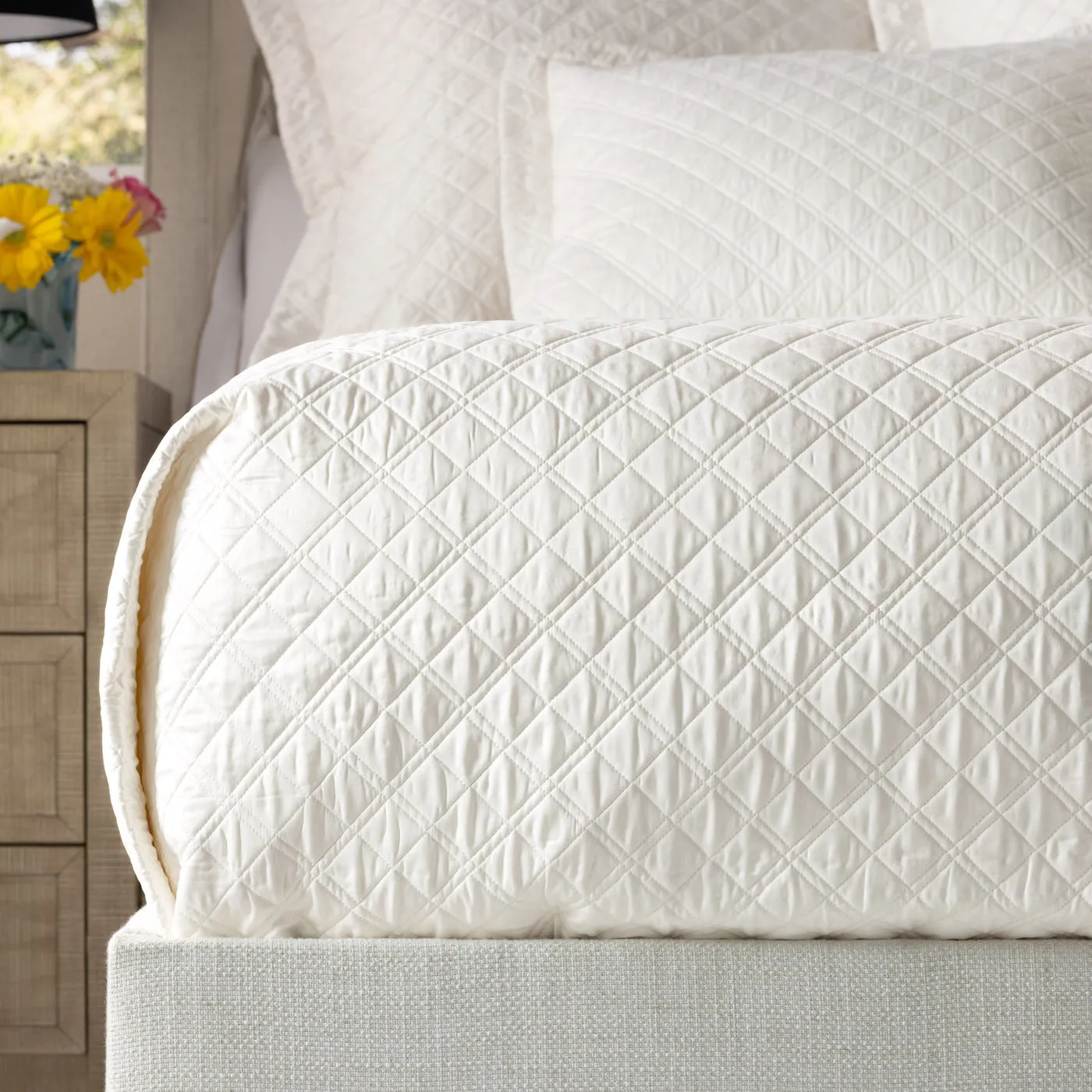
Polished depth with Silk Sensibility
The diamond-quilted silk coverlet offers a richer choice for a formal or romantic bedroom. Its ivory tone keeps the palette soft, while the diamond quilting adds a clear pattern. The queen coverlet measures 96x98 and suits beds built around graceful detail.
Use this quilted coverlet when sheen and tailored pattern should guide the room. Ivory works well with warm neutrals, muted metallic accents, and plush decorative pillows. Keep nearby patterns restrained so the diamond quilting remains easy to see. A tonal throw can add depth without competing with it.
Choosing between the two looks
Tessa suits rooms that lean fresh, relaxed, and texture-led. Silk Sensibility fits spaces that call for polish, soft sheen, and a more formal mood. Both examples begin with a pale queen-size foundation, yet their materials give each bed a distinct point of view.
Let the room's existing finish guide the choice. Linen can soften glossy furniture and ornate accents, while silk can add richness beside clean-lined pieces. Once the foundation is set, repeat its tone or texture in a few select details. This keeps the layered bed intentional rather than crowded.
Care and seasonal styling tips for a quilted coverlet
Care starts with the label
Before cleaning a quilted coverlet, read its sewn-in care label and note the face fabric, fill, and trim. Cotton matelasse can resist wrinkles and may be machine washable, but confirm those directions for the exact piece. A delicate textile, such as silk velvet, may call for professional care instead.
Address small spills soon with the method approved on the label. Avoid harsh cleaners, high heat, and vigorous rubbing unless the maker permits them. For allergen care, the Mayo Clinic advises washing bedding at 130 F to kill dust mites. Since that heat can harm delicate fabric, always let the product label take priority.
A lighter warm-weather bed
In warm weather, let the coverlet serve as the main visible layer over crisp sheets. Its slim profile gives the bed a finished look without the bulk of a heavy quilt or duvet. Fold the top edge back to reveal the sheets and create a relaxed, airy line.
Color and texture can make this simple arrangement feel considered. Pair pale matelasse or linen with two tailored shams, then add one decorative pillow for contrast. For a coastal room, explore ideas for layering a luxury quilted coverlet with soft tones and natural textures. Keep extra layers within reach for cool nights.
Cool-weather layers and storage
When temperatures fall, use the quilted coverlet as a neat foundation rather than hiding it. Add a duvet or blanket above it, then fold that warmer layer near the foot. The arrangement keeps the coverlet's pattern visible while making warmth easy to adjust through the night.
At the end of a season, clean the coverlet as directed and let it dry fully before storage. Fold it loosely, place it in a breathable cotton bag, and choose a cool, dry space away from direct sun. Avoid packing it under heavy items, which can press deep creases into quilted texture.
Refold the piece from time to time so the same lines do not bear pressure for months. Before returning it to the bed, air it out and check the seams, trim, and surface. Thoughtful care helps a quilted coverlet remain a polished base for changing sheets, duvets, throws, and pillows.
Frequently Asked Questions
What is a quilted coverlet used for?
A quilted coverlet provides a light, decorative layer that can sit directly over sheets or above another bed covering. It adds texture and gentle warmth without the bulk of a comforter. The Sleep Foundation notes that a coverlet may also be used alone. Fold it near the foot of the bed when extra warmth is not needed.
What is the difference between a quilt and a quilted coverlet?
A quilt usually contains three layers: a decorative top, an insulating middle, and a backing. A quilted coverlet is generally thinner and works well as a flexible decorative layer. According to the Sleep Foundation, quilts are warmer and heavier than single-layer coverlets. Choose a quilt for greater warmth or a coverlet for lighter, more adaptable styling.
What is the difference between a coverlet and a bedspread?
A coverlet is designed to cover the mattress and usually ends near the bed frame. A bedspread is larger and typically extends toward the floor, sometimes covering the pillows as well. Coverlets suit a tailored, layered bed because their shorter drop leaves room for a bed skirt, duvet, or folded throw. Bedspreads create a more complete, single-piece presentation.
Is a quilted coverlet suitable for all seasons?
A quilted coverlet can work throughout the year when its material and surrounding layers match the season. Use it alone over sheets during warm months, then add a duvet or blanket in cooler weather. Breathable cotton, linen, and bamboo suit warmer rooms, while silk velvet offers a richer feel. Always check the product's care instructions before selecting a fabric for everyday use.
How do I choose the right size quilted coverlet?
Measure the mattress width, length, and desired drop before choosing a quilted coverlet. Add twice the preferred side drop to the mattress width, then compare that total with the listed dimensions. Lili Alessandra's Tessa Queen quilted coverlet measures 96 by 98 inches. Account for mattress depth, bed-frame height, and whether you want a tailored or generous drape.
Ready to complete your layered luxury bed?
Putting off the right coverlet can leave a carefully designed room feeling unfinished and make every seasonal bedding update harder. Waiting also makes it harder to coordinate the textures and colors that bring the complete arrangement together. Start now so you can compare materials, confirm the right dimensions, and build a balanced foundation before choosing the final accents. A thoughtful choice today gives your duvet, throws, and decorative pillows a clear place within the finished design.
Ready to create a more considered bedroom? Shop the luxury bedding collection to find quilted coverlets and complete the layered luxury bed look. Contact the Lili Alessandra team if you want help choosing a coverlet that suits your preferred texture, palette, and proportions.


