





Bed Skirts: 5 Modern Styles for a Polished Bedroom
Bed Skirts: 5 Modern Styles for a Polished Bedroom
A beautiful bed can lose its impact when a box spring, metal frame, or under-bed storage remains in view. Modern bed skirts solve that visual interruption with a considered layer of fabric that grounds the bed and completes the composition. The right design is not a fussy afterthought. It is the foundation that lets a fashion-forward duvet, quilted coverlet, decorative pillows, and a carefully placed throw look fully intentional.
Shop Lili Alessandra bed skirts to create a polished foundation for your bedroom.
Modern bed skirts are decorative fabric panels that conceal a bed foundation, frame, and under-bed space while creating a finished visual base. The most current styles favor tailored lines, adjustable panels, relaxed linen, controlled gathering, or rich velvet. For a polished result, select a silhouette that supports the room's mood, coordinate the fabric with the bedding above, and measure the drop so the hem meets the floor without pooling.
At Lili Alessandra, the bed is styled as a complete statement rather than a collection of unrelated basics. A bed skirt supports that approach by connecting the lower edge of the bed to the luxurious layers above it. It can echo the texture of signature silk velvet, soften a structured coverlet, or provide a quiet neutral base beneath handcrafted finishing details. The result feels composed from every angle.
Are bed skirts still in style?
Yes, bed skirts remain in style, but their role has evolved. The dated version many people picture is an overly full ruffle with an imprecise hem. A modern bed skirt is more controlled. It may have crisp corners, flat panels, a relaxed linen drape, or soft gathering with enough weight to fall neatly. Rather than adding decoration for its own sake, it resolves the transition from mattress to floor.
Bed skirts are particularly useful in layered luxury bedrooms. A substantial duvet, coordinated shams, and decorative pillows naturally draw attention to the upper portion of the bed. Leaving the frame exposed below can make that composition feel top-heavy or incomplete. A skirt restores balance while hiding practical elements that do not belong in the design story.
Why the detail feels current again
Modern interiors increasingly combine clean architecture with expressive textiles. That balance gives bed skirts a renewed purpose. A tailored skirt can bring order to a room filled with tactile pillows and throws. A relaxed linen style can soften strong furniture lines. A silk velvet option can extend an opulent palette to the floor without adding a busy print.
The key is restraint. Select one clear design idea, then repeat it through the bed. If the skirt is richly textured, allow it to relate to a velvet pillow or throw. If it is an understated neutral, use it as a calm frame for a more dimensional duvet and shams. Thoughtful repetition makes the skirt feel integral, not added at the end.
Form and function in one layer
A bed skirt also answers practical needs elegantly. It conceals bed supports and storage, reduces visible clutter, and creates a continuous line around the base. Panel designs can make the look easier to adjust around bedposts or a footboard. Lili Alessandra's bed skirt installation guide explains how to position a three-panel design for an even, tailored result.
Because the skirt sits close to the floor, fit and fabric matter. A hem that floats too high reveals what it should hide. One that pools can appear careless and gather dust. A precisely measured skirt in an elevated textile delivers both the practical coverage and polished effect the room needs.
Five modern bed skirt styles at a glance
There is no single bed skirt style that suits every bedroom. The right choice depends on the bed frame, the desired mood, and the textiles used above it. These five approaches cover a range from architectural and restrained to soft and opulent.
| Style | Visual effect | Best for | Styling direction |
|---|---|---|---|
| Tailored | Crisp and architectural | Modern, transitional, or streamlined rooms | Pair with a structured coverlet and aligned shams |
| Three-panel | Precise and adaptable | Poster beds, footboards, and adjustable drops | Position each panel for an even line |
| Relaxed linen | Soft and naturally textured | Airy, layered, or understated bedrooms | Combine with tonal bedding and tactile pillows |
| Controlled gathered | Graceful and softly full | Romantic or classic rooms with modern restraint | Balance with simple, clean layers above |
| Silk velvet | Rich and light-catching | Fashion-forward, dramatic, or formal bedrooms | Echo with one velvet accent and quieter linens |
1. Tailored and pleated
A tailored bed skirt uses straight planes, carefully placed pleats, or crisp corners to establish a clean perimeter. It is an excellent choice when the rest of the room includes statement textiles but still needs visual discipline. The skirt quietly frames the bed, allowing a decorative duvet or embroidered pillow to command attention without competing at floor level.
For the most cohesive effect, connect the skirt color to a dominant neutral in the room. It might relate to the coverlet, headboard, drapery, or rug. The colors do not need to match exactly, but they should share an undertone. That connection makes a tailored style look designed for the space.
2. Three-panel and adjustable
A three-panel bed skirt dresses the two sides and foot of the bed separately. This construction is especially useful when a traditional platform would be difficult to position beneath a heavy mattress. It can also adapt to bedposts and footboards more gracefully because each section can be arranged independently.
Panel designs reward careful installation. Align the top edge, set a consistent drop, and check each corner from across the room. Small adjustments can transform the effect from merely covered to custom-looking. Review the step-by-step guide to installing a bed skirt before styling the final layers.
3. Relaxed linen
Linen brings natural texture and an easy drape to a bed skirt. Its subtle variation prevents a neutral room from looking flat, while its matte character supports a quiet, collected atmosphere. A linen skirt pairs beautifully with coordinated duvets, shams, and quilted coverlets because it adds softness without overwhelming their details.
Use linen when you want luxury to feel approachable rather than formal. Tonal styling is especially effective: select nearby shades for the skirt, duvet, and shams, then introduce contrast through designer decorative pillows. The layered textures create depth even within a limited palette.
4. Controlled gathered
A gathered skirt can look modern when its fullness is intentional and its hem is precise. Instead of broad, buoyant ruffles, choose fabric that falls in soft vertical folds. The result brings movement to the lower edge of the bed while remaining refined. This style works well in bedrooms that blend classic shapes with contemporary colors.
Keep the upper layers relatively edited so the room does not become visually crowded. A clean duvet, a pair of coordinated shams, and a focused arrangement of accent pillows can balance the softness below. A single throw placed across the foot adds another tactile note without disrupting the skirt's graceful line.
5. Signature silk velvet
Silk velvet gives a bed skirt depth, sheen, and fashion-forward presence. As light moves across the pile, the base of the bed takes on subtle tonal variation. That quality makes velvet especially compelling in a room built around rich color and opulent details. It can feel dramatic, but it does not need to feel heavy.
Balance is essential. Pair a velvet skirt with breathable linen, smooth cotton sateen, or a structured quilted coverlet above. Repeat the velvet selectively in a decorative pillow or trim rather than across every layer. This creates a deliberate visual rhythm and lets each material retain its impact.
Explore luxury bedding to coordinate your bed skirt with duvets, shams, and coverlets.
How do you choose the right bed skirt?
Begin with the room rather than the skirt. Identify whether the bedroom should feel crisp, relaxed, romantic, or dramatic. Then study the existing bed frame and textiles. A skirt should solve the exposed-base problem while reinforcing the design direction already established by the bedding, furniture, and architecture.
Choose a silhouette that supports the mood
For a streamlined room, begin with tailored or panel construction. Strong vertical lines and an even hem create an architectural foundation. For a softer room, linen or controlled gathering introduces movement. For a more opulent statement, velvet adds depth and color at the base without requiring pattern.
Also consider how much visual activity exists above the mattress. Intricate embroidery, embellished pillows, or a highly dimensional coverlet often benefit from a quieter skirt. If the upper bedding is restrained, the skirt can carry more texture. This balance keeps the bed expressive but composed.
Coordinate color without making everything identical
A fully coordinated bed does not require every layer to be the same color. Instead, repeat undertones and textures strategically. A warm ivory linen skirt might support a creamy duvet, then allow a deeper throw and decorative pillows to provide contrast. A jewel-toned velvet skirt could connect to a single accent pillow while neutral shams create breathing room.
Use the bed skirt as one part of a larger palette. Lili Alessandra's luxury bedding collection offers inspiration for combining duvets, shams, and coverlets, while the collection of luxury throws can add a final layer of color and texture at the foot of the bed.
Consider the frame and daily use
The best style must work with the bed itself. A poster bed may call for adjustable side panels that fit cleanly between posts. A bed with a footboard may need only side coverage or a carefully positioned foot panel. If under-bed storage is accessed often, panels can offer more flexibility than a one-piece platform skirt.
Think about maintenance as well. The skirt should remain aligned when sheets are changed and should not drag on the floor. Heavier fabrics can hang beautifully but may require secure positioning. Lighter linen can feel effortless, but the drop must still be measured and adjusted for a deliberate finish.
Choosing the right fabric and finish
Fabric determines how a bed skirt falls, reflects light, and relates to the layers above it. A tailored silhouette in a stable fabric creates a crisp edge, while linen gives even a simple panel natural movement. Silk velvet brings depth and a gentle luster that can turn the skirt into a statement. Choose according to the effect you want, not simply the color.
Linen for relaxed refinement
Linen is ideal when a bedroom should feel light, tactile, and collected. Its natural texture gives neutral colors dimension and supports an effortless drape. It works particularly well with quilted coverlets, coordinated shams, and decorative pillows that introduce handcrafted finishing details. The contrast between relaxed linen and precise embroidery can feel both classic and current.
Velvet for expressive luxury
Velvet has visual weight, which helps anchor a tall or generously layered bed. Lili Alessandra's signature silk velvet can inspire a fashion-forward room where texture takes priority over print. Use it with intention: let the velvet ground the composition, then add smoother materials above to maintain contrast and prevent the look from feeling overly formal.
Finishing details that create polish
Seams, pleats, corners, trim, and the hem all influence the final result. Straight lines reinforce a tailored look, while restrained gathering creates softness. Handcrafted details elsewhere on the bed can be highlighted by keeping the skirt simple. Whichever finish you choose, inspect the bed from the doorway and both sides to confirm that the line appears even.
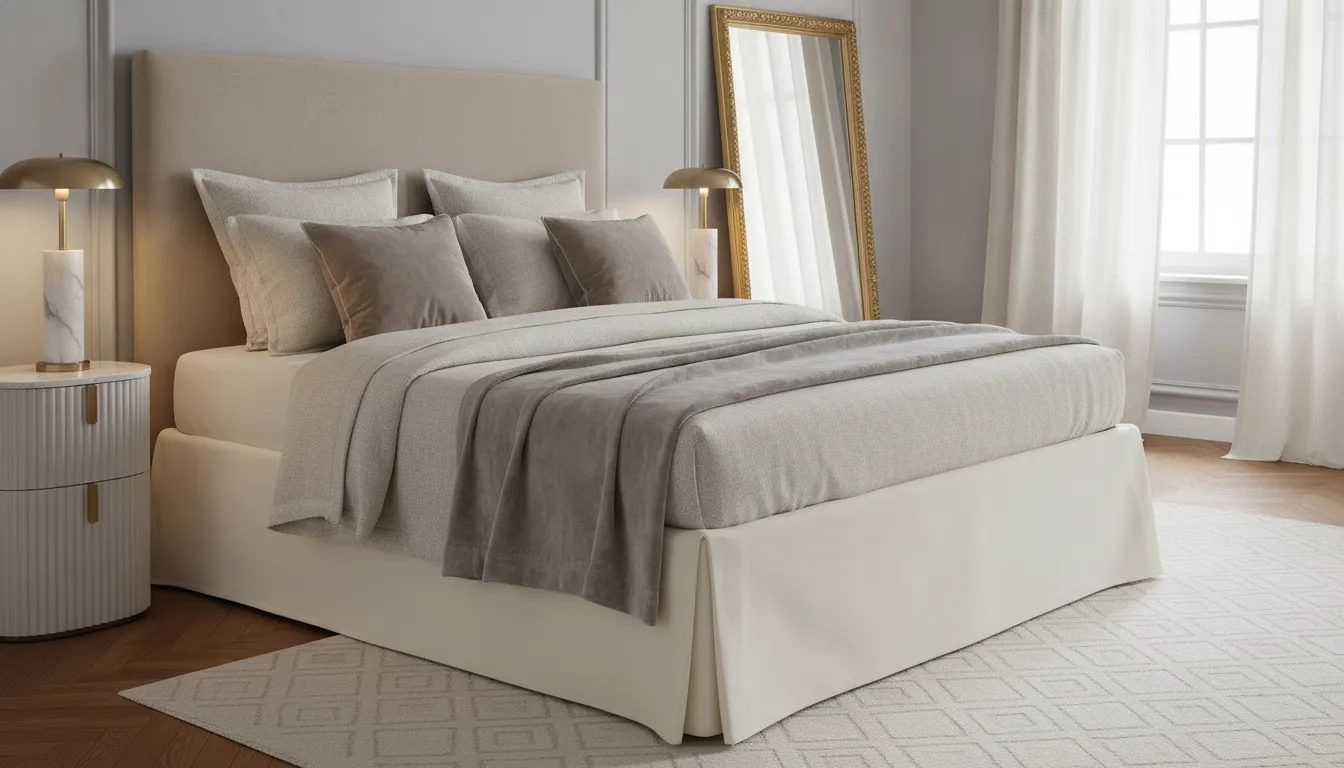
How should a bed skirt fit?
A bed skirt should conceal the foundation and frame while ending at the floor or just above it. It should not reveal a distracting gap, and it should not pool. Accurate measurements are more important than relying on a presumed standard size because mattress foundations, frames, rugs, and flooring can all affect the final drop.
Measure the drop before selecting a style
Measure from the top of the box spring or foundation to the floor. Take measurements at both sides and the foot, particularly if the bed sits partly on a rug. If the measurements differ, investigate whether the frame or flooring is uneven before placing the skirt. Record the mattress width and length as well so panels provide complete coverage.
- Remove or lift the upper bedding so the foundation edge is visible.
- Measure from the top of the foundation to the floor at several points.
- Account for a rug, bedposts, a footboard, and any under-bed storage.
- Select a drop that reaches the floor without creating excess fabric.
- Install the skirt, step back, and adjust each section before remaking the bed.
Create an even line around the bed
Once the skirt is in position, view it from the main entrance to the room. Confirm that the hem forms one continuous line and that the corners sit cleanly. Then walk around the bed and refine each side. A three-panel design makes these small corrections easier because one section can move without disturbing the others.
Finish the installation before adding the duvet, shams, coverlet, pillows, and throw. This sequence keeps the skirt accessible and makes it easier to judge the entire composition as each layer is added. For additional guidance, use Lili Alessandra's three-panel installation instructions.
Styling bed skirts with luxury bedding
A polished bed tells one visual story from floor to pillows. Start with the skirt as the foundation, then build upward through sheets, a coverlet or duvet, coordinated shams, decorative pillows, and a throw. Each layer should have a role. Some establish the palette, some provide texture, and a few deliver the fashion-forward focal points.
Build a thoughtful texture story
Contrast makes a layered bed compelling. Pair a relaxed linen skirt with a more structured quilted coverlet, or set a rich velvet skirt against smooth bedding. Add handcrafted finishing details through pillows rather than repeating them everywhere. The eye should move naturally across the composition, discovering details without meeting visual clutter.
Decorative pillows are especially useful for connecting the skirt to the upper bed. One pillow can repeat its color or texture, while others introduce complementary materials. Browse decorative pillow designs for shapes and finishes that can bring that connection to life.
Use a throw to finish the composition
A throw placed at the foot of the bed creates a transition between the upper bedding and skirt. Fold it neatly for a more tailored room, or drape it with controlled ease for a relaxed effect. Choose a texture that contrasts with the skirt while sharing part of its palette. That relationship helps the bed feel coordinated without becoming overly matched.
Edit the final arrangement
Once every layer is in place, remove anything that does not contribute. Luxury is not defined by the number of textiles on the bed, but by their quality, proportion, and relationship. Ensure the skirt remains visible enough to ground the design, straighten the coverlet, shape the pillows, and place the throw with intention. This final edit turns a group of beautiful pieces into a complete bedroom statement.
Frequently asked questions about bed skirts
Do bed skirts work with modern bedrooms?
Yes. A tailored, panel, linen, or velvet bed skirt can give a modern bedroom a clean, finished foundation. The most current looks use controlled fullness, a measured drop, and fabric that coordinates with the bedding rather than ornate ruffles.
Should a bed skirt touch the floor?
A bed skirt should finish at the floor or just above it. The ideal drop hides the frame without pooling, dragging, or exposing a visible gap. Measure from the top of the box spring or foundation to the floor before choosing a size.
Can you use a bed skirt with a footboard?
Yes. A three-panel bed skirt is especially useful with a footboard because the side panels can dress the exposed sides while the foot panel can be omitted, folded, or positioned to suit the frame.
How do you keep a bed skirt from looking dated?
Choose a simple silhouette, a precise drop, and an elevated fabric such as linen or silk velvet. Coordinate its color with the duvet, shams, coverlet, or headboard, then use decorative pillows and a throw to create intentional contrast above it.
Complete the bedroom from the foundation up
Bed skirts have a clear place in a modern luxury bedroom. They conceal practical elements, create an elegant floor line, and give the bedding above a finished foundation. Whether the room calls for tailored structure, adjustable panels, relaxed linen, gentle gathering, or signature silk velvet, the strongest choice is the one that supports the complete design.
Measure carefully, coordinate rather than overmatch, and let the materials carry the mood. With a precise fit and thoughtfully selected layers, a bed skirt becomes more than a cover for the frame. It becomes the detail that makes the entire bedroom feel polished.
View the Lili Alessandra bed skirt collection and complete your luxury bedding look.


