





Upholstered Bed Styling Ideas for a Luxury Bedroom
Upholstered Bed Styling Ideas for a Luxury Bedroom
An upholstered bed gives a bedroom an immediate sense of softness, but the headboard alone does not create a finished retreat. The most elegant rooms treat the upholstery, bedding, pillows, and surrounding furnishings as one composition. Whether your bed is wrapped in quiet linen, tailored performance fabric, or plush velvet, the right styling choices can turn it into a confident focal point without making the room feel overdone.
Explore Lili Alessandra bedding collections to begin building a polished, layered look around your upholstered bed.
Start With the Upholstered Bed as Your Design Anchor
Before choosing sheets or arranging pillows, study the bed itself. Its upholstery color, texture, silhouette, and height establish the visual language for the room. A channel-tufted velvet headboard feels glamorous and architectural. A gently curved linen headboard reads softer and more relaxed. A tall, winged design has enough presence to carry dramatic bedding, while a low-profile frame benefits from a more restrained arrangement that preserves its clean proportions.
Think of the headboard as the background of a portrait. Every layer placed in front of it should either create intentional contrast or build harmonious depth. If the upholstery is highly textured, introduce a few calmer textiles so the details can breathe. If it is smooth and understated, use quilting, embroidery, and sculptural pillows to create dimension.
A simple design rule helps: let one element lead, let another support it, and let the remaining pieces connect the two. For example, a pale blue upholstered bed can lead the palette, an ivory quilted coverlet can provide a serene foundation, and a decorative pillow with blue embroidery can unite them.
Choose a Color Relationship, Not Just a Color Match
A luxury bedroom rarely depends on perfectly matching every shade. It feels collected because the colors relate to one another in a deliberate way. Choose one of three approaches before adding bedding.
Tonal and Serene
Use closely related shades to create a calm, enveloping effect. An ivory upholstered bed might be layered with cream sheets, a warm white duvet, and a pale champagne coverlet. The interest comes from changing textures rather than dramatic color shifts. This approach works beautifully when you want the room to feel airy and restful.
Soft Contrast
Pair warm and cool neutrals, or place a muted color against a neutral headboard. A dove grey upholstered bed feels more dimensional with ivory bedding and touches of seaglass or soft blue. A sand-colored headboard gains refinement from pearl, pewter, or gentle sage. Keep the contrast measured so it enhances the bed rather than dividing it into separate visual zones.
Statement Accent
For a more fashion-forward composition, repeat one bold accent in small, controlled moments. A richly colored velvet pillow, embroidered motif, or throw can bring energy to a quiet upholstered bed. Repeating the accent once elsewhere in the room, perhaps in drapery or an art detail, makes the choice feel intentional.
How Should You Layer Bedding on an Upholstered Bed?
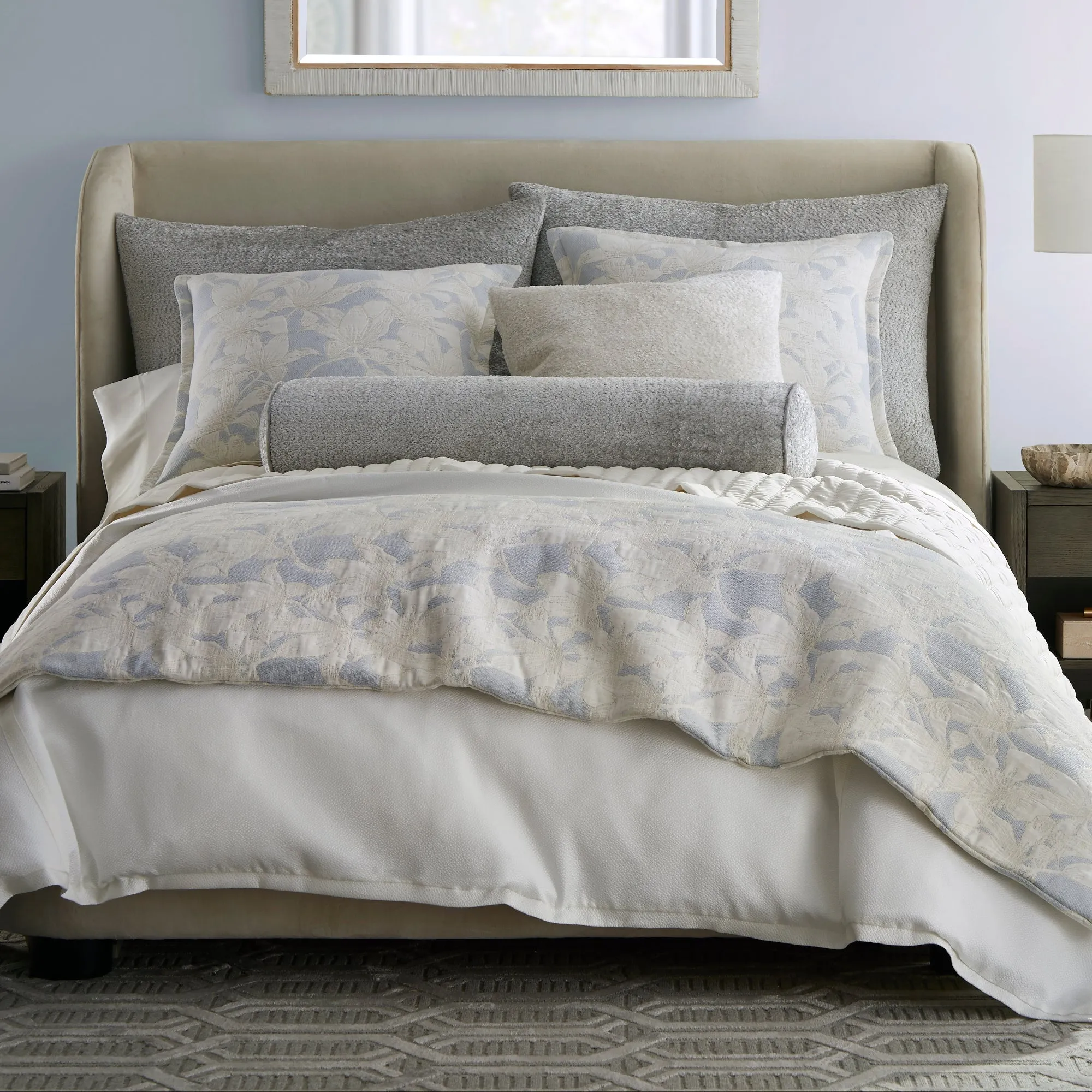
Layering gives an upholstered bed depth, comfort, and a sense of occasion. The goal is not to pile on as many pieces as possible. It is to create a graceful sequence of textures and proportions that leads the eye from the foot of the bed toward the headboard.
- Build a quiet foundation. Begin with fine sheets in a versatile neutral or a shade that complements the upholstery. A smooth, tailored base lets decorative layers stand out.
- Add the primary cover. Choose a duvet or coverlet with enough visual weight to balance the headboard. On a tall or deeply tufted bed, a fuller duvet or patterned quilt can hold its own. On a streamlined frame, a beautifully tailored coverlet may be all the foundation needs.
- Fold back the upper layer. Turning down the duvet or top cover reveals the layers beneath and keeps the headboard from feeling hidden. The fold also creates a horizontal line that balances a tall upholstered silhouette.
- Introduce a contrasting texture. A quilted velvet, matelasse, bamboo viscose, linen, or embroidered accent adds depth without relying only on color.
- Finish the foot of the bed. Place a throw across the lower third of the mattress, or drape it asymmetrically for a softer look. Leave enough of the upholstered frame visible to preserve its shape.
View quilted coverlets for an elegant middle layer that adds texture without overwhelming the headboard.
As you layer, step back and look at the relationship between the bed and the room. Upholstery already contributes softness, so one richly detailed textile may have more impact than several competing ones. The most luxurious composition often includes a thoughtful pause: an area of smooth fabric, a quiet neutral, or a clean edge that gives decorative details room to shine.
Use Pillow Proportions to Frame the Headboard
Pillows should complement an upholstered bed's scale, not cover it completely. If the headboard is one of the room's most beautiful features, keep its top edge, wings, or tufting visible. The pillow arrangement should sit within the architecture of the headboard and draw attention toward its center.
For a Tall Statement Headboard
A tall headboard can support a layered arrangement. Start with sleeping pillows, add two or three European shams for height, then finish with one or two decorative accents. Varying shapes creates a more curated look than a wall of identical squares. A long rectangular pillow can be especially effective because it echoes the horizontal line of the mattress while allowing the headboard to remain visible.
For a Low or Curved Headboard
Keep the arrangement lower and simpler. Try sleeping pillows with two tailored shams and one central decorative pillow. This keeps a low profile from looking crowded and preserves the graceful silhouette of a curved frame.
For a King-Size Upholstered Bed
Use enough width to make the arrangement feel proportional. Three European shams can create a strong background, while a small number of decorative pillows brings focus to the center. Avoid filling every inch. A little negative space at the sides makes the full composition feel more refined.
Mixing pillow materials is an easy way to connect the upholstery with the bedding. Pair a matte linen headboard with luminous silk velvet accents, or temper a velvet headboard with crisp cotton and subtle embroidery. Browse decorative pillows to find shapes and handcrafted details that can complete the arrangement.
Balance Headboard Height With the Rest of the Room
An upholstered bed can change the perceived proportions of a bedroom, especially when the headboard is tall, wide, or winged. Styling the surrounding space with scale in mind keeps the bed impressive without allowing it to dominate.
- Let tall headboards breathe. Avoid placing small art directly above a statement headboard. The piece can feel disconnected or visually cramped. If the wall needs art, choose a work with enough scale or move the visual interest to an adjacent wall.
- Match bedside height thoughtfully. Nightstands and lamps should feel substantial enough beside the bed. Very petite pieces can make a grand upholstered frame look out of proportion.
- Use drapery to extend the composition. Full-height panels add softness around the bed and can echo its upholstery or bedding palette. The repetition creates a cohesive, room-enveloping effect.
- Ground the bed with the right rug. A rug should extend generously beyond the sides and foot of the bed. A too-small rug makes even a beautiful upholstered bed feel visually unsupported.
Lighting also matters. A pair of lamps or sconces creates symmetry, while soft ambient light brings out velvet pile, embroidery, quilting, and other tactile details. In a luxury bedroom, the most beautiful textures should feel as inviting in the evening as they do in daylight.
Mix Textures With Restraint
Texture is where upholstered bed styling becomes especially expressive. Because the bed frame already introduces fabric, it invites a sophisticated conversation among soft surfaces. The key is contrast with restraint.
Begin by identifying the upholstery's dominant quality. Is it matte, lustrous, nubby, smooth, or plush? Add one or two materials that provide a distinct counterpoint. A smooth velvet headboard can look exceptional with a dimensional matelasse coverlet and crisp cotton sheets. A relaxed linen headboard can become more polished with quilted velvet and hand-embroidered accents. A tailored neutral frame gains personality from a silk velvet pillow or a throw with a soft, substantial drape.
Avoid using the same texture at the same intensity across the entire bed. Even beautiful velvet can lose its impact when every layer has equal sheen and weight. Instead, create a hierarchy: one plush statement, one detailed middle layer, and one quiet foundation.
Discover luxury throws to add a final layer of softness and dimension at the foot of the bed.
Should Bedding Match an Upholstered Headboard?
Bedding does not need to match an upholstered headboard exactly. In fact, a slight variation in color or texture usually creates a more considered result. What matters is that the pieces share a visual connection.
That connection might be an undertone, a repeated accent color, a similar level of formality, or a complementary texture. For example, cool ivory bedding can relate beautifully to a pale grey headboard, while an embroidered pillow repeats a subtle metallic detail elsewhere in the room. When the relationship is clear, the bed feels coordinated rather than matched from a single set.
If you are unsure where to begin, use the headboard as the mid-tone in the palette. Select bedding that is slightly lighter, then add one accent that is slightly deeper. This creates an easy sense of depth while keeping the room serene.
Four Upholstered Bed Looks to Inspire Your Bedroom
1. European-Inspired Ivory
Pair a warm ivory upholstered bed with tonal sheets, a quilted coverlet, and decorative pillows featuring embroidery or subtle metallic details. Keep the palette quiet and let fine craftsmanship create the interest. Full drapery panels and warm lighting complete the elegant effect.
2. Modern Blue and Silver
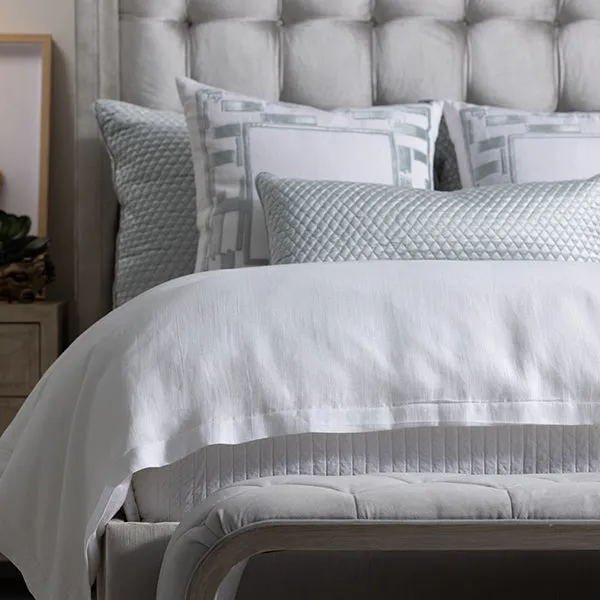
Style a pale blue or grey upholstered headboard with crisp ivory bedding, a silver-toned quilted layer, and a small number of blue decorative pillows. The cool palette feels polished, while changing finishes keep it from looking flat.
3. Collected Neutral Texture
Combine a natural linen headboard with cotton sateen, a dimensional coverlet, and a velvet accent. Choose cream, sand, ecru, and soft taupe rather than one uniform beige. The variations give a neutral room warmth and movement.
4. Dramatic Velvet Retreat
Let a deep velvet headboard be the hero. Surround it with lighter, quieter bedding, then repeat the headboard color in one decorative pillow or a detail at the foot of the bed. This keeps the look rich but balanced.
Common Upholstered Bed Styling Mistakes
Small adjustments can make the difference between a bed that feels crowded and one that feels composed.
- Hiding the entire headboard with pillows. Allow the upholstery's shape and craftsmanship to remain visible.
- Using too many equal-weight patterns. Choose one dominant pattern or decorative technique, then support it with quieter layers.
- Ignoring the upholstered frame. Do not let oversized bedding completely obscure a beautifully tailored side rail or footboard.
- Matching every surface exactly. Introduce nuanced contrast so the room feels collected rather than flat.
- Forgetting the room beyond the bed. Echo a color, texture, or line in drapery, lighting, or a nearby accent to connect the entire space.
Frequently Asked Questions About Upholstered Bed Styling
What color bedding goes with a grey upholstered bed?
Ivory, soft white, pale blue, muted sage, and silver-toned bedding all complement a grey upholstered bed. For a calm look, keep the palette tonal. For gentle contrast, choose warm ivory layers and repeat the grey in one decorative pillow or throw.
How many pillows should you place on an upholstered bed?
Use enough pillows to frame the headboard without hiding it. A king-size bed often looks balanced with sleeping pillows, three European shams, and one or two decorative accents. A low or curved headboard usually benefits from a simpler, lower arrangement.
Should a duvet match the upholstered headboard?
A duvet does not need to match the headboard exactly. A related undertone, complementary texture, or repeated accent color creates a more collected look than a perfect match. Let the headboard act as the anchor and select bedding that adds subtle contrast.
How do you style a tall upholstered headboard?
Keep the headboard's top edge and distinctive details visible. Use pillows with enough height to feel proportional, then balance the vertical scale with a folded duvet, a coverlet, or a throw that creates graceful horizontal lines across the bed.
What bedding textures work best with an upholstered bed?
Choose textures that contrast with the upholstery rather than repeating it at equal intensity. Crisp cotton, matelasse, quilted velvet, linen, embroidery, and silk velvet accents can all work beautifully when one texture leads and the others support it.
Create a Bedroom That Feels Finished
The best upholstered bed styling begins with proportion and ends with personality. Use the headboard as your anchor, choose bedding layers that enhance its scale, and frame it with pillows that reveal rather than conceal. Then add just enough contrast in color and texture to make the composition feel distinctive.
A luxurious bedroom is not defined by excess. It is defined by how thoughtfully every material, silhouette, and detail works together. With refined textiles and a clear visual hierarchy, an upholstered bed becomes more than a soft place to rest. It becomes the centerpiece of a room designed to feel elegant, comfortable, and entirely your own.
View the Lili Alessandra bedding collection and complete your upholstered bed with artfully layered luxury.


