





Velvet Throw Pillows: A Designer Styling Guide
Velvet throw pillows can transform a beautifully furnished room in one small, decisive move. Their soft pile catches the light, deepens color, and gives a bed or sofa the finished quality of a thoughtfully chosen piece of jewelry. The secret is restraint: let velvet be the accent that draws the eye, then surround it with quieter textures, considered proportions, and enough open space to appreciate every detail.
Connect with a Design Advisor to create a polished pillow arrangement for your room.
The designer rule: Use velvet as a visual anchor rather than the only texture in the room. Choose one or two velvet throw pillows, repeat one of their colors elsewhere, and pair them with linen, cotton, matelasse, or embroidery for a layered look that feels luxurious without becoming heavy.
This guide explains how to choose color, scale, texture, and placement with a designer's eye. It also offers practical arrangements for beds and sofas, simple care guidance, and ideas for selecting statement pieces that feel at home with the rest of your decor.
The designer rule for styling velvet throw pillows
Use velvet as the anchor, not the entire story. One or two velvet pillows create a clear focal point. Surrounding them with matte or intricately woven textiles gives the eye contrast and keeps the arrangement balanced.
Velvet has visual weight because its pile reflects light differently as it moves. Even a quiet neutral can appear deeper and more dimensional in velvet than in a flat weave. That quality makes the fabric ideal for establishing the focal point of a bed or sofa, but it also means a large group of matching velvet pieces can compete for attention.
Begin with one hero piece. It may be a generous square pillow in a rich mineral color, a long lumbar pillow with hand-finished detail, or a small jewel-like accent placed at the center. Build the rest of the arrangement around that choice. If you want a more layered effect, add a second velvet pillow in the same color family or in a different scale. Stop before the velvet loses its special role.
The most polished rooms repeat rather than match. Draw one tone from the velvet into a throw, artwork, drapery panel, or patterned pillow. This subtle repetition connects the accent to the room without making the design feel overly coordinated. Browse the decorative pillow collection with this relationship in mind: the most beautiful selection is the one that adds distinction while still speaking to the textiles already in the room.
A simple three-part formula
- Anchor: one velvet pillow with enough color, scale, or detail to command attention.
- Bridge: a patterned or embroidered pillow that connects the velvet color to the wider palette.
- Relief: a quieter linen, cotton, or matelasse textile that gives the arrangement breathing room.
This formula works because each textile has a job. The velvet supplies depth, the bridge creates cohesion, and the quieter layer prevents the look from feeling crowded.
How many velvet pillows should you use?
For most beds and sofas, one to three velvet pillows is enough. Use one as a centered statement, two for symmetry, or three when the pieces vary clearly in size and shape.
The right number depends less on a fixed rule than on the size of the furniture and the role it plays. A formal bed can carry a fuller arrangement because pillows are part of its daily presentation. A sofa used for conversation should remain easy to sit on, so its arrangement needs more open space.
On a queen bed, place a single long velvet lumbar in front of sleeping pillows and shams for an edited, contemporary finish. For a fuller look, use two medium squares with one smaller decorative accent in front. On a king bed, two large velvet squares can provide symmetry, while a centered lumbar breaks up the repeated shape.
On a sofa, begin with one velvet pillow at one end and a contrasting textile at the other. Add a third only if the sofa is long enough to preserve a comfortable center seat. A pair of identical velvet pillows creates formality; two related but different pieces make the room feel collected over time.
Scale matters as much as count. If every pillow is the same size, the arrangement can look flat even when the fabrics are beautiful. Layer larger shapes behind smaller ones, and vary squares with rectangles or lumbars. Leave part of the sofa back or bedding visible so the eye can register the silhouette of each pillow.
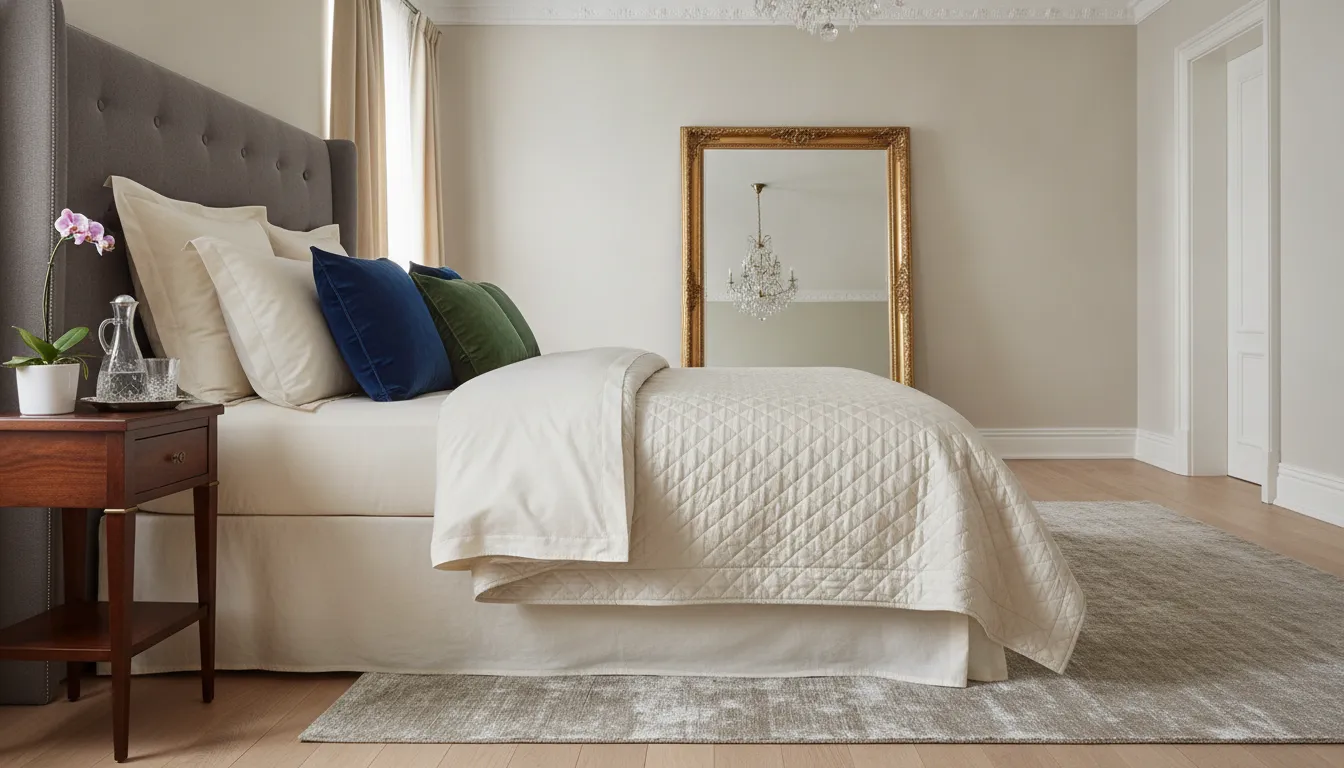
How to mix velvet with linen, cotton, and matelasse
Pair velvet with a fabric that reflects less light. Linen brings relaxed texture, cotton adds crisp softness, and matelasse introduces a sculpted pattern. Each creates contrast while allowing velvet to remain the focal point.
Texture mixing is what makes a monochromatic room feel considered rather than plain. A palette of ivory, sand, and pale taupe can still have tremendous depth when one pillow is plush, another is embroidered, and the bedding has a subtle woven pattern. The eye notices how light travels across each surface, even when the colors are close.
Velvet and linen
Linen's dry, natural texture is an elegant counterpoint to velvet's soft sheen. Use the pair when you want a room to feel elevated but not overly formal. An ivory linen ground can make blush, celadon, blue, or warm neutral velvet appear especially luminous. Linen also gives stronger jewel tones a calmer setting.
Velvet and cotton
Cotton creates a crisp visual break and works particularly well in bedrooms. Smooth sheets, tailored shams, and a velvet accent pillow combine softness with structure. The result is comfortable and polished, with enough contrast to keep each layer distinct.
Velvet and matelasse
Matelasse brings pattern through construction rather than print. Its raised surface adds detail while remaining quiet enough to support velvet. Pairing velvet pillows with quilted coverlets is an effective way to create a rich, tonal bed without relying on several competing colors.
Embroidery, metallic details, and patterned fabrics can also join the mix, but give the most ornate element space. If the velvet pillow includes decorative work, let it lead. If another pillow has hand embroidery or a bold motif, choose simpler velvet nearby.
Choosing a velvet color that belongs in the room
Choose velvet color from something already in the room, then move one shade deeper or softer. This makes the new pillow feel connected while allowing velvet's reflective pile to add dimension.
Color looks especially expressive in velvet. Depending on the direction of the pile and the light in the room, one pillow may reveal several tones throughout the day. Rather than selecting color from a small swatch alone, consider the pillow in relation to the room's daylight, evening lighting, and largest textile surfaces.
| Room palette | Velvet direction | Supporting textures | Overall effect |
|---|---|---|---|
| Ivory and warm white. | Blush, celadon, pale blue, or champagne. | Linen, matelasse, subtle embroidery. | Soft and luminous. |
| Sand, taupe, and natural wood. | Chocolate, olive, rust, or deep gold. | Woven cotton, hemp, boucle. | Warm and grounded. |
| Silver, grey, and cool white. | Sapphire, steel blue, plum, or charcoal. | Cotton sateen, silk, geometric quilting. | Tailored and dramatic. |
| Layered jewel tones. | A related tone one step darker. | Metallic detail, restrained pattern, solid linen. | Opulent and collected. |
For a serene room, use analogous colors that sit near one another, such as pale blue, seaglass, and soft green. For more energy, choose a controlled contrast, such as blush velvet against olive or sapphire against a warm neutral. Keep the rest of the arrangement quieter so the contrast looks intentional.
A neutral velvet pillow is not necessarily understated. Ivory, pewter, and sand gain depth from the pile and can be just as striking as saturated color. These shades are ideal when the room already includes pattern or when you want texture to carry the design.
Arranging velvet throw pillows on a bed
Arrange a bed from largest and quietest at the back to smallest and most expressive at the front. Place velvet where it can be seen clearly, usually in the front or middle layer, rather than hiding it behind several shams.
A luxury bed feels inviting when every layer has purpose. Begin with the pillows used for sleep, then add shams that relate to the duvet or coverlet. From there, introduce the decorative layer. Velvet should complete the composition rather than overwhelm it.
- Establish the backdrop. Place sleeping pillows and coordinated shams upright or slightly angled.
- Add a structured middle layer. Use two larger decorative squares or European shams to create height.
- Introduce velvet. Center one long lumbar, or use a pair of smaller velvet pillows in front of the middle layer.
- Add one final detail if needed. A small embroidered or embellished accent can connect the arrangement to the room's other finishes.
- Edit. Remove any piece that hides the most beautiful details or makes the bed difficult to use.
A velvet pillow also creates an elegant relationship with a folded throw at the foot of the bed. Choose a luxury throw in a related tone but a different texture. This repeats the color vertically through the composition while preserving variety.
For a more contemporary bed, reduce the count and increase the impact of each piece. A single sculptural lumbar in velvet can look more intentional than a row of smaller pillows. For a romantic or layered bed, mix shapes while maintaining a disciplined palette.
Styling velvet pillows on a sofa or chair
Keep seating comfortable first. On a sofa, use velvet at one or both ends and preserve open seating in the center. On a chair, one well-scaled pillow is usually the most polished choice.
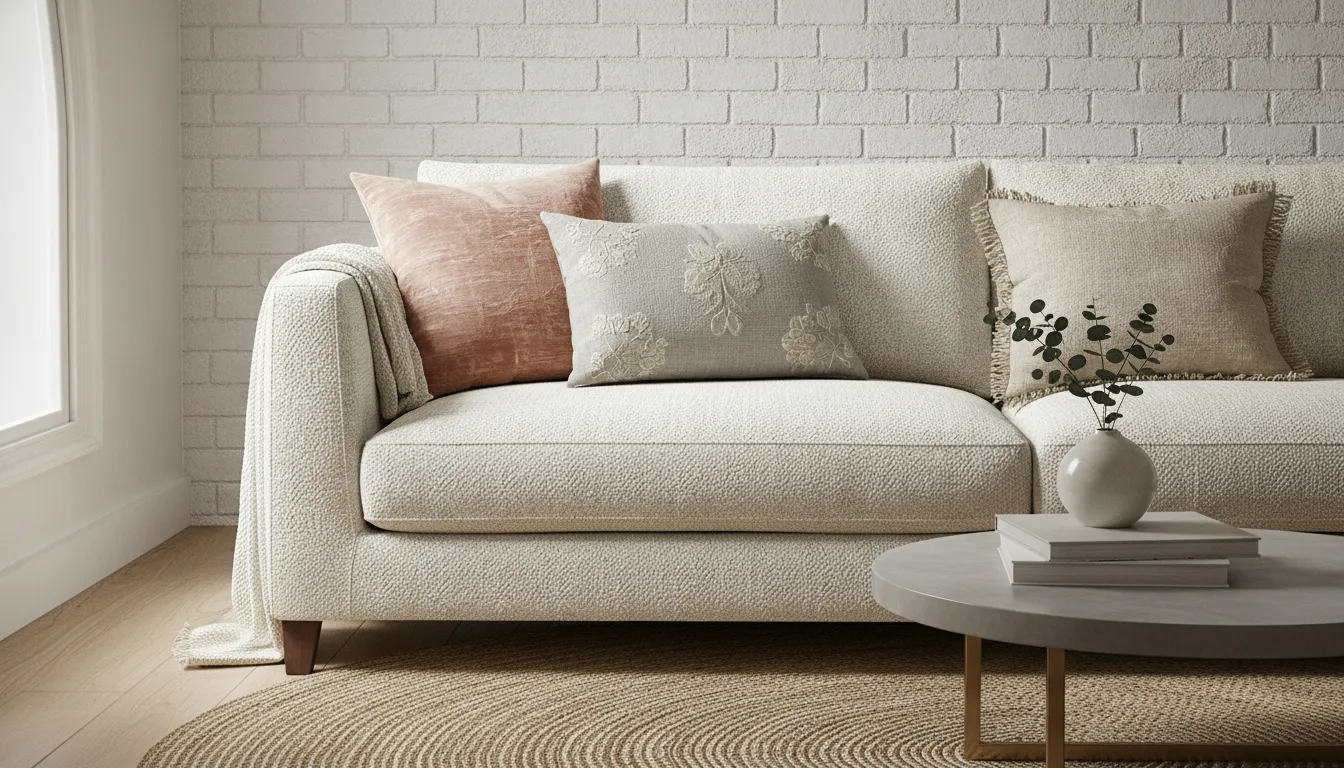
A sofa arrangement should look beautiful from across the room and remain welcoming up close. Place the largest pillow at the outer corner, where it can support the arm and establish the color story. Layer a smaller pillow slightly in front, then balance the opposite side with a related color, pattern, or texture rather than an exact duplicate.
For a symmetrical room, matching velvet pillows at either end of the sofa create instant order. For a collected room, use two different velvet pieces that share one attribute, such as color family, trim, or shape. The relationship should be visible without looking like a set.
Accent chairs offer an opportunity for a single statement. Choose a pillow that contrasts with the upholstery while repeating a nearby tone from artwork, drapery, or a rug. Make sure the scale leaves enough room to sit comfortably and does not hide the chair's silhouette.
How to care for velvet throw pillows
Follow the care label for the specific pillow, protect the pile from crushing, and address spills promptly with a clean cloth. When in doubt, consult a professional cleaner experienced with fine textiles.
Beautiful velvet rewards thoughtful care. Because fiber content, decorative work, and construction vary, the care label is always the first authority. A removable cover may have different instructions from its insert, and a hand-embroidered or embellished pillow may require more specialized handling than a simple solid velvet design.
- Rotate decorative pillows occasionally so one side does not receive all the wear or direct sunlight.
- Lift and place pillows rather than pressing or folding them beneath heavier items.
- Use a gentle upholstery attachment or a soft fabric brush only when the care instructions allow it.
- Blot a spill with a clean, absorbent cloth. Do not rub, which can spread the spill and disturb the pile.
- Store clean pillows in a breathable fabric bag with enough space to preserve their shape.
Before using any cleaning product, test it in an inconspicuous area and confirm that it is appropriate for the pillow's fiber and finish. Fine textiles and handcrafted details deserve individualized care. When a pillow includes embroidery, stones, trim, or other embellishment, professional cleaning is often the safest choice.
Common styling mistakes to avoid
The most common mistake is treating every pillow as a focal point. A successful arrangement has a clear hierarchy: one hero, one or two supporting pieces, and quieter layers that create space around them.
Too many velvet pillows can flatten the very contrast that makes the fabric special. The same is true of using several equally bold colors, prints, or embellished pieces together. When every element asks for attention, none receives it.
Matching every textile exactly
A room feels richer when its pieces relate without being identical. Repeat a color, line, or material, but vary the scale and surface. Velvet beside linen and quilting looks collected; velvet beside more velvet in the same shape and color can feel like a showroom set.
Ignoring the furniture's scale
A tiny pillow can disappear on a deep sofa, while an oversized pillow can hide a graceful chair. Evaluate each piece against the furniture, not in isolation. Keep enough negative space for the furniture's design to remain visible.
Choosing beauty without considering use
An arrangement should support the way the room is lived in. Reserve the fullest layering for a formal bed or occasional seating. Edit everyday sofas and chairs so guests can sit down without moving a large collection of pillows.
Finally, resist buying every accent at once. Start with the velvet anchor, live with it in the room, and add supporting pieces slowly. This approach produces a more personal composition and makes each choice more deliberate.
Frequently asked questions about velvet throw pillows
Are velvet throw pillows suitable for every season?
Yes. Velvet can work throughout the year when it is balanced with seasonal colors and textures. Pair it with linen and pale neutrals for a lighter spring or summer look. Combine it with quilted textiles and deeper tones for autumn and winter.
Can you mix different colors of velvet pillows?
Yes, especially when the colors share a common undertone or appear elsewhere in the room. Two related jewel tones can feel opulent, while soft analogous colors create a serene effect. Keep surrounding textiles restrained so the color story remains clear.
Should velvet pillows match the curtains?
They do not need to match. A more considered approach is to repeat one tone from the drapery in the pillow, or choose a related shade that creates depth. This connects the room while avoiding an overly coordinated look.
What fabrics look best with velvet throw pillows?
Linen, cotton, matelasse, silk, hemp, and embroidered textiles can all complement velvet. The best partner provides contrast in sheen or surface while sharing a color or design detail with the rest of the room.
Finish the room with a velvet statement
Velvet throw pillows bring color, softness, and light-catching dimension to a room. Choose one piece that deserves attention, balance it with quieter textiles, and edit the arrangement until every detail can be appreciated. The result will feel layered and luxurious, yet still welcoming and personal.
Shop decorative pillows to find the velvet accent that completes your room.


