





King Size White Tencel Sheet Set Style Guide
A king bed gives every layer room to make an impression, which is why the sheet should be chosen as thoughtfully as the coverlet or duvet above it. White offers a luminous, tailored foundation, while Tencel, commonly used to describe lyocell fibers, brings a smooth and fluid feel worth evaluating alongside fit, construction, and care requirements.
The right king size white tencel sheet set should combine a precise king-size fit. A refined white finish, and a tactile hand feel that supports restful comfort and elegant layering. Research comparing lyocell with cotton found participant preferences for softness, temperature control, moisture control. And wrinkle resistance, although those findings describe the fiber category rather than a specific product. Read the study and confirm each set's specifications on its product page.
Shop Lili Alessandra Luxury Bedding
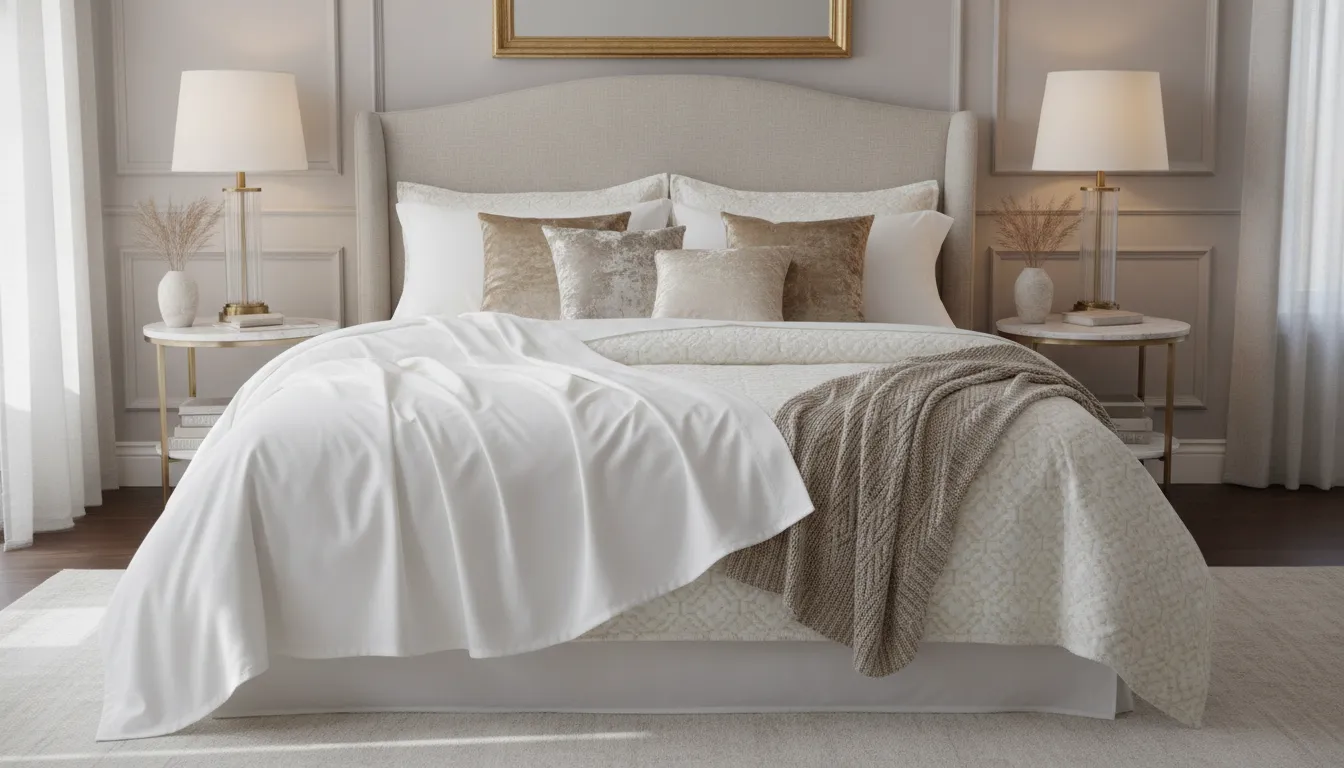
From there, the most successful choice is less about treating white sheets as a blank basic and more about selecting a polished foundation for dimensional bedroom design. Understanding what Tencel contributes, and what it does not guarantee, makes the selection process more discerning.
What Makes a King Size White Tencel Sheet Set Worth Considering?
Tencel is a brand name commonly associated with lyocell fibers, so it is worth checking the product specifications rather than treating the terms as interchangeable in every listing. Lyocell belongs to the regenerated cellulose family. In broad terms, these fibers are made by dissolving cellulose from a natural source and reconstituting it into fiber form. That describes a material category, not a guarantee about the composition, finish, or performance of a particular sheet set.
The appeal is tactile as much as technical. In a controlled comparison involving cotton and lyocell bedding, participants preferred lyocell for softness, temperature control, moisture control, and wrinkle resistance. The study used separate one-week periods with each material, so its findings are useful context rather than a promise that every Tencel fabric will feel identical. Weave, finishing, construction, and personal preference still shape the experience.
For a king bed, that experience has a generous visual and physical scale. A smooth, fluid hand can make the foundation feel polished beneath more dimensional layers, while a luminous white palette keeps the composition tailored and versatile. The result can read as refined rather than clinical when paired with texture, tonal contrast, or richly finished coverlets and pillows.
The same research observed lower average itching during lyocell use, but the difference was not statistically significant. And the study concluded that lyocell was equivalent to cotton for itch reduction. It is therefore more accurate to describe lyocell as a material some sleepers may find comfortable than to present it as a treatment or a universal solution for sensitive skin. Read the exact fiber content and care guidance before choosing a set.
For a closer look at the category, explore the benefits of Tencel sheets and the distinctions in Tencel versus Egyptian cotton. If temperature is central to your decision, the guide to cooling Tencel sheets offers additional context. None of these category discussions should substitute for verifying the specifications of the particular king-size white set you are considering.
How Should You Check King-Size Fit Before You Buy?
A beautifully finished bed begins with a sheet that stays smooth, secure, and properly proportioned. Before choosing a king size white Tencel sheet set, work through the product details instead of relying on the word "king" alone. Manufacturers can define pocket depth, dimensions, and included pieces differently. A careful check protects comfort and the bed's tailored appearance.
- Measure the mattress and topper together. Measure from the top surface to the bottom edge. Include any mattress pad, protector, featherbed, or topper that stays beneath the fitted sheet. Compare that total depth with the stated pocket range. Do not assume a deep pocket fits every layered mattress.
- Look for pocket depth and elastic construction. The listing should state the pocket depth and explain how the sheet is secured. Market examples range from all-around elastic for mattresses up to 15 inches deep to extra-deep options for deeper or adjustable setups. These are examples to verify, not universal Tencel standards. If the page is silent, contact the seller before ordering.
- Confirm the exact king dimensions. Check the fitted sheet's length and width. Review the flat sheet and pillowcase measurements separately. One product lists a 77 by 81 inch fitted sheet, a 113 by 109 inch top sheet, and 20 by 36 inch king pillowcases. Another set may differ. Use the exact product page, not a general size chart.
- Review what the set contains. Verify whether the package includes a fitted sheet, flat sheet, and two pillowcases, or a different combination. A sheet set does not guarantee identical contents across brands. This matters when planning a complete bed composition and deciding which pieces you still need.
- Account for an adjustable bed. If the mattress moves, look for language addressing adjustable-bed compatibility, elasticized edges, or a pocket depth suited to your configuration. Consider whether the sheet can remain anchored through movement. When the page is silent, ask for confirmation.
- Read the exact product page again. Check the selected color, size, material description, dimensions, included pieces, and care instructions for the specific variant. Compare these details with the guide to best quality bed sheets and the broader Tencel sheet-set guide. This final review helps the set support both practical fit and refined style.
| Check | Why it matters |
|---|---|
| Mattress and topper depth | Confirms the fitted sheet can reach the mattress edges. |
| Elastic and pocket details | Helps the sheet stay secure during sleep or adjustment. |
| Dimensions and set contents | Prevents surprises when styling the complete king bed. |
Why Does White Work as a Luxury Bedding Foundation?
White has a rare ability to make a bed feel luminous without making it feel stark. In a luxury bedroom, it acts as a tailored foundation: calm enough to support expressive layers, yet refined enough to hold its own. That versatility is especially valuable when the goal is a king bed that feels composed rather than overly coordinated.
A white sheet layer gives the eye a quiet starting point. From there, deeper tones, softened neutrals, and patterned accents can be introduced with intention. A charcoal duvet may feel more architectural against white. A champagne coverlet can bring warmth without muddying the palette. Jewel-toned decorative pillows or a richly colored throw become focal points instead of competing with the entire bed.
Use tonal contrast to create depth
Luxury is rarely about using one color from headboard to footboard. It comes from proportion, contrast, and the relationship between surfaces. Pairing white sheets with ivory, cream, or pale sand creates a restrained tonal composition. The effect is softer than a high-contrast scheme, but it still has dimension when the layers differ in scale and finish.
For inspiration, explore these ivory bedding ideas to see how closely related shades can create a serene, elevated bedroom. White does not need to match every layer exactly. Slight variation often makes the bed appear more collected and considered.
Let texture do the visual work
When the palette is light, texture becomes essential. A smooth sheet layer can set off the raised pattern of a coverlet. The plush hand of velvet, the movement of a throw, or the dimensional surface of matelasse. Lili Alessandra's design philosophy combines mixed fabrics with handcrafted techniques, making tactile contrast a natural part of its aesthetic.
The brand's assortment includes fine bed sheets alongside duvets, coverlets, pillows, and throws. So the foundation can be developed into a coordinated ensemble rather than treated as an isolated purchase. Browse the luxury bedding collections for a broader view of those complementary layers, or consider white quilted coverlets when you want the palette to remain light while adding pattern and relief.
The most successful white foundation feels intentional from a distance and rewarding up close. Keep the base luminous, then build character through tonal shifts, tailored proportions, and tactile finishes.
How Can You Style White Tencel Sheets on a King Bed?
Think of the sheets as the quiet, luminous foundation of the composition. On a king bed, the goal is not to stack every piece you own. It is to establish a generous field of white, then add layers that create depth, softness, and a deliberate sense of proportion.
Begin with a tailored sheet foundation
Place the fitted sheet smoothly over the mattress, then add the top sheet with its finished edge turned down. Keep the fold crisp and generous enough to remain visible beneath the next layer. If the set includes details such as a decorative hem, position them where they can be seen. Before styling the rest of the bed, confirm the sheet set's exact size, dimensions, and care instructions on its product page. Lili Alessandra product pages provide material specifications, size options, care details, imagery, and related pieces for further consideration.
For a fuller designer effect, let the white sheets remain visible at the sides and near the pillows. That negative space keeps the bed from looking visually crowded and allows the smooth surface of the Tencel fabric to contrast with more dimensional textiles.
Build dimension from the bottom up
Fold a coverlet across the lower third of the bed rather than pulling it all the way to the headboard. A quilted or matelasse texture introduces quiet relief against the sheet's fluid surface. A king bamboo coverlet can bring a softly layered finish, provided its current product details suit your palette and composition.
Add the duvet next. Fold it back from the pillows or turn down the upper edge so the white sheet remains part of the visual story. This approach gives the king bed a relaxed, tailored profile instead of allowing the duvet to become a single uninterrupted block of color. Lili Alessandra's coordinated bedding collections are designed to bring together duvets, shams, coverlets, and decorative elements, making it easier to build a unified ensemble.
Use pillows and a throw to establish proportion
Arrange sleeping pillows behind the shams, then add decorative pillows in graduated sizes. Use one dominant pattern or surface as the focal point, and support it with quieter solids or tonal textures. Velvet, embroidery, and other tactile finishes can make the white foundation feel warmer and more architectural without competing with it. For inspiration, explore this guide to a king-size velvet quilt.
Finish with one folded throw at the foot or over a corner. Keep the fold substantial enough to register from across the room. But do not cover so much of the sheet and coverlet that the layers lose their visual order. For a broader sequence of sheet, coverlet, duvet, and pillow placement, see how to layer a luxury bed and make your bed luxurious. The most successful king-bed arrangement feels composed, tactile, and easy to live with.
What Should You Know About Tencel Sheet Care?
Begin with the care label attached to the specific set. Tencel is a category name used across different constructions, blends, finishes, and dye processes, so a general routine should never override the manufacturer's instructions. Before washing a king-size set, confirm the recommended water temperature, cycle, detergent, drying method, and any restrictions on ironing or bleaching.
Wash according to the label, not a universal rule
Some Tencel sheet care instructions call for a warm machine wash with similar colors. The same example recommends medium tumble drying, prompt removal from the dryer, and warm ironing when needed. Those are category examples, not instructions for every set. If your label specifies cold water, a delicate cycle, low heat, or a different drying method, follow that guidance instead. Washing sheets separately from rough garments, heavy items, or pieces with fasteners can also help limit unnecessary abrasion.
Manage wrinkles with a light touch
Tencel can show some wrinkling, particularly when it remains compressed or sits in the dryer after the cycle ends. Promptly removing the sheets and smoothing them while folding or making the bed may be enough for a relaxed finish. When the label permits it, a brief low-heat tumble or light steam can help release creases. Avoid treating a polished white bed as a demand for rigid perfection. Soft, natural movement can preserve the inviting quality of the fabric while still looking considered.
Be cautious with softener and bleach
Category guidance commonly recommends skipping fabric softener. Buildup may reduce breathability over time, while Tencel is already valued for a smooth hand. Chlorine bleach is also commonly discouraged because it can weaken and discolor the fibers. Do not substitute another whitening product automatically. For a white set, check the label before using any bleach alternative or stain treatment, and test only as directed. Spot-treat marks promptly with a product approved for the fabric, rather than experimenting with household formulas.
White bedding benefits from simple prevention. Keep skincare, cosmetics, food, and colored textiles away from freshly laundered sheets. Rotate sets so one is not continually exposed to wear. If temperature comfort is part of your decision, compare this care guidance with cooling Tencel sheets before choosing your routine.
Which Details Separate a Good Set From a Beautifully Finished One?
Material is only one part of a considered sheet set. The finishing details determine how the bed looks when made and how the fitted sheet behaves overnight. They also show whether the set suits a carefully designed room. Before comparing colors or thread counts, examine the construction and the information supplied on the product page.
Start with the fitted-sheet construction
Elastic is a small detail with an outsized effect. Look for an elastic edge that follows the perimeter rather than relying on tension at only a few points. One Tencel sheet product, for example, specifies 360-degree elastic and a pocket depth designed for mattresses up to 15 inches. That is a product-specific example, not a universal standard, so compare the stated pocket depth with your mattress, protector, topper, or adjustable-bed setup before buying.
King sizing also deserves a precise check. Product pages may list separate measurements for the fitted sheet, top sheet, and pillowcases. One example lists a 77-by-81-inch fitted sheet, a 113-by-109-inch top sheet, and 20-by-36-inch king pillowcases. Those figures illustrate why the phrase "king size" alone is not enough. Review the exact dimensions and set contents for the particular collection. The best quality bed sheets guide offers a broader framework for evaluating these specifications.
Notice the hand feel and visual finish
A well-finished sheet should look smooth and intentional without appearing stiff or overly glossy. Category descriptions commonly use terms such as smooth, breathable, fluid, or silky-soft. But shoppers should treat those words as a starting point and confirm the actual fiber composition and weave. Pay attention to how the surface is described, whether the photography shows a clean drape, and whether the finish complements the more dimensional layers on the bed.
Pillowcase closures are another quiet design cue. An envelope closure, for instance, creates a clean appearance and helps keep the pillow insert visually contained. Inspect the hem, closure, elastic, and included pieces together. The result should feel coherent rather than assembled from unrelated basics.
Questions trade buyers should ask
Interior designers and professional buyers should request the full specification set. Ask about fiber content, weave or finish, finished dimensions, pocket depth, elastic construction, closure type, care instructions, available sizes, and lead time. Lili Alessandra product pages provide material specifications, care instructions, size options, detailed imagery, and cross-sells. They are useful starting points for comparison. Trade professionals can also review the To The Trade Program when sourcing premium bedding for a client project.
Connect With a Lili Alessandra Design Advisor
Frequently Asked Questions
How can you make sure a king fitted sheet stays secure?
Measure the mattress with any topper in place, then compare that total depth with the fitted sheet's stated pocket depth. Check the product details for all-around elastic, included pieces, and the exact king dimensions. A mattress with an adjustable base or substantial topper deserves especially careful fit verification.
Does Tencel feel cold, crisp, or silky?
Tencel generally feels smooth and fluid rather than crisp or slippery like satin. It may not feel instantly cold when you touch it, but its breathability and moisture-management qualities can support a more comfortable sleep temperature. In one controlled comparison, participants preferred lyocell over cotton for softness, temperature control, and moisture control according to a published study.
Will Tencel sheets wrinkle?
They can show some wrinkling, as many natural and regenerated fibers do. Follow the care label for your specific set, remove sheets promptly after drying when instructed, and use low heat or light steaming only when the label permits. This preserves a refined finish without treating one care routine as universal.
Can you use chlorine bleach or fabric softener on Tencel?
Do not assume either is appropriate. Product guidance commonly advises avoiding chlorine bleach because it may weaken or discolor the fibers, while fabric softener can leave buildup that affects breathability. Read the set's care label first and choose only treatments it explicitly allows.
How can white sheets look layered rather than plain?
Use the white sheet as a luminous foundation, then introduce contrast through a textured coverlet, tailored duvet, dimensional shams, and a restrained arrangement of decorative pillows. A velvet or linen accent can add depth while keeping the composition elegant. Coordinate scale and texture before adding more color, so the bed feels curated rather than crowded.
Ready to Refine Your King Bed?
A white Tencel sheet foundation can give a king bed a luminous, tailored starting point for layered texture and richer accents. For help balancing proportions, materials, and finishing touches, contact a Lili Alessandra Design Advisor. The Design Concierge can help you explore a polished bedding direction that feels considered from the first layer to the final decorative detail.


