





Ivory Bedding Ideas for a Luxury Bedroom
Ivory bedding gives a bedroom the luminosity of white with a softer, more cultivated point of view. Its creamy undertone creates a gracious foundation for quilted coverlets, sumptuous duvets, tailored shams, and artful decorative pillows, allowing every material and finishing detail to feel intentional rather than overly formal.
The most sophisticated ivory beds rely on tonal variation, not a perfectly matched set. Begin with smooth sheets, add a dimensional coverlet, fold a plush duvet toward the foot, and finish with decorative pillows and a throw in contrasting textures. The resulting composition feels serene from across the room and richly detailed up close.
Ivory is especially compelling for a luxury bedroom because it responds beautifully to changing light. In the morning it looks fresh and quiet; beneath warm evening lamps, it becomes enveloping and atmospheric. The following design principles show how to select, layer, style, and care for ivory bedding with the discernment of a professional interior stylist.
Why does ivory bedding create a softer luxury bedroom?
Ivory bedding softens a luxury bedroom by reflecting light without the starkness of pure white. Its warm undertone creates a calm visual foundation, while tonal layers direct attention toward craftsmanship, silhouette, quilting, embroidery, and material. The result feels gracious, dimensional, and polished rather than overly formal.
Ivory offers warmth without visual weight
Bright white can feel crisp and architectural, while ivory introduces a subtle warmth that is often easier to live with. The color reflects light gently, helping a room feel open without creating a stark contrast against walls, upholstery, or wood. In a bedroom with substantial furniture or dramatic drapery, this softness gives the eye a place to rest.
Because ivory sits between white and cream, it also adapts easily to different design eras. It can complement a carved traditional bed, temper the angles of a modern frame, or bring quiet refinement to an airy coastal room. The tone is versatile, but it never feels anonymous when paired with expressive textiles.
A tonal palette directs attention to craftsmanship
When color contrast is restrained, details become more visible. A matelasse weave, channel quilting, embroidered border, or tailored flange reads clearly against a tonal ivory composition. This is why a mostly neutral bed can look more luxurious than one filled with competing colors: the eye notices the quality and artistry of each element.
Lili Alessandra approaches the bed as a layered design statement, with textures and decorative finishes that can be combined rather than treated as a single fixed set. Explore the Moderne Ivory bedding collection for a tonal example with a distinctive point of view. Choosing pieces with distinct surfaces creates a collected effect and gives the arrangement a sense of personality.
Ivory creates an enduring design foundation
A well-chosen ivory foundation can evolve through seasons and changing tastes. Pale blue or fresh green accents feel light in spring, while cognac, bronze, and forest tones add autumnal depth. The central bedding does not need to be replaced each time the mood changes. A new throw, pillow, or drapery detail can shift the entire room.
This versatility makes ivory particularly useful for a principal bedroom, where a sense of permanence is often desirable. Rather than following a fleeting color trend, the palette supports considered updates and allows investment pieces to remain relevant for years.
How do you layer ivory bedding for a designer look?
To layer ivory bedding with a designer's eye, begin with a tailored sheet foundation, add a dimensional coverlet, and fold a plush duvet across the lower half of the bed. Finish with decorative pillows and a tactile throw. Each layer should contribute a distinct texture, scale, or silhouette.
Begin with a tailored, comfortable base
Start with bed sheets in ivory, soft white, or a closely related neutral. A fitted sheet creates the practical foundation, while a flat sheet with a clean turned-back edge establishes a tailored line near the head of the bed. If the shades are not identical, embrace the variation. Slight tonal movement gives the bed depth and keeps it from resembling a packaged set.
Keep the lower layers relatively smooth so that the more expressive pieces above them have room to stand out. A neatly made base also makes the bed easier to reset each morning, an important consideration when building an arrangement intended for daily life.
Add a dimensional coverlet and generous duvet
Place a quilted or woven coverlet over the sheets, then turn back the upper portion to reveal a narrow band of the flat sheet. A coverlet brings definition across the full surface of the bed and provides a visually substantial middle layer. Matelasse, channel quilting, and tonal stitching are particularly effective in ivory because their relief creates elegant shadow and light.
Next, fold a duvet into thirds across the lower half or foot of the bed. The duvet adds loft and relaxed volume, balancing the more tailored coverlet beneath it. Select a quality duvet insert to give this layer an inviting silhouette. Avoid pressing every fold perfectly flat; natural fullness signals comfort while the structured layers preserve the polished look.
Finish with pillows and an artfully placed throw
Build height at the headboard with sleeping pillows or Euro shams, then place decorative shams and one or two statement pillows in front. The arrangement should descend gradually in scale so that every piece remains visible. Finish with a throw folded neatly or draped at one corner to interrupt the symmetry and introduce an effortless final gesture.
- Set the foundation: smooth the sheets and create a crisp turned-back edge.
- Introduce pattern: add a quilted or matelasse coverlet across the full bed.
- Create volume: fold a plush duvet toward the lower half of the mattress.
- Frame the headboard: arrange shams from largest to smallest.
- Add the signature: finish with a distinctive pillow and tactile throw.
For a coordinated foundation with room for personal expression, explore the luxury bedding collection and select pieces that vary in texture, scale, and finish.

Which fabrics make ivory bedding feel luxurious?
Ivory bedding feels most luxurious when its fabrics create visible contrast within the tonal palette. Pair sculptural matelasse or quilting with smooth cotton sateen, relaxed linen, plush velvet, or subtle sheen. Repeating one finish or motif across the arrangement keeps these distinctive surfaces connected and gives the bed a cohesive identity.
Matelasse and quilting create sculptural dimension
Matelasse and quilted textiles bring architectural interest to a neutral bed. Raised motifs catch light along their edges and form delicate shadows, giving ivory a sense of movement. These materials work especially well as coverlets because they provide a substantial visual plane between smooth sheets and a billowing duvet.
Choose a pattern scale that relates to the room. An intricate motif can add romance to a traditional space, while wider channels or simplified geometry can feel clean and contemporary. Either approach allows the textile itself to become a quiet focal point.
Velvet and subtle sheen add evening glamour
Velvet lends depth to ivory because its surface changes as light moves across the pile. Used on decorative pillows, a bench, or a carefully placed throw, it adds richness without requiring a stronger color. Silk velvet is especially expressive, combining a soft hand with a gentle sheen that elevates the overall arrangement.
Lustrous accents are most effective in moderation. Pair them with matte linen, woven cotton, or dimensional quilting so that the contrast remains sophisticated. Too many reflective surfaces can flatten the hierarchy of the bed, while one or two moments of sheen feel deliberate.
Linen and cotton bring relaxed refinement
Linen offers a naturally textured, lightly rumpled character that keeps ivory from feeling overly precious. Cotton sateen provides a smoother alternative with an elegant, understated glow. Both can support a luxury bedroom when selected for quality, finished thoughtfully, and layered with more decorative materials.
| Texture | Visual character | Ideal placement | Pairs beautifully with |
|---|---|---|---|
| Matelasse | Dimensional and tailored | Coverlet or shams | Smooth sheets and velvet |
| Silk velvet | Lustrous and opulent | Decorative pillows or throw | Linen and quilting |
| European linen | Relaxed and textural | Duvet or sheets | Embroidery and sateen |
| Cotton sateen | Smooth with subtle sheen | Sheets or duvet | Matelasse and woven throws |
Color palettes that pair beautifully with ivory bedding
Ivory bedding pairs beautifully with champagne, taupe, sand, soft gold, muted blush, sage, olive, charcoal, and chocolate brown. The most polished combinations begin by matching undertones, then repeat a restrained accent elsewhere in the room. This approach keeps the palette fluid while allowing the ivory foundation to remain luminous.
Layer warm neutrals for quiet sophistication
Champagne, sand, taupe, camel, and pale mushroom extend the softness of ivory without making the room monochromatic. Use the palest tone across the largest areas, then reserve deeper neutrals for a throw, lumbar pillow, upholstered bench, or curtain border. This gradual progression gives the room dimension while preserving serenity.
Natural materials reinforce the palette beautifully. Warm wood, antique brass, parchment shades, and woven rugs add depth beyond the bedding itself. Repeating one or two tones across these elements makes the bedroom feel curated rather than simply color matched.
Use muted color for a graceful transition
Dusty blue, muted blush, soft sage, and hazy lavender complement ivory without competing with it. These shades work best when they appear slightly softened rather than bright or highly saturated. Introduce one as a secondary color through a pair of shams or a throw, then echo it once elsewhere in the room for visual continuity.
If the room includes artwork or patterned drapery, select an accent color already present in that feature. The bedding will then connect naturally to the broader design, and the ivory foundation will give the selected hue space to breathe.
Ground ivory with deep, dramatic accents
Chocolate, charcoal, deep olive, and inky navy create a compelling contrast against ivory. Use these colors with precision: a single velvet pillow, an upholstered headboard, or a folded throw may be enough. The darker note frames the lighter bedding and can make delicate embroidery, quilting, or flange details appear even more refined.
Metal finishes can serve a similar purpose. A restrained touch of aged brass, bronze, or soft silver introduces polish and reflects the subtle luminosity of ivory. Select a finish that already appears in the room's lighting or furniture hardware to keep the effect cohesive.
Decorative pillows that give an ivory bed personality
Decorative pillows give an ivory bed personality through concentrated moments of texture, artistry, and color. Build a balanced silhouette, then select one statement pillow with hand-finished detail or an unexpected material. Supporting pillows should echo its palette without competing, creating an arrangement that feels collected, expressive, and intentionally edited.
Build a balanced pillow silhouette
Begin with the largest shams against the headboard, then move forward in descending scale. On a king bed, three Euro shams can create a generous backdrop; on a queen, two may offer a cleaner proportion. Standard or king shams form the middle row, while a lumbar or a small group of decorative pillows completes the front.
The headboard should remain visible enough to frame the composition. If the pillows obscure its most beautiful details, reduce the number or lower the arrangement. Luxury styling depends on proportion and editing as much as abundance.
Mix detail, texture, and scale
A successful pillow collection may combine a large quilted sham, a smooth tailored pillow, and a smaller velvet or embroidered accent. Varying scale prevents the details from competing. For example, pair a broad geometric quilting pattern with delicate tonal embroidery rather than placing several equally intricate motifs together.
Explore Lili Alessandra's decorative pillows to find statement textures and finishing touches that can transform an ivory foundation. Select one memorable piece first, then build the supporting arrangement around it.
Shop Decorative Pillows to Complete the Look
Edit the arrangement for everyday elegance
A bed should be beautiful enough to anchor the room and practical enough to enjoy. If a large pillow arrangement feels cumbersome each evening, keep the scale but reduce the count. Two substantial shams and one expressive lumbar can be as impactful as a much larger display when the materials are distinctive.
Seasonal edits can be equally simple. Exchange a pale linen accent for velvet in cooler months, or introduce a hand-finished pillow that reflects a new color elsewhere in the room. The ivory bedding remains constant while the decorative story evolves.
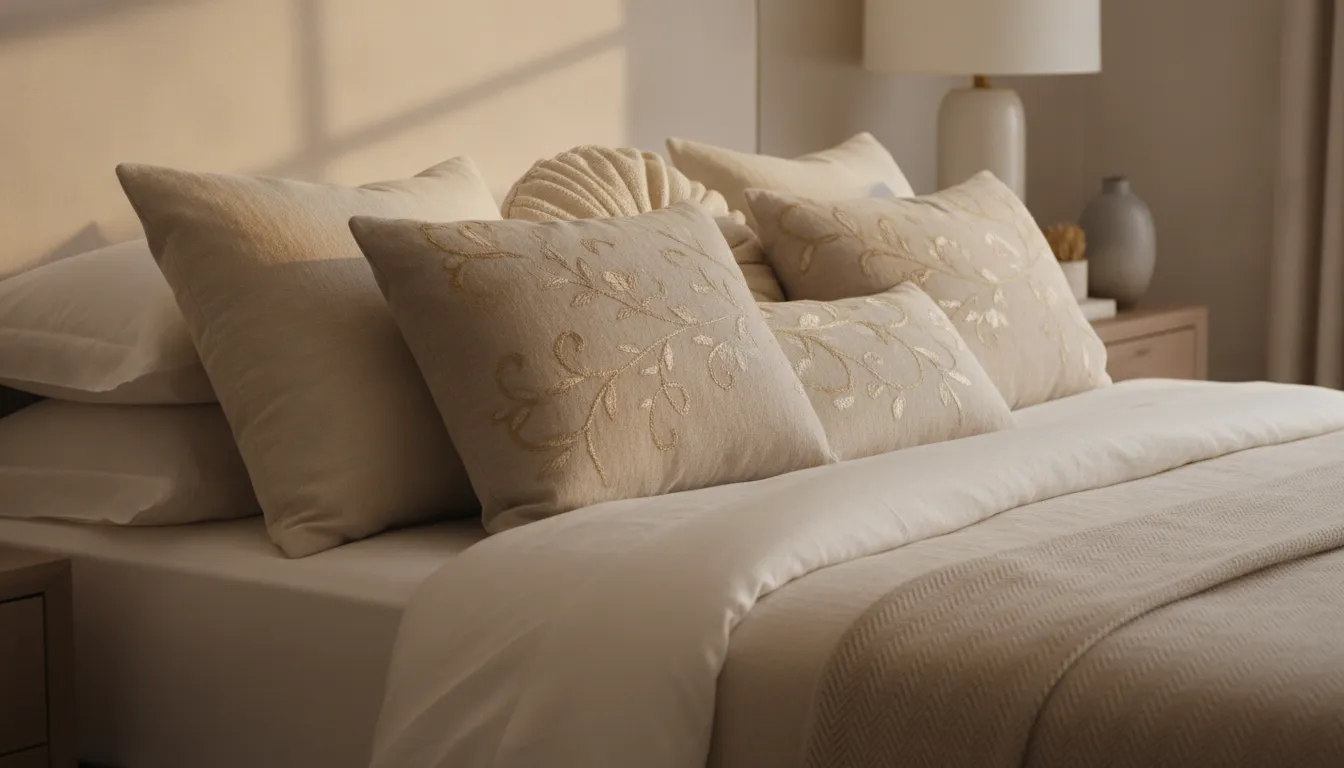
How to style ivory bedding within the whole room
Style ivory bedding as part of the room's complete material palette rather than as an isolated focal point. Use layered lighting to reveal texture, frame the bed with complementary drapery and furniture, and repeat ivory's warmth in small, deliberate details. A contrasting throw can connect the bed to surrounding accents.
Choose lighting that reveals texture
Layer ambient, task, and accent lighting so the room remains inviting throughout the day. Bedside lamps cast light across shams and coverlets, revealing dimensional stitching and the changing surface of velvet. An overhead fixture can establish drama, while a small picture light or wall sconce adds intimacy.
Consider lamp shade material and bulb warmth alongside the bedding. Warm illumination tends to emphasize ivory's creamy character, while cooler light can make it appear closer to white. Test the room in both daylight and evening conditions before finalizing nearby paint or accent colors.
Frame the bed with drapery and furniture
Drapery panels can extend the softness of ivory and create a gracious vertical frame around the bed. They do not need to match the linens exactly. A related neutral, subtle woven pattern, or contrast border often looks more collected. Upholstered benches and occasional chairs provide another opportunity to repeat a bedding texture or introduce a grounding shade.
Keep the most ornate details concentrated. If the bedding features elaborate embroidery or decorative pillows, select simpler drapery and furniture silhouettes. If the bed is tailored and quiet, a dramatic panel or sculptural nightstand can carry more of the room's personality.
Complete the composition with a tactile throw
A throw bridges the bed and the rest of the room. Its weave can relate to a rug, its color can echo artwork, or its finish can complement an upholstered chair. Fold it precisely for a tailored mood or drape it loosely across one corner for a relaxed, residential feel.
To add a final layer with color, softness, or sheen, shop luxury throws and choose a piece that contrasts with the primary coverlet. Lili Alessandra designs make it possible to complete the look with an expressive accent while preserving the refined ivory foundation.
Shop Luxury Throws for the Final Layer
How to keep ivory bedding looking beautiful
Keep ivory bedding beautiful by following the care label for every individual textile, addressing marks promptly, and storing clean pieces in a cool, dry, breathable space. Protect decorative layers during daily use and rotate suitable pieces for even wear. Never apply one care method to cotton, linen, embroidery, and silk velvet alike.
Follow each textile's care instructions
Review labels before washing, spot treating, steaming, or sending an item for professional cleaning. Water temperature, agitation, detergent, and drying method can all affect color, finish, and dimensional details. Hand-finished or embellished pieces may require especially gentle handling, while some washable basics can support a more straightforward routine.
Keep labels or product-care notes together so instructions remain easy to reference. When in doubt, choose the least aggressive method and consult an appropriate professional rather than experimenting on a valuable textile.
Protect light-colored layers from everyday marks
Address a spill or mark promptly according to the care instructions, working gently rather than rubbing it deeper into the fibers. Avoid applying an unapproved treatment simply because the textile is light colored. Strong products can alter the ivory tone or affect embroidery, sheen, and softness.
A washable flat sheet or duvet insert cover can help protect more decorative layers during daily use. Rotate pillows and periodically change the direction of a coverlet where practical so that wear remains even. These simple habits support a polished appearance without making the bedroom feel untouchable.
Store seasonal bedding with care
Clean and fully dry every piece before storing it. Fold bedding loosely enough to avoid severe creases, and place it in a breathable storage solution in a cool, dry location away from direct sunlight. Avoid compressing dimensional textiles or stacking heavy items on embroidery, beads, or plush velvet.
When returning a stored piece to the room, allow it time to air and relax before styling it. A gentle reset restores the loft and drape that make layered bedding feel luxurious. With considered maintenance, an ivory collection can remain an elegant and adaptable foundation through many room updates.
Frequently asked questions about ivory bedding
Is ivory bedding warmer than white bedding?
Visually, yes. Ivory has creamy undertones that feel softer and warmer than bright white, although actual warmth depends on the fabric, fill, and number of layers. Use a duvet and throw to adjust physical warmth while keeping the same refined palette.
What colors pair best with ivory bedding?
Ivory pairs beautifully with champagne, taupe, sand, soft gold, muted blush, sage, deep olive, charcoal, and chocolate brown. Match the undertones and vary texture to keep the palette refined. For a sophisticated tonal reference, view the Vendome Ivory bedding collection. A restrained accent repeated elsewhere in the room will make the design feel intentional.
How do you keep an ivory bed from looking flat?
Layer contrasting textures and scales, such as smooth sheets, a dimensional coverlet, a relaxed duvet, velvet decorative pillows, and a casually draped throw. Tonal embroidery and subtle sheen also add depth. The strongest compositions balance matte and lustrous finishes rather than relying on color alone.
Can ivory bedding work in a modern bedroom?
Yes. For a modern look, use tailored silhouettes, a restrained pillow arrangement, graphic quilting, and accents in charcoal, bronze, or dark wood. Ivory softens the clean lines without making the room feel traditional. Keep decorative details focused and let proportion create the impact.
How should you care for ivory luxury bedding?
Follow the care label for each piece, address marks promptly, avoid harsh treatments unless specifically permitted, and store clean bedding in a cool, dry, breathable space away from direct sunlight. Separate pieces by their material and embellishment needs rather than washing every ivory item together.
Ivory bedding is enduring because it makes room for both serenity and self-expression. Begin with a beautifully textured foundation, layer with disciplined abundance, and choose every final accent for its craft and character. The result is not simply a neutral bed, but a personal luxury retreat with depth, warmth, and lasting elegance.


