





Luxury Duvet Cover for Hot Sleepers: Fit & Breathability
Choosing a luxury duvet cover for hot sleepers is less about chasing a single promise such as cooling and more about balancing fiber, weave, weight, fit, and the rest of the bed. The right cover can keep the bedroom feeling polished while allowing you to build a lighter, more breathable sleep environment.
For warm sleepers, begin with the cover's actual material and construction. Then consider the insert, the finished dimensions, and the layers you want to keep on the bed. This approach lets the design remain opulent without making the duvet the heaviest or most insulating element in the room.
A breathable duvet cover for hot sleepers should use a suitable lightweight or open-feeling textile, fit the insert closely, and work with a lower-bulk sleep system. Linen, percale, selected bamboo viscose, and lyocell can be worth considering, but the product specification and care instructions should guide the final choice.
Shop luxury bedding for a more breathable, beautifully layered bedroom
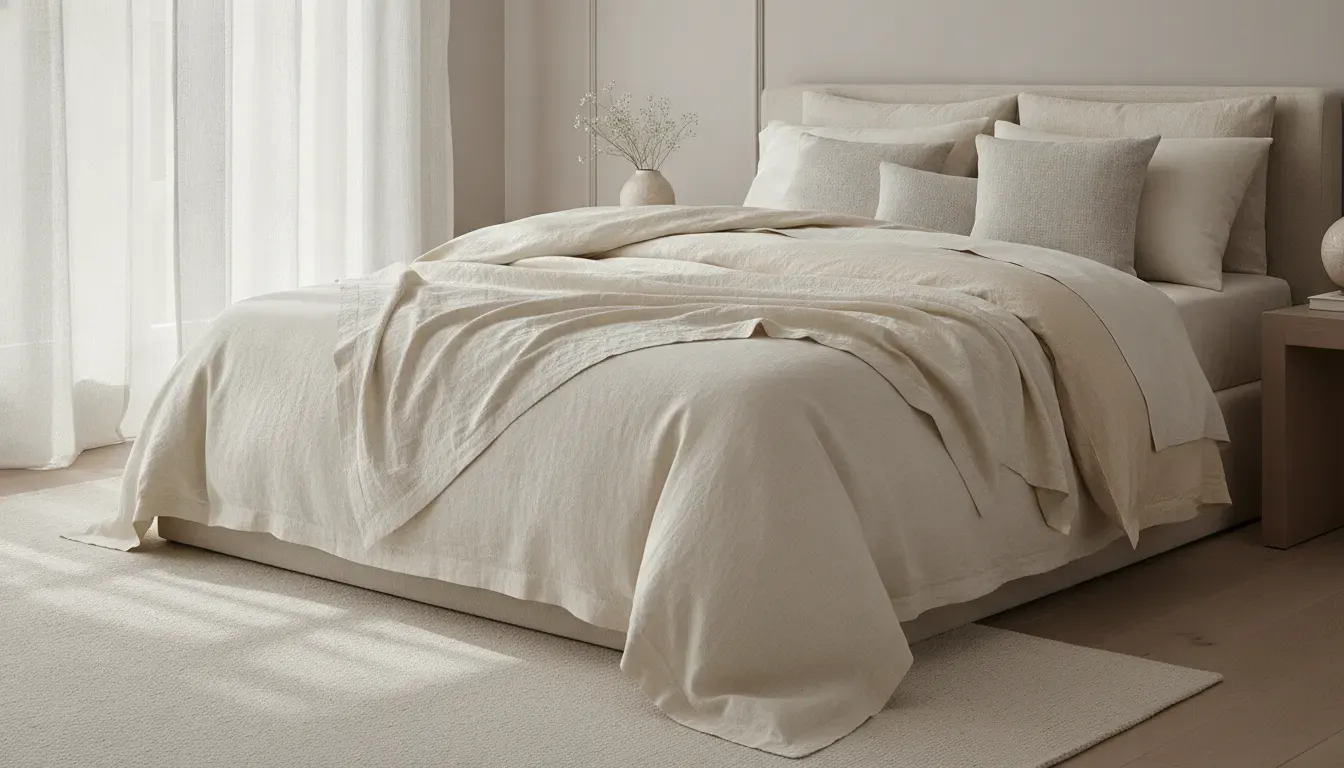
How to choose a luxury duvet cover for hot sleepers
Breathability comes from how a textile handles air, moisture, weight, and surface contact. A cover cannot control every part of sleep temperature, but a lighter construction can avoid adding unnecessary bulk around the body.
Start with the fiber, but do not stop at the fiber name. The weave, finish, quilting, lining, trim, and overall weight all influence the way a duvet cover feels. A smooth sateen may create a refined, fluid surface. Linen may bring a more visibly textured and relaxed hand. A quilted or embellished cover can introduce dimension, yet additional layers may change the way the bed feels at night.
Fit is equally important. A cover that is too small can compress the insert and create uneven fill. One that is too large can leave excess fabric around the edges and make the insert shift. Neither result creates the controlled silhouette expected from luxury bedding.
It also helps to separate the cover from the insert. The cover is the decorative and washable outer layer. The insert contributes much of the bed's warmth and loft. Lili Alessandra product information states that duvet covers do not include inserts, while oversized inserts are sold separately. That distinction gives warm sleepers more control over the complete bedding system.
Which materials work well for warm sleepers?
The best material depends on your preferred hand feel, the room's climate, the insert you use, and the care routine you can maintain. Compare fiber, weave, weight, finish, and care instructions instead of treating one material as universally cool.
| Material direction | Why it may suit warm sleepers | What to check before buying |
|---|---|---|
| Linen or European flax | Textured, relaxed, and often associated with an airy visual character | Fiber content, finishing, weight, shrinkage guidance, and care requirements |
| Cotton percale | Crisp and breathable-feeling, with a tailored surface that works well in a refined bedroom | Weave description, fabric weight, laundering instructions, and the exact product specification |
| Cotton sateen | Smooth and polished, useful when you want a more luminous finish without relying on heavy embellishment | Construction, weight, finish, and whether the cover includes lining or additional quilting |
| Bamboo viscose | Silky and fluid in hand, with a soft drape that can support a lighter-looking bed | Fiber labeling, blend details, responsible care guidance, and the actual product composition |
| Lyocell or Tencel | Smooth and moisture-conscious in feel, making it a useful comparison point for warm sleepers | Whether the material is used in the cover, the sheets, or another layer, plus care instructions |
| Silk or silk blend | Lustrous and exceptionally tactile when an opulent, fluid finish is the priority | Blend percentage, lining, closures, snag resistance, and professional or specialized care needs |
These categories are starting points rather than guarantees. For example, a dense construction in a nominally breathable fiber can feel very different from a lighter construction. A cover with substantial quilting, velvet panels, or decorative trim may be visually spectacular but warmer or heavier than a simple shell.
Use the bed sheets collection to think about the foundation layer separately from the duvet cover. Lili Alessandra's verified bed-sheet collection includes cotton percale options in multiple thread counts, so compare the sheet specification with the outer cover rather than evaluating the bed by one layer alone.
How should you choose lightweight construction?
For a lighter sleep setup, look for a cover with a simple shell, restrained trim, and a closure that does not add unnecessary bulk. The goal is a graceful drape with enough structure to keep the insert aligned.
Examine the listing for construction details before you focus on color. Consider these questions:
- Is the cover lined, quilted, or backed with another textile?
- Does the surface include dense embroidery, raised appliqué, or substantial trim?
- Are interior ties or another closure system specified?
- Do the finished dimensions suit the insert you already own?
- Are the care requirements realistic for how often you want to refresh the cover?
Decorative detail is central to Lili Alessandra's point of view, so lightweight does not have to mean plain. A refined flange, a controlled border, subtle texture, or a quiet tonal contrast can create presence without covering the entire bed in multiple heavy layers. Browse the bedding collection and compare the visual density of each design with the climate and sleep preferences of the room.
How do you get the duvet cover fit right?
Measure the cover and insert by finished length and width, then compare those measurements directly. Do not rely on the size label alone, because queen and king dimensions can vary between makers and designs.
First, measure the insert you plan to use. Record the length, width, and approximate loft. Then read the duvet cover listing carefully. Confirm whether the dimensions describe the cover, the insert, or a set that includes shams. For a made-to-order or unusually proportioned design, ask for the finished measurements before ordering.
A close match should distribute the insert evenly across the shell. An oversized insert can create a fuller silhouette, but it should not force the cover's seams or closure. If the cover is too generous for the insert, corners may collapse and the bed can look less tailored. If it is too restrictive, the fill can bunch or create tension at the closure.
Lili Alessandra's 120x98 duvet cover fit guide is useful when you are evaluating an oversized dimension. For the separate insert decision, review the duvet insert guide before finalizing the cover.
For a product-level reference, review the measurements and inclusion notes on the Alessandra queen duvet listing. The important practice is not to copy one dimension across every purchase. Match the cover, insert, mattress, and desired drop for the specific bed.
How does the insert affect a hot sleeper?
A breathable cover will not compensate for an overly warm insert. Warm sleepers should evaluate the cover and insert as one system, choosing the lowest practical level of loft and insulation for the room.
The insert affects the bed's loft, weight, and warmth more than the cover alone. If your room is already warm, a lofty winter insert may make the bed feel too insulating even when the outer shell is lightweight. A lighter or lower-bulk insert can leave more room for the cover's texture and styling to do the visual work.
Lili Alessandra uses Down Alternative inserts rather than down feathers in its guidance because the fill is hypoallergenic, cleaner, and better suited to people with allergies. The brand also notes that its inserts are larger than the duvets so they do not shift. Review the current insert guidance and the exact product details before treating any general rule as a purchase decision.
For hot sleepers, the practical sequence is simple: choose the cover's hand feel, select an insert appropriate to the room, then decide whether a coverlet or throw belongs on the finished bed. Avoid assuming that more loft automatically creates a more luxurious result. A well-proportioned, breathable-looking bed can feel far more considered.
How can you style a breathable luxury duvet cover?
Keep the duvet cover as the main textile statement, then use sheets, a coverlet, pillows, and a throw in deliberate amounts. This creates visual richness without requiring every layer to be thick or heavily insulated.
- Begin with the sheet foundation. Choose a calm, smooth or textured sheet that supports the cover's material. The bed sheets collection offers a starting point for comparing the foundation layer.
- Add structure selectively. A coverlet folded at the foot of the bed can define the composition when the duvet is pulled back. Consider the coverlets collection or the Urban Bamboo Champagne coverlet as examples of a distinct finishing layer.
- Use pillows to frame the cover. A restrained grouping of shams and decorative pillows can add dimension without requiring a heavy blanket across the sleeper. Keep the palette tonal when the duvet has texture or embellishment.
- Place the throw with intention. A lightweight throw at the foot or over one corner can introduce contrast. It should be a visual accent rather than a required sleeping layer.
Silk velvet can bring depth and a polished finish, while a textured coverlet can make a lighter duvet feel more complete. The Enzo Ivory King Coverlet shows how a pale, dimensional layer can support a calm palette. For a broader styling framework, read how to style a luxury duvet, then narrow the final layers to what the sleeper will actually use.
The most successful warm-weather composition may be a crisp sheet, a breathable cover, one structured folded layer, and a carefully edited pillow arrangement. That is still a luxury bed. Luxury is expressed through proportion, material quality, and finishing detail, not through maximum quantity.
How should you care for a breathable duvet cover?
Follow the exact care label for the cover, especially when it includes silk, velvet, embroidery, lining, or specialty trim. Gentle, consistent care protects both the hand feel and the finished silhouette.
Before buying, confirm whether the cover is machine washable, requires a gentle cycle, or should be professionally cleaned. Do not transfer the care method from one fiber to another. Even two covers that look similar can have different finishes, closures, or embellishments.
Remove the cover carefully so the closure and interior ties are not strained. Wash or clean it at the interval appropriate for your use, then dry it according to the product instructions. Overheating, aggressive agitation, or crowded drying can change the texture and dimensions of some fabrics.
For broader bedding care, consult Lili Alessandra's bed sheet care guide. It is also useful to compare the care guidance for warm-sleeping sheets in the bamboo sheets guide for hot sleepers and the Tencel sheets guide. These articles address adjacent layers, not a substitute for the cover's own instructions.
What should you check before ordering?
The right purchase combines a verified material description, suitable weight, accurate dimensions, compatible insert, realistic care routine, and a design that supports the room.
- Confirm the exact fiber, blend, weave, finish, and lining information.
- Compare the cover's finished dimensions with the insert, not just the bed size.
- Check whether the insert is included or sold separately.
- Review closures, interior ties, quilting, trim, and care requirements.
- Decide which layers will remain on the bed during the warmest nights.
- Use product pages as the authority for current availability and specifications.
A good starting point is the Lili Alessandra bedding collection, where the visual language ranges from refined elegance to more expressive, fashion-forward design. If the bedroom needs an unusual proportion or a coordinated custom finish, explore Custom Made-to-Order Items and confirm the construction details before ordering.
Temperature is also influenced by the wider sleep environment. A peer-reviewed review of thermal environment and sleep notes that room conditions can affect sleep and circadian rhythm, so bedding is only one part of a comfortable setup. Read the research review from the National Library of Medicine's PMC archive for context, then consider ventilation, room temperature, and your insert together.
Connect with a Lili Alessandra Design Advisor
Frequently Asked Questions
What is the best duvet cover for hot sleepers?
There is no universal best cover. Look for a material and construction that feel light to you, confirm the finished dimensions, and pair the cover with an insert suited to the room. Linen, cotton percale, selected bamboo viscose, and lyocell are useful comparison directions, but the exact product specification matters most.
Is linen always cooler than cotton?
Not necessarily. The weave, finish, weight, and construction can change how a cover feels. Compare the complete product specification and your preferred hand feel rather than assuming that one fiber will always perform the same way.
Does a duvet cover keep you cooler than a comforter?
Not by definition. A duvet cover is an outer shell, while a comforter typically combines a shell and fill. The warmth of the complete bed depends on the shell, insert or fill, loft, construction, and surrounding layers.
Should hot sleepers use a duvet insert?
Many warm sleepers still use an insert, but the appropriate level of loft and insulation depends on the room and personal preference. Choose a cover and insert as a system, and avoid assuming that a taller or heavier insert is automatically better.
How do I stop a duvet insert from shifting?
Start with a close size match and use the interior ties or closure system when the product provides them. Lili Alessandra also notes that its duvet inserts are larger than the duvets so they do not shift. Check the specific product instructions before ordering.
Can a breathable duvet cover still look luxurious?
Yes. Luxury can come from the material, proportion, finishing, color, and craftsmanship. A simple breathable shell can feel elevated when it is paired with refined sheets, a structured coverlet, and carefully edited pillows.
With the right material research and fit check, warm sleepers do not have to choose between comfort and an expressive bedroom. Build the bed around a breathable foundation, keep the insert proportionate to the room, and let Lili Alessandra's decorative details create the final sense of refinement.


