





Luxury European Duvet Covers: Materials and Style
Luxury European duvet covers bring together the qualities that make a bedroom feel considered: beautiful material, precise fit, and a finish that supports the whole room. The phrase can describe European flax or linen, European-inspired design, or simply a level of textile refinement. The best choice depends on the hand feel, visual mood, insert size, and layering plan you want to create.
Quick answer: Choose a luxury European duvet cover by verifying its fiber and finish first, then checking the cover dimensions against your insert. Look for a closure that keeps the insert aligned, a fabric weight suited to your climate, and a color or pattern that gives your bedroom a clear design direction.
View the Lili Alessandra Bedding Collection
What makes a duvet cover feel European and luxurious?
A European-inspired duvet cover feels luxurious when the textile, construction, and styling work together. It may feature the relaxed texture of linen, the smooth finish of sateen, or the depth of velvet. The important point is not a label alone. It is the quality of the material information, the care behind the finish, and the way the cover performs on the bed.
European style is also broader than one fabric. It can mean a refined balance of texture, proportion, and restraint. A quiet neutral cover can feel as elevated as a patterned design when it has an intentional drape and polished finishing details.
- Material clarity: The product description should identify the primary fiber or blend.
- Textile character: The surface should suit the room, whether that means airy texture, smooth luster, or plush depth.
- Construction: Closures, seams, corner details, and proportions should support a neat fit.
- Design discipline: The cover should coordinate with sheets, shams, coverlets, and decorative pillows.
For a broader view of how designers evaluate duvet-cover materials and layering, explore this guide to designer duvet covers. This article focuses more narrowly on the European material, fit, and styling decisions that shape the finished bed.
Which materials work best for a luxury European duvet cover?
The best material depends on the atmosphere you want and the care routine you will maintain. Linen brings an airy, softly textured look. Cotton sateen offers a smoother, more polished surface. Velvet creates depth and drama. Silk can add luminous softness, but it requires more deliberate care. Compare the material's touch, drape, warmth, and visual role before choosing.
| Material direction | Visual character | Best styling role | Check before buying |
|---|---|---|---|
| European flax or linen | Airy, relaxed, and softly textured | Quietly elegant rooms with natural dimension | Fiber content, finish, weight, and care instructions |
| Cotton sateen | Smooth, refined, and gently lustrous | Tailored bedrooms with a polished foundation | Weave description, feel, and laundering requirements |
| Velvet | Rich, dimensional, and light-catching | Decorative rooms that need depth or contrast | Nap direction, color shift, and professional care guidance |
| Silk or silk blend | Luminous, fluid, and exceptionally tactile | Opulent accents and sophisticated focal layers | Fiber blend, handling instructions, and cover construction |
Material names should guide your questions, not replace them. European flax can be casual or tailored depending on the weave and finish. Cotton can feel crisp or smooth. Velvet can read modern or traditional based on color and quilting. When a product page gives specific fiber and care information, use that information as the final authority.
Lili Alessandra's collections are built around a mix of classic and modern textiles. Browse the bed sheets collection to consider how the feel of your foundation layers will complement the duvet cover.
How should a luxury duvet cover fit the insert?
A luxury duvet cover should hold the insert securely without creating excessive bunching or an empty-looking shell. Begin with the finished dimensions of both pieces. Do not rely on the size name alone, because measurements can vary between brands and product styles. A well-matched cover gives the bed a fuller, more controlled silhouette.
Measure the insert and cover together
Record the insert's length and width, then compare those measurements with the duvet cover listing. Check whether the listed dimensions refer to the cover itself or a set that includes shams. If the insert is intentionally oversized, confirm that the cover is designed to accommodate that proportion. The goal is an even fill from the center to each corner.
Check the closure and interior details
Button closures, ties, snaps, and concealed zippers each create a different experience. A closure should be secure without making the end of the cover stiff or visually distracting. Interior ties can help keep an insert aligned. If the listing does not mention ties or a specific closure, do not assume that feature is present.
Remember that the insert is a separate layer
Lili Alessandra product information notes that duvet covers do not include inserts, while oversized duvet inserts are sold separately. This distinction matters when planning the finished look. For guidance on that separate decision, read the duvet insert guide. You can also compare the roles of the cover and insert in this comforter versus duvet layering guide.
What details signal refined duvet-cover construction?
Construction details are easy to overlook when a pattern or color first catches your eye. They are also what determines whether the cover looks composed after it has been filled and styled. Look for even seams, balanced proportions, a closure that suits the fabric, and a finish that supports the cover's intended drape.
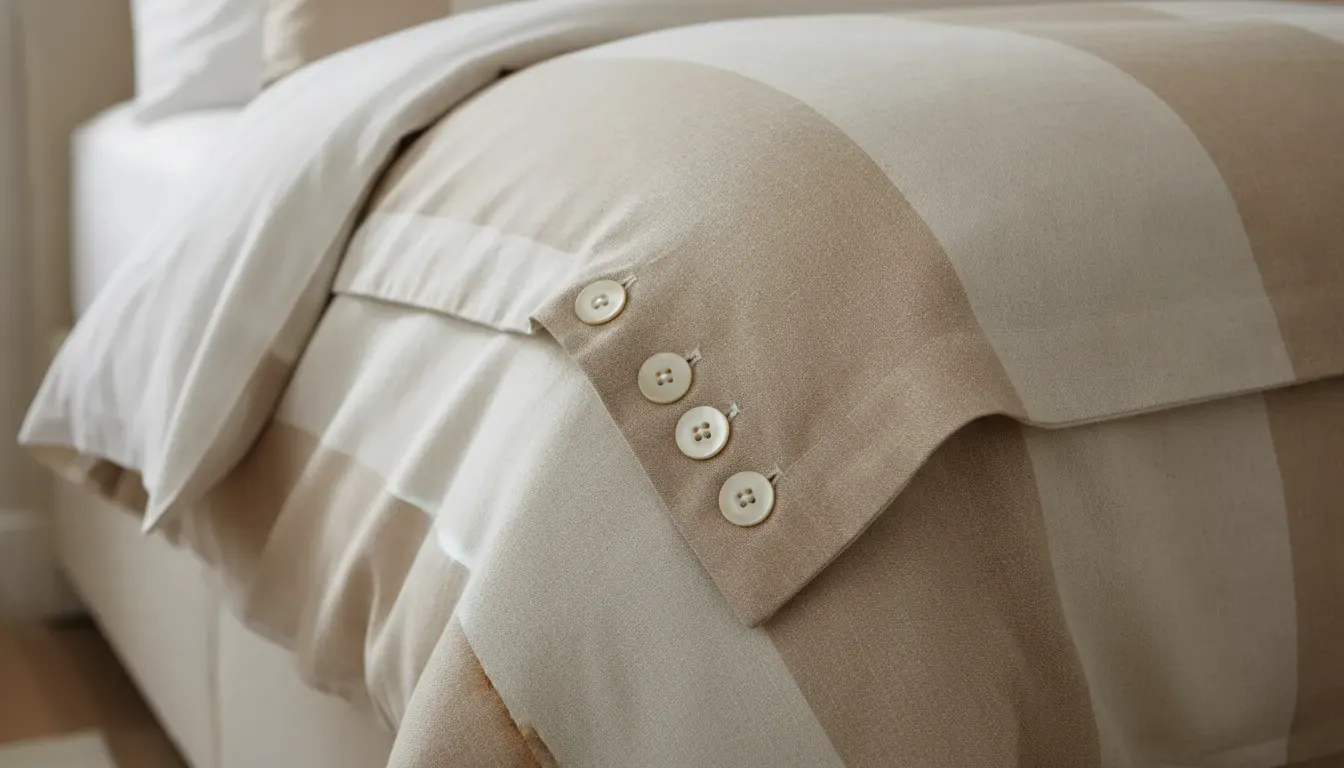
Consider these details when reviewing a product page or speaking with a design advisor:
- Edge finish: A flange, flange-like border, piping, or clean turned edge changes the visual weight of the cover.
- Closure placement: The opening should make the insert manageable while keeping the finished end neat.
- Pattern scale: A large motif needs enough surface area to read clearly without competing with every other layer.
- Surface consistency: Texture should feel intentional across the visible face and folded edge.
- Proportion: The cover should look generous enough for the bed, without swallowing the architectural lines of the room.
A refined duvet cover does not need to be ornate. In a luxury bedroom, quality can show through a restrained palette, a distinctive weave, or a carefully considered border. The most successful piece is the one that makes the bed look complete without making every layer compete for attention.
How do you style European duvet covers in a polished bedroom?
Start with the duvet cover as the room's largest textile statement, then add contrast through scale and texture. Pair a quieter cover with dimensional pillows and a tactile throw. If the cover has a strong pattern, keep the supporting layers more edited. This creates visual hierarchy and lets the European-inspired material remain the center of the composition.
Build from a calm foundation
Begin with fitted and flat sheets that support the cover's temperature and surface. Smooth cotton sateen can sharpen a textured linen look. Bamboo can add a softer, fluid counterpoint. If you are styling for a warmer room, consider breathable sheet materials and a lighter visual palette. The bamboo sheets guide for warm sleepers offers a useful comparison point.
For another material perspective, read Tencel versus Egyptian cotton sheets. The goal is not to make every layer identical. It is to make the differences feel deliberate.
Use a coverlet to add structure
A coverlet can frame the lower portion of the bed and give the duvet cover a more finished edge. Fold it across the foot of the bed, or let it provide a slim foundation beneath the duvet. Explore the Lili Alessandra coverlets collection for decorative layering options. You can also learn more in What Is a Coverlet? and the queen quilts and coverlets guide.
Finish with pillows and a throw
Use pillow groupings to repeat one color from the duvet cover without copying its entire pattern. A pair of tailored shams can establish symmetry, while one or two decorative pillows introduce shape. Browse the decorative pillows collection, then review the pillow shams styling guide for proportion ideas.
Velvet is especially effective when a linen or cotton duvet cover needs a richer note. Use the velvet accent pillow styling guide and luxury velvet throw pillow guide for ways to add depth without covering the main textile. A final throw can soften the foot of the bed. See the Lili Alessandra throws collection for additional texture and color.
How can you choose the right color and pattern?
Choose color by considering the room's permanent elements first: flooring, wall color, upholstery, wood tone, and lighting. A luxury European duvet cover can be the quiet link between those elements or the one expressive layer that gives the room its personality. Either approach works when the palette is edited and the pattern scale is intentional.
- For a serene room: Choose ivory, stone, pale blue, or another softened neutral, then vary texture instead of adding more color.
- For a tailored room: Use a restrained stripe, border, or tonal pattern with crisp supporting layers.
- For a romantic room: Pair a softly colored cover with curved pillows, subtle sheen, and a tactile accent.
- For a dramatic room: Let velvet, deep color, or a larger motif lead, then keep the sheets and coverlet composed.
Before buying, place the proposed color beside a photo of the room. Screens can shift the appearance of textiles, especially fabrics with sheen or a directional nap. If the choice is part of a broader bedroom project, a design advisor can help you compare the cover with the other layers before you commit.
How should you care for a luxury European duvet cover?
Care begins with the exact fiber and finish, not with a generic luxury-linen routine. Read the product's care label before washing, drying, steaming, or spot treating. Some fabrics are suited to regular laundering, while embellished, velvet, or delicate constructions may require a gentler approach. Preserve the cover by following the maker's instructions and avoiding unnecessary heat.
- Remove the insert before cleaning the cover.
- Close buttons, zippers, or ties according to the product instructions.
- Wash with like colors and use the recommended cycle and water temperature.
- Do not assume a decorative finish is machine washable.
- Dry and store the cover completely clean and dry.
- Fold along natural seams to reduce hard creases during storage.
For broader linen and bedding-care guidance, read how to wash luxury bed sheets. Care is part of the buying decision. A fabric that looks beautiful but does not fit your household routine may not be the right luxury choice for your bedroom.
Connect with a Lili Alessandra Design Advisor
Frequently Asked Questions
What size duvet cover should I buy?
Choose a duvet cover by comparing its finished measurements with the measurements of your insert. Do not rely only on labels such as queen or king. Confirm the cover dimensions, insert dimensions, and any intentional oversized fit before ordering.
Are European duvet covers always made from linen?
No. European duvet covers may use linen, cotton, velvet, silk, or a blend. The word European can describe fiber origin, design influence, or a brand's aesthetic. Read the full product description to verify the actual material.
What is the difference between a duvet cover and a duvet insert?
A duvet cover is the removable textile shell that creates the visible look of the bed. A duvet insert is the filled layer placed inside it for warmth and loft. Lili Alessandra duvet covers and inserts are separate pieces, so check both dimensions when building a set.
How do I keep a duvet insert from shifting?
Start with a cover and insert that are proportionally compatible. If the cover includes interior ties or another anchoring feature, use it as directed. A correctly sized insert also helps the cover maintain an even, polished silhouette.
Can a luxury duvet cover be the focal point of a bedroom?
Yes. Use the cover as the largest visual layer, then support it with quieter sheets, a structured coverlet, and a small number of decorative pillows. When the cover has a strong pattern or texture, restraint in the surrounding layers gives it room to lead.
How do I style a European duvet cover for a classic and modern room?
Pair the cover with clean proportions and tactile contrast. Smooth sheets can balance linen texture, a tailored coverlet can add structure, and velvet pillows can introduce depth. Keep the palette cohesive so the result feels collected rather than overly matched.
A luxury European duvet cover is ultimately a design decision as much as a bedding purchase. Choose the material for the way you want the room to feel, confirm the fit before ordering, and let the finishing layers express your personal style. With that foundation, the bed can feel both opulent and remarkably composed.


