





Buy Queen Size Matelasse Bedspread: A Luxury Layering Guide
A queen bed looks most considered when its finishing layer is chosen for the mattress beneath it, not simply the label on the package. Measure the mattress width, length, and depth, then decide how much side drop you want before comparing dimensions, texture, and drape.
To buy queen size matelasse bedspread with confidence, compare the piece's finished measurements and intended coverage with your bed. Then consider whether its dimensional woven texture should stand alone or balance softer layers. A bedspread and a coverlet can serve different styling roles, so the right choice depends on the silhouette and finish you want.
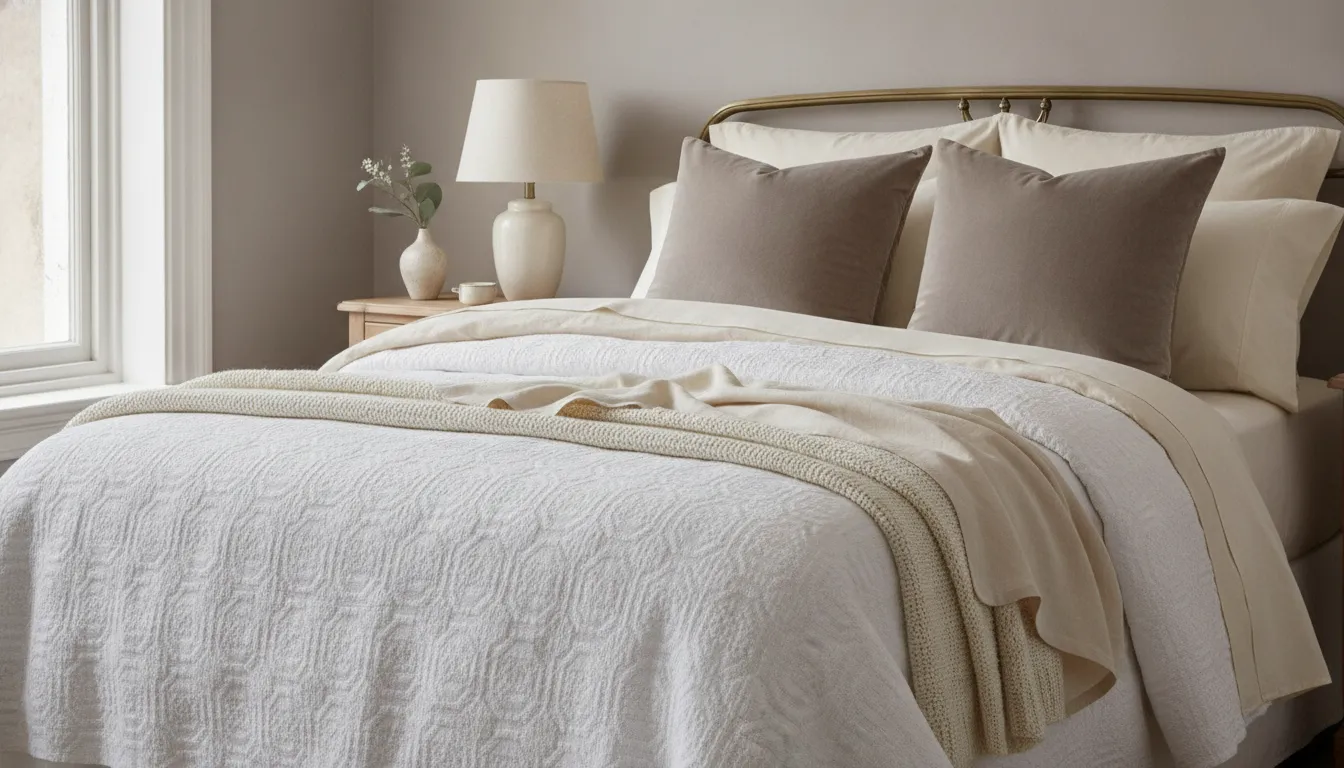
Shop refined queen matelasse layers
Lili Alessandra treats matelasse as a tactile, dimensional foundation for an elevated bedroom. The documented Caribbean Matelasse Coverlet, for example, measures 96 by 98 inches in queen and is made from 100% premium cotton matelasse in Portugal. Begin by looking closely at fit, construction, and the way the layer will work with your existing bedding.
What to Look For Before You Buy a Queen Size Matelasse Bedspread
Begin with the role you want the piece to play on the bed. A bedspread is often selected for a more generous, finished silhouette. While a coverlet is commonly used as a tailored top layer or as part of a composed bedding arrangement. Neither term is universally superior. The right choice depends on the coverage, drape, warmth, and overall proportion you want. For a broader terminology overview, see these coverlet versus bedspread differences, then bring the decision back to your queen bed and its specific dimensions.
Next, decide whether you want an independent finishing layer or a foundation for additional textiles. Lili Alessandra offers quilted coverlets and comfortlets as premium bedding foundations in multiple fabrics and patterns. A coverlet can sit over sheets, support a duvet, or be folded at the foot of the bed. If you are building a more elaborate arrangement, the brand's designer bed layering tips can help clarify how the top layer should relate to the rest of the room.
Look closely at texture and construction
Matelasse is chosen for its textured, dimensional sophistication. The woven surface adds visual depth without requiring a busy print, making it effective in both classic and modern rooms. When comparing pieces, consider how pronounced the relief feels, whether the pattern complements your existing upholstery, and how the surface will look when laid flat or folded.
Construction also affects the character of the layer. A matelasse piece may be evaluated as a single-layer woven textile, while a quilted coverlet typically has a top fabric, batting, and bottom fabric. That distinction can influence the perceived weight, warmth, texture, and care conversation. The guide to matelasse versus quilted coverlets offers useful construction context without replacing the product details for the piece you are considering.
Confirm the fit before ordering
Measure the mattress width, length, and depth, then decide how much side drop and end coverage you prefer. Also account for any mattress topper, duvet, or other layer that will remain beneath the bedspread or coverlet. Queen selection should consider proper bed measurement along with warmth, weight, style, and construction. Finally, confirm the listed product dimensions and material before purchase. A documented queen matelasse example measures 96 by 98 inches, but that should be treated as a product-specific dimension, not a universal standard for every queen bedspread.
How to Buy Queen Size Matelasse Bedspread for the Right Fit
The right size begins with your bed, not a generic chart. Before you buy queen size matelasse bedspread styles, measure the mattress itself and decide how much of the sides you want the finished layer to cover. A tailored, lightly dropped look calls for a different dimension than a more generous drape.
Measure the mattress before choosing a dimension
Start with the mattress width from one side edge to the other, then measure its length from head to foot. Next, measure the mattress depth from the top sleeping surface to the bottom edge. Include any substantial topper in that depth, since it changes where the textile will fall.
Finally, determine your desired side drop. This is the distance you want the bedspread or coverlet to extend down each side of the mattress. If you want the layer to reach farther toward the bed base, allow for a longer drop. If you plan to show a bed skirt or keep the silhouette crisp, a shorter drop may be more appropriate. The practical calculation is mattress width plus the desired drop on both sides. Check the finished width against the product dimensions before ordering.
Use product measurements as the final reference
Queen sizing is not a universal promise that every matelasse bedspread will measure the same. Construction, intended coverage, quilting or weaving, and the designer's preferred silhouette can all affect the listed dimensions. Lili Alessandra's queen sizing guidance recommends considering proper bed measurement alongside warmth, weight, style, and construction.
For a documented example, the Caribbean Matelasse Coverlet in queen is listed at 96 x 98 inches. That measurement belongs to this specific product, not to every queen bedspread. The Gigi Queen Matelasse Coverlet and the Caribbean Trench Coat queen coverlet are also documented at 96 x 98 inches, offering useful points of comparison while you confirm each product page.
When your measurements fall between options, consider the look you want rather than choosing by label alone. Review the listed width and length, compare them with your mattress depth and desired drop. And remember that a coverlet can be styled as a bed-top layer or folded accent. For a broader selection, explore the luxury coverlet collection.
Bedspread or Coverlet: Which Finish Suits Your Queen Bed?
For a queen bedroom, the right choice depends less on the label and more on the silhouette you want to create. A bedspread is typically chosen for broader coverage and a more enveloping drape. A coverlet is often selected as a tailored top layer that reveals more of the bed, surrounding upholstery, or decorative foundation. Both can look polished when their dimensions, texture, and role in the room are considered together.
Before you buy queen size matelasse bedspread styles, compare the practical differences below. The terminology is not always used consistently across collections, so read the product description and listed measurements rather than relying on the name alone. For a broader overview, see these coverlet versus bedspread differences.
| Consideration | Bedspread | Coverlet |
|---|---|---|
| Coverage | Usually selected when you want the textile to extend farther over the mattress and create a more complete, unified surface. | Often designed to cover the mattress area while leaving room for a tailored fold, visible bed skirt, or other finishing layer. |
| Drape | A longer drop can produce a relaxed, graceful fall along the sides and foot of the bed. | A shorter or more controlled drop gives the bed a crisp, architectural outline. |
| Construction | Construction varies by product. Confirm whether the piece is woven, quilted, or made with another layered structure. | Matelasse may be woven into a dimensional, tactile surface, while a quilt generally uses a top fabric, batting, and bottom fabric. See matelasse versus quilted coverlets for construction context. |
| Warmth | Can feel more substantial when the design provides greater coverage or a heavier construction, but warmth is product-specific. | Often works as a lighter decorative layer. Construction and fiber content determine how it feels, so check the individual listing. |
| Styling role | Creates a nearly complete bed statement, especially in a restrained palette or richly textured matelasse. | Functions beautifully as a foundation for sheets, a duvet, shams, and folded accents. Explore the coverlet collection for queen-ready options and product dimensions. |
For many queen rooms, a matelasse coverlet offers the most flexible finish: dimensional enough to stand alone, yet refined enough to support additional layers. Choose a bedspread when the desired effect is generous and enveloping. Choose a coverlet when you want proportion, texture, and the freedom to reveal or add layers around it.
How to Style a Queen Matelasse Layer
A queen matelasse layer can give the bed a tailored foundation while leaving room for softer, more expressive accents. Begin with smooth sheets, then place the matelasse coverlet over the bed as the principal top layer. Fold the upper edge down slightly to reveal the sheet and create a clean band of contrast. This arrangement lets dimensional texture carry the look without making the bed feel overly formal.
1. Create a refined tonal foundation
For a quiet, European-inspired composition, pair a pale sheet with a white, natural, or similarly restrained matelasse layer. Add coordinating shams behind the sleeping pillows, then introduce one subtle tonal variation through the duvet or folded coverlet edge. The result is polished rather than flat because the surface interest comes from the matelasse pattern and the difference between smooth and textured fabrics. Explore these designer matelasse bedding sets for ideas on coordinating the full arrangement.
2. Add a duvet for dimension
Use the matelasse piece as a structured base and layer a duvet across the lower two-thirds of the bed. A duvet in European linen, cotton sateen, or another restrained texture can bring gentle contrast without competing with the coverlet. Finish with layered shams and a small group of decorative pillows. When shopping, remember that a duvet cover does not include its insert. Oversized duvet inserts are separate, so confirm what is included before completing the set.
3. Contrast matelasse with velvet and linen
For a more fashion-forward bedroom, combine the dimensional surface of matelasse with the plush hand of velvet and the relaxed character of linen. Keep the larger layers within one related palette, then use velvet decorative pillows to provide depth at the headboard. A linen accent can soften the composition, while a neatly folded throw at the foot adds an intentional finishing gesture. These designer bed layering tips offer further guidance on balancing texture and proportion.
4. Use the coverlet as a folded accent
If you prefer a lighter visual effect, fold the matelasse coverlet lengthwise or across the lower third of the bed over a separate duvet. This approach keeps the sheet or duvet visible and gives the textured piece a distinct architectural role. Repeat one color or material in the shams or pillows to make the layers feel considered. For additional arrangements, see these ways to style a coverlet. Decorative pillows and throws often use handcrafted or upholstery fabrics, so check their individual care guidance rather than treating every layer like washable bedding.
Which Matelasse Color and Texture Belongs in Your Room?
Color establishes the mood of a queen bedroom, while texture determines how the bed reads from across the room and up close. Matelasse is especially effective when you want dimension without introducing a busy pattern. Its woven relief gives the surface a tactile, quietly sophisticated presence that can anchor both classic and modern interiors.
Choose a tonal foundation
White creates a crisp, light-filled foundation for a room with pale walls, polished finishes, or layered neutrals. It also gives decorative pillows and a folded throw room to make a considered statement. The documented white cotton queen matelasse coverlet offers one product-specific option for this approach.
Natural brings a warmer, softer direction. It suits bedrooms built around wood, woven materials, gentle stone tones, or other quiet neutrals. Rather than matching every element, let the natural shade bridge the bed with the room's surrounding finishes. The result feels collected and tailored, not overly coordinated.
Trench Coat offers another documented Caribbean Matelasse colorway, with a deeper, grounded character than White or Natural. Use it when the room benefits from visual weight, then balance the bed with lighter sheets or restrained accents. The Trench Coat queen matelasse coverlet is listed as a 96 x 98 inch queen piece, so confirm the product details before ordering.
Build contrast through touch
A refined palette does not have to be visually flat. Pair dimensional matelasse with the smoother hand of cotton sateen, the relaxed character of European linen, or the plush depth of velvet. The designer bedding collection provides a broader view of these coordinated textile possibilities. For a more focused look at the material, explore matelasse versus quilted coverlets.
If you are drawn to the Caribbean line, browse the Margaritaville bedding collection alongside the coverlet collection. Consider the room's existing light, wood, metal, and upholstery before choosing a color, then let the matelasse's dimensional surface provide the quiet finishing detail.
How Do You Care for a Matelasse Bedspread?
A dimensional matelasse layer rewards thoughtful care. The most important distinction is between general fiber guidance and the instructions for the specific piece in your home. Use this routine before cleaning a matelasse bedspread or coverlet, and keep the product page and label close at hand.
- Start with the care label. Read the complete label before choosing a wash or drying method. Care instructions are product-specific, and a cotton textile may have added finishes or construction details that affect how it should be cleaned. The same label-first approach is useful for every bedding textile, as explained in this bed linen care guide.
- Confirm the product instructions. The documented Caribbean Matelasse Coverlet is made from 100% premium cotton matelasse and is described as machine washable and naturally wrinkle-resistant. Those claims apply to that product. Do not transfer them automatically to every matelasse bedspread, quilted coverlet, or decorative textile.
- Follow the label rather than guessing. Cotton is generally compatible with detergent-based cleaning, but the care label should determine the approved process. It may specify washing and drying instructions without naming a particular detergent or temperature. Never add a hotter setting, special cleaner, or treatment simply because it worked for another cotton item.
- Account for cotton's behavior. Cotton can shrink and may wrinkle, even though the Caribbean Matelasse Coverlet is specifically described as naturally wrinkle-resistant. Use the labeled process and handle the piece carefully after cleaning to help preserve its tailored appearance and dimensional texture.
- Care for accents separately. Decorative pillows and throws are not interchangeable with a machine-washable matelasse coverlet. Most are not machine washable, may be spot cleaned, and use handcrafted or upholstery fabrics. Check each item's label before cleaning, and avoid placing these accents in the same routine unless their own instructions allow it.
With the label as your authority, care becomes a practical part of preserving the refined texture and finish that make matelasse such a distinctive bed layer. For additional guidance on building a coordinated room, explore European linen bedding, decorative pillow shams, and luxury velvet throw pillows.
Connect with a Lili Alessandra Design Advisor
Frequently Asked Questions
What dimensions should I look for in a queen matelasse bedspread?
Measure your mattress width, length, and depth, then consider how much side drop you want. Product dimensions are not universal. For example, the documented Caribbean Matelasse Coverlet in queen measures 96 by 98 inches, so confirm the exact dimensions and intended fit before ordering. View the product dimensions.
Is a matelasse bedspread the same as a coverlet?
Not always. Bedspread and coverlet can describe different coverage and styling roles, so compare the piece's drape, construction, and intended position on the bed. A matelasse coverlet is often selected as a refined top layer or folded accent, while the best choice depends on your desired silhouette and overall bedding arrangement.
What does matelasse mean in bedding?
Matelasse refers to a textile known for its dimensional, tactile surface. It brings visual depth without requiring a bold print. In the documented Caribbean collection, the queen coverlet is made from 100% premium cotton matelasse and made in Portugal. Explore matelasse and coverlet options.
How can I layer a queen matelasse coverlet?
Begin with smooth sheets, then add the matelasse as the tailored foundation or top layer. Fold a duvet at the foot for additional dimension, or introduce contrast through linen, velvet, bamboo viscose, shams, and decorative pillows. Check duvet details carefully, since duvet covers do not include inserts.
How should I care for a matelasse bedspread?
Always follow the care label for the specific textile. The documented Caribbean Matelasse Coverlet is described as naturally wrinkle-resistant and machine washable, but that guidance should not be generalized to every matelasse piece. Decorative pillows and throws may require spot cleaning instead of machine washing.
Ready to Shop a Refined Queen Bed Layer?
Once you have considered dimensions, texture, and the balance between a bedspread and a coverlet, the right layer can bring the room together with a more tailored finish. Explore the collection to compare matelasse textures and find a piece that suits your bedding ensemble.


