





Handcrafted Quilted Coverlet: A Designer's Guide
The most memorable beds are shaped by the relationship between texture, proportion, and carefully chosen finishing pieces. A handcrafted quilted coverlet brings that precision to the top layer, adding dimension without making the room feel overworked.
Shop handcrafted quilted coverlets
A handcrafted quilted coverlet is a lightweight bed covering defined by deliberate stitch work, considered materials, and artisan detail. Raised matelasse, decorative quilting, and hand embroidery can create tactile dimension. Used alone or layered over a duvet, it gives the bed a polished, designer-finished appearance.
For an investment-minded home, the appeal extends beyond appearance. Cotton matelasse, silk velvet, fine linen, and cotton sateen each contribute a different surface and mood. Thoughtful layering lets one distinctive textile work in both classic and modern interiors. The details begin with construction, then continue through material selection, placement, and care.
What Makes a Handcrafted Quilted Coverlet Distinctive?
A handcrafted quilted coverlet is distinctive because its visual character comes from intentional construction rather than a printed surface alone. Stitch placement, relief, embroidery, fabric choice, and finishing all influence how the piece feels in the hand and reads across the room.
A coverlet is a lightweight bed covering that can be quilted or non-quilted. Used alone, it gives the bed a clean, finished appearance. Layered with other bedding, it adds structure and visual depth without overwhelming the room. For a broader explanation of the category, read what a coverlet is and how it works within bedding layers.
Handcrafted bedding allows the design to retain a more personal quality. Stitch placement, embroidered accents, and the relationship between pattern and fabric all contribute to the final impression. The result feels considered rather than generic.
Handwork Creates Dimension and Character
The coverlet occupies a broad, visible area of the bed, so its surface can serve as either a quiet foundation or a statement layer. Decorative stitching gives the eye a reason to pause. Hand embroidery adds another level of artistry through line, movement, and small variations that reward closer inspection.
Refined texture does not need to be loud. A restrained tonal motif can soften a contemporary room, while a more expressive pattern can complement carved furniture, upholstered details, or collected decorative pillows. The strongest choice reflects the room's proportions and the level of visual quiet you want at the bed.
Construction Matters
Stitching has an aesthetic role and a construction role. It joins the textile's layers and helps define the intended surface. The exact performance depends on the fabric, filling, stitch pattern, and care instructions. Instead of assuming that every quilted piece behaves the same way, inspect its construction and follow the product-specific guidance.
Which Materials Bring the Design to Life?
The best material depends on the room's tactile balance. Cotton matelasse brings raised structure, silk velvet adds depth and a soft light response, linen introduces organic texture, and cotton sateen provides a smoother, more polished foundation.
Cotton matelasse creates a patterned, dimensional surface with a tailored presence. It can make the quilting itself part of the room's design language, especially when the palette is restrained. Lili Alessandra's Caribbean Matelasse Coverlets are described in the customer product context as premium cotton matelasse, with selected pieces made in Portugal and offered in neutral shades.
Silk velvet offers a different expression of luxury. Its surface catches and softens light as the room changes throughout the day. Velvet can provide a richer accent against smooth sheets or a more saturated note within a layered composition. Because specialty fabrics respond differently to moisture, friction, and cleaning products, the individual care instructions should guide ownership.
Fine linen has an organic visual character that can temper more ornate details. Its natural texture gives the bedroom relaxed sophistication. Cotton sateen offers a smoother handfeel and a more polished appearance. Pairing a structured quilted surface with a quieter base fabric often creates more depth than repeating one texture throughout the bed.
Consider the room as a conversation between surfaces. A sculptural matelasse can anchor the arrangement, fine linen can bring softness, and velvet can add a controlled note of plushness through a pillow or throw. Browse Lili Alessandra bedding collections to compare how fabric, color, and pattern work together.
How Do Stitch Patterns Shape Texture and Style?
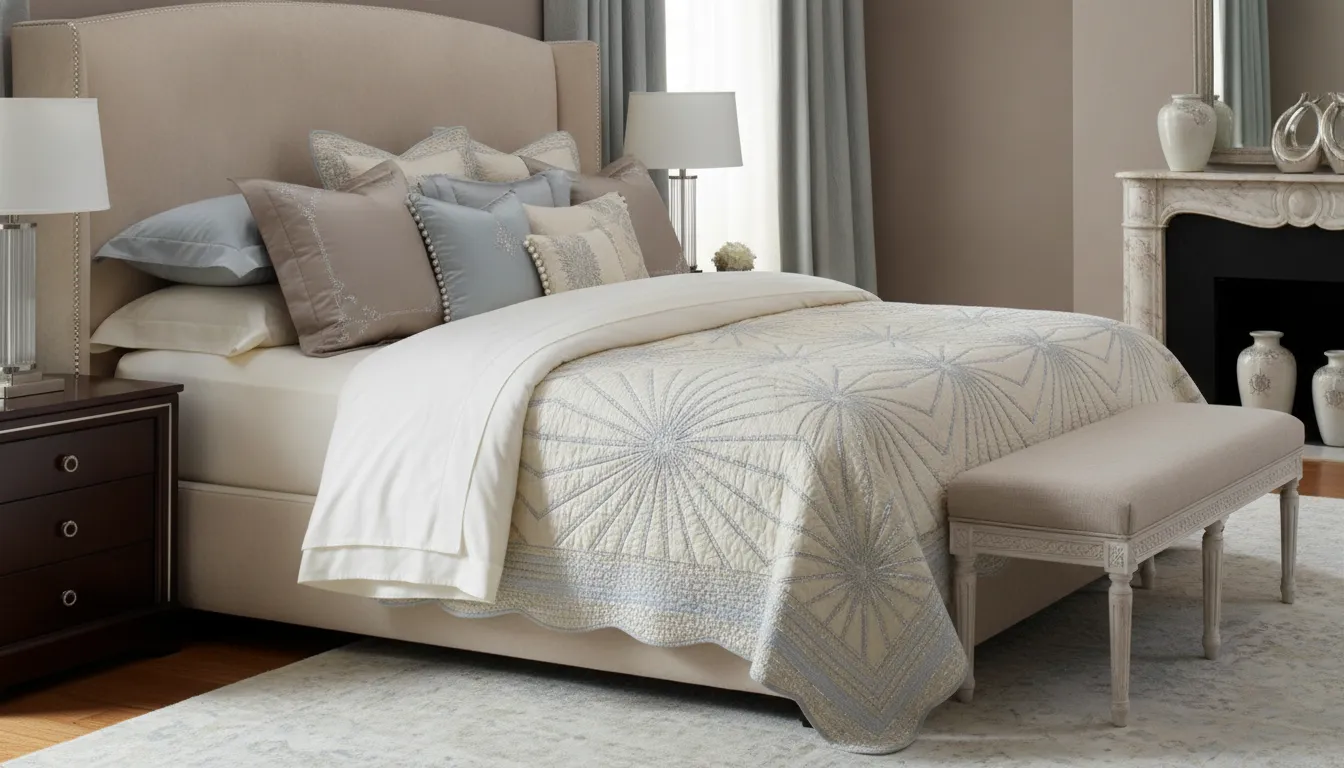
Stitch patterns shape a coverlet's texture by controlling relief, rhythm, and the way light moves across the surface. Broad motifs can feel architectural, small repeats can feel traditional, and hand embroidery can add expressive line work without covering the entire textile.
Consider scale as carefully as color. A broad motif can give a modern room a composed focal point. A smaller repeating pattern may feel more traditional and layered. Embroidery introduces movement because it can trace, accent, or frame the surface rather than define its entire structure.
| Approach | Visual effect | Best design setting | What to inspect |
|---|---|---|---|
| Raised matelasse | Patterned relief with pronounced depth. | Tailored rooms that need texture without a busy color story. | Clear motif, even relief, and an intentionally formed surface. |
| Decorative quilting | Rhythm and tactile structure from a considered stitched pattern. | Modern or transitional rooms where pattern can be a focal point. | Consistent stitches, aligned pattern, and an appropriate construction. |
| Hand embroidery | Distinctive line work with individual artisan character. | Collected, romantic, or design-led interiors. | Precision, clean transitions, and harmony with the fabric. |
| Tonal stitching | Subtle dimension within a restrained palette. | Serene, monochromatic, and softly layered bedrooms. | Visibility in changing light and appropriate motif scale. |
A raised matelasse surface, decorative quilting, and hand embroidery communicate different design intentions. None is automatically better. The right choice is the one that suits the architecture, existing furnishings, and amount of pattern you want to introduce.
How to Layer a Handcrafted Quilted Coverlet Like a Designer
Layer a handcrafted quilted coverlet by starting with smooth foundation linens and adding a duvet or insert when needed. Place the coverlet where its stitchwork remains visible, then finish with coordinated shams and edited decorative pillows.
A beautifully layered bed is composed, not crowded. Each textile should contribute a distinct surface, color, or sense of comfort. Use these five steps as a starting point, then adjust the proportions to suit the bed and the room.
- Begin with a quiet foundation. Dress the mattress with a fitted sheet and add a top sheet in fine linen or cotton sateen when appropriate. Keep the first color close to the room's palette so the coverlet can act as the visual anchor.
- Build comfort with the duvet or insert. Settle the duvet evenly before adding the coverlet. The insert creates softness and volume, while the coverlet brings structure. Let one surface lead instead of giving every layer equal visual weight.
- Choose the coverlet placement. Pull it over the bed for a tailored presentation, or fold it across the lower portion to reveal the duvet beneath. A fold at the foot creates a relaxed finish while keeping the stitchwork visible.
- Establish the sham arrangement. Place coordinating shams behind the sleeping pillows. Echo the coverlet's color or finish without repeating every detail. This creates height and frames the central textile.
- Finish with deliberate pillow contrast. Add decorative pillows in complementary shapes and textures. Velvet, cotton, and linen can create tactile depth when edited into a clear palette rather than accumulated without purpose.
Step back from the doorway before making final adjustments. Smooth visible surfaces and check that the coverlet connects the bedding to the room's wider design language. For additional ideas, explore quilted coverlet styling guidance and ways to arrange decorative pillow shams.
Can a Quilted Coverlet Work Across Seasons and Styles?
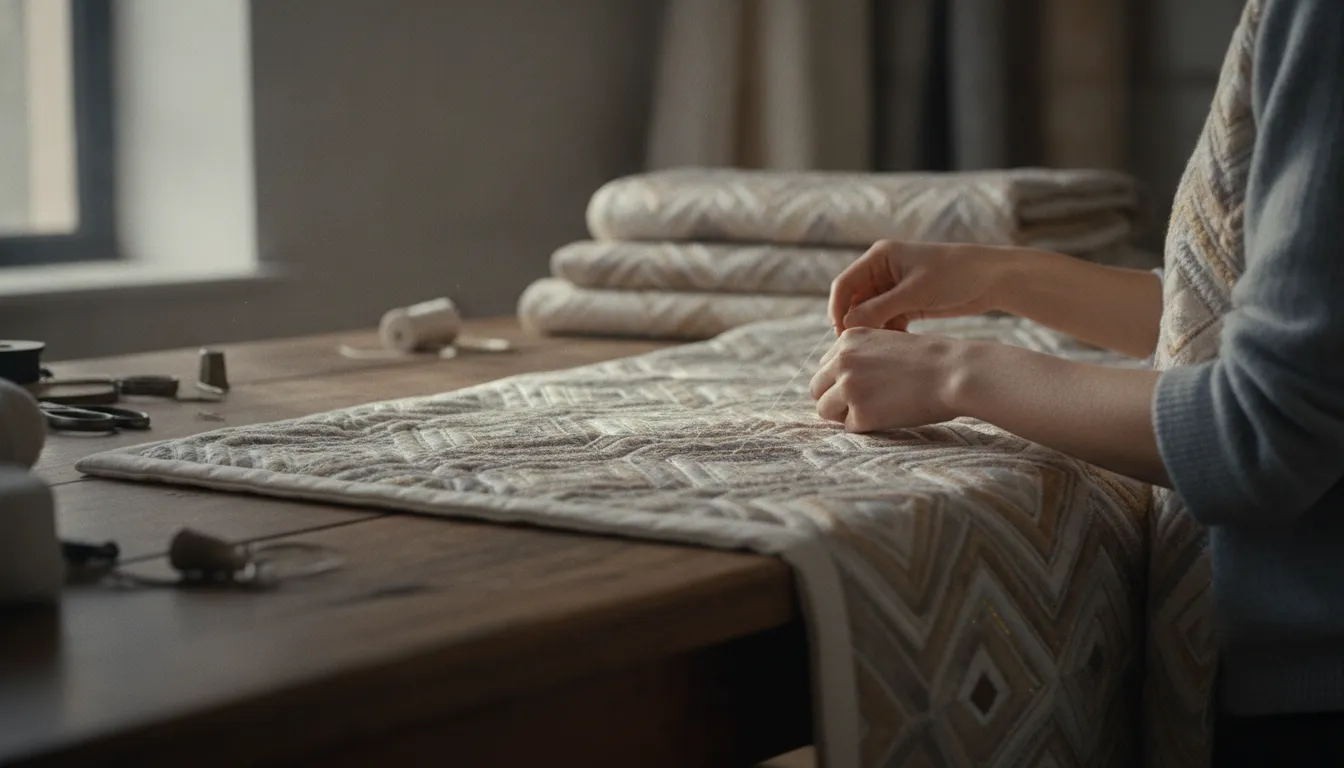
Yes. A quilted coverlet can serve as a principal decorative layer in warmer months and add visual depth over a duvet in cooler seasons. Its color, scale, and placement allow the same textile to move between classic, transitional, and contemporary rooms.
In spring and summer, place the coverlet over breathable base linens and fold it low across the bed. This leaves more of the sheet or duvet cover visible. In autumn and winter, pull it higher or layer it over a duvet for a richer, more enveloping composition.
Let Color Support the Room
Natural neutrals and softened tonal shades create a calm foundation that works throughout the year. A deeper hue can make a winter room feel more intimate, but the color should still relate to the headboard, drapery, and accent pillows. When the palette is cohesive, texture can carry the visual interest.
Bridge Traditional and Modern Design
Traditional craftsmanship does not require a traditional bedroom. In a contemporary setting, a restrained pattern with generous negative space can soften clean-lined furniture. In a classic room, a stronger motif can sit comfortably beside carved details and upholstery. Scale controls the mood: a small stitch pattern reads quietly, while a larger design becomes a focal point.
Placement provides another adjustment. Pulled neatly over the duvet, the coverlet creates a tailored plane. Folded at the foot, it introduces a deliberate band of color and texture. Complementary pillows can reinforce the pattern, or a controlled contrast can keep the arrangement from feeling overly matched. See velvet accent pillow styling ideas for another way to balance texture.
How Should You Care for Artisanal Bedding?
Care for artisanal bedding according to its specific fabric and construction. Avoid assuming that every handcrafted quilted coverlet is machine washable. Gentle handling, correct storage, and label-led cleaning help protect embroidery, raised surfaces, and specialty textiles.
Begin with gentle everyday care. Avoid dragging the coverlet across rough surfaces, placing heavy objects on it for extended periods, or allowing details to catch on jewelry and hardware. When removing it from the bed, support its full weight instead of pulling from one corner.
Do not assume that a handcrafted quilted coverlet is compatible with standard detergent, spot treatment, heat, or vacuum storage. Some pieces may require professional cleaning, particularly when they include delicate embroidery or premium textures. The product label remains the final authority.
Store the piece clean and completely dry, with enough room to avoid crushing raised surfaces. Fold or roll it according to its construction. Avoid prolonged compression unless the care instructions specifically allow it. For general bedding-care context, read this guide to caring for luxury bed linens.
Why Choose a Made-to-Order or Designer Coverlet?
A made-to-order or designer coverlet can be worthwhile when proportion, material, and finishing detail matter as much as immediate appearance. It offers a more deliberate path to a coordinated bedroom and can support an investment-minded approach to luxury home furnishings.
A designer coverlet earns its place through the care visible in its surface, seams, and proportions. Unlike a trend-led accent, a thoughtfully selected piece can remain relevant as the bedroom evolves. Artisanal finishes and a timeless silhouette give the room a considered foundation for future layers.
Customer context states that Lili Alessandra's custom-made-to-order pieces are handcrafted in San Antonio with a typical four-week production timeline. That timeline reflects a deliberate process rather than an interchangeable, mass-produced option. It is also why product-specific details should be confirmed before purchase.
Customization can help a coverlet sit naturally within the architecture, palette, and furnishings of a home. Interior designers and trade professionals can explore the Design Concierge pathway and To The Trade Program when a project calls for a more tailored point of view. Homeowners can use the same design-led approach when selecting a material, stitch, and scale.
For a broader collection view, explore Lili Alessandra coverlets, velvet pillows and finishing pieces, and the Margaritaville collection. The goal is a coherent textile composition in which the coverlet contributes substance and character rather than functioning as an afterthought.
Connect with a Lili Alessandra Design Advisor
Frequently Asked Questions
What should I look for in a handcrafted quilted coverlet?
Look at the stitch pattern, density, alignment, fabric, edge finish, and overall proportion. Thoughtful construction gives the surface dimensional character. Hand embroidery and decorative stitching can also reveal the level of artisan attention behind the design.
Which fabrics work beautifully in a quilted coverlet?
Cotton matelasse offers raised texture and a tailored presence. Silk velvet brings depth and a softly luminous surface. Fine linen introduces organic texture, while cotton sateen provides a smoother foundation. Choose by the room's tactile balance and care requirements.
How do I layer a quilted coverlet on a designer bed?
Begin with foundation sheets, then add a duvet or insert when you want additional volume. Pull the coverlet over the bed for a polished finish, or fold it at the foot to reveal the layers beneath. Complete the arrangement with coordinated shams and edited pillows.
Can I use a handcrafted coverlet throughout the year?
Yes. A coverlet can be the principal decorative layer in warmer months and add depth over a duvet in cooler seasons. Its versatility also makes it a natural bridge between modern and traditional rooms when the color and pattern suit the furnishings.
How should I care for an artisanal quilted coverlet?
Follow the care instructions for its specific fabric and construction. Delicate embroidery and premium textures may require professional cleaning. Store the coverlet clean and dry, with enough room to preserve its shape and surface. Never assume that standard machine washing is appropriate.
Connect with a Lili Alessandra Design Advisor
A handcrafted quilted coverlet can bring structure, texture, and a more considered finish to the bedroom. For guidance on selecting a stitch, material, or complementary layer, explore a coverlet approach that suits your design vision.


