





High End Coastal Bedding Sets King Size for Resort Style
A resort-inspired bedroom rarely depends on one dramatic element. Its appeal comes from proportion, quiet color, and a deliberate progression of textures that makes a king-size bed feel layered rather than overloaded.
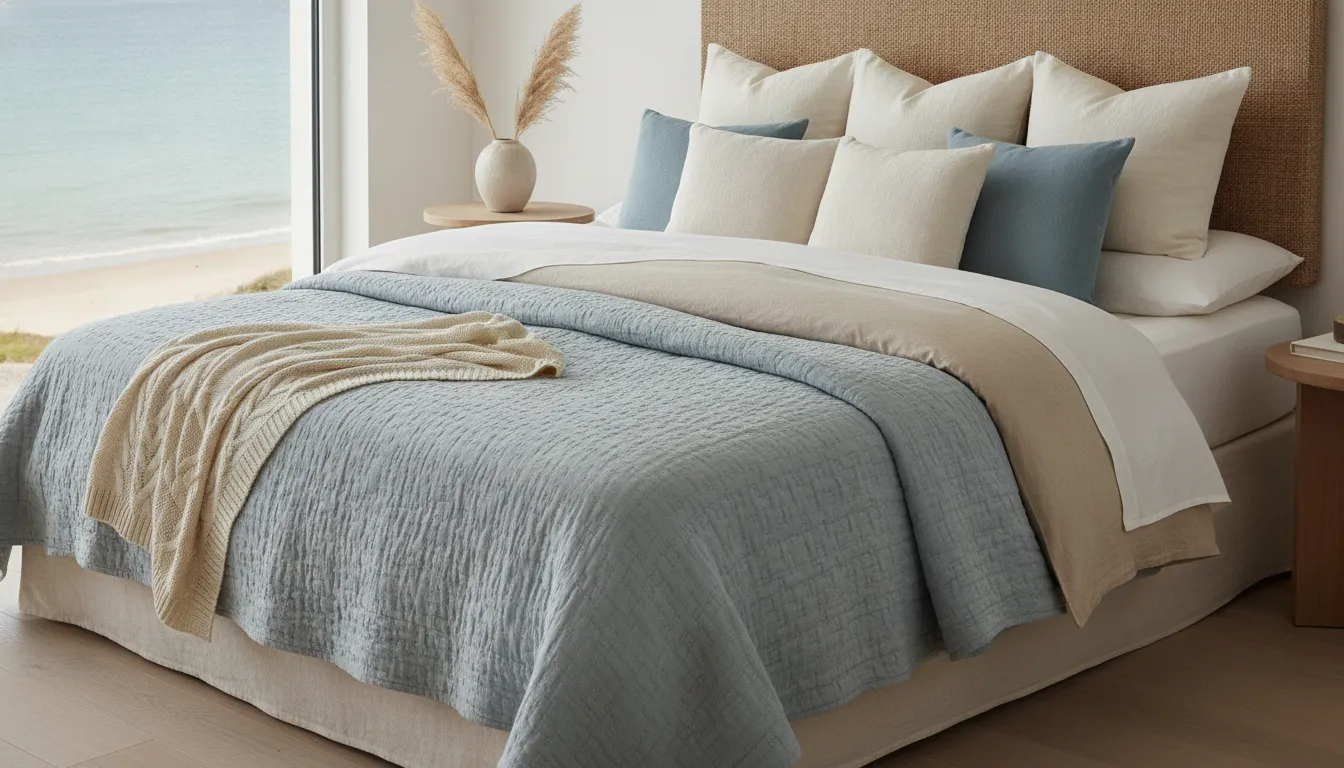
To build high end coastal bedding sets king size, begin with fine linen or cotton sateen sheets. Add a structured matelasse coverlet, then layer a generously sized duvet. Finish with scaled shams, decorative pillows, and a relaxed throw. Keep the palette soft and muted, then let handcrafted details and varied fabric weights provide distinction.
Shop the Lili Alessandra Bedding Collection
The result should feel calm, tailored, and tactile, not themed. Before choosing individual pieces, consider how the bed will anchor the entire suite and how each layer contributes to its visual height, softness, and sense of balance.
What Defines a High-End Coastal King-Size Bed?
A high-end coastal king-size bed is defined by restraint. The design does not rely on anchors, shells, rope details, or literal nautical motifs. Instead, it creates a composed atmosphere through simplicity, function, and harmony, principles that help a bedroom feel restorative rather than themed. Coastal design guidance from the New York Institute of Art and Design similarly emphasizes the importance of a room that expresses a mood while remaining functional and visually harmonious.
On a king-size bed, that restraint must also account for scale. The bed is usually the visual anchor of the room, so every layer should feel intentional across its generous width. A narrow-looking coverlet, undersized pillows, or scattered accents can make the arrangement feel unfinished. A refined composition gives the eye a clear center, then builds outward with balanced proportions. The result should feel enveloping and tailored, never crowded.
A muted palette creates the foundation
Color is one of the clearest ways to establish a coastal mood without making the room predictable. Begin with quiet tones drawn from the landscape: softened sea blue, warm sand, pale sky, oyster, ivory, and weathered stone. These shades create a calm foundation and allow the bed to sit comfortably within the architecture of the room. Strong contrast can be beautiful, but it should be deliberate and controlled rather than bright or competing.
A sophisticated neutral palette also gives premium materials room to lead. When the colors remain composed, the eye notices the character of the textile: the relief of a quilted surface. The subtle variation of linen, the polish of sateen, or the depth of a decorative accent. The Design Concierge reflects this approach by treating palette, proportion, and the surrounding home as part of one considered design decision.
Proportion turns layering into architecture
King-size styling works best when it has visual hierarchy. The foundation should establish a broad, quiet field. Upper layers can then introduce structure and dimension without breaking the calm. Pillows should have enough presence to frame the head of the bed, while accents at the foot can create a grounded finish. Each element needs breathing room, so the arrangement feels edited rather than overdecorated.
Ultimately, high-end coastal style is less about a fixed color formula than about harmony. Muted tones, generous proportion, and carefully selected materials transform the king bed into a serene focal point. The atmosphere feels connected to the coast through its lightness and ease, while craftsmanship and scale give it the polish expected of a luxury bedroom.
How Do You Build High End Coastal Bedding Sets King Size?
A king bed benefits from a deliberate progression of layers. Each piece should add either comfort, structure, or visual depth without making the arrangement feel heavy. The most refined coastal rooms rely on proportion and tactile contrast rather than literal nautical motifs. Follow this sequence to create a composed, resort-inspired foundation that still feels inviting at the end of the day.
-
Begin with fine sheets
Start with the layer that meets the body. Choose fine bed sheets in a quiet sea, sand, ivory, or soft mineral tone so the palette feels calm from the first glance. Linen introduces natural texture and an easy, relaxed character, while cotton sateen brings a smoother, more polished finish. Either choice can work beautifully in a coastal setting, provided the color remains restrained and the quality feels intentional. Explore the fine bed sheets collection for a foundation that supports the more decorative layers above it.
-
Add a matelasse coverlet as the textured base
Place a structured matelasse coverlet over the sheets. On a king-size bed, this layer gives the composition a broad, tactile plane and helps the bed look finished even when the duvet is folded down. Matelasse adds texture and season-appropriate warmth without competing with the architecture of the room. Fold the coverlet back slightly at the upper third of the mattress, or let it extend neatly toward the foot for a more tailored presentation. Browse the textured king coverlets to find a substantial base with quiet dimension.
-
Layer the duvet with an oversized insert
Next, place the duvet over the coverlet and allow it to establish the bed's central volume. An oversized insert creates a fuller, more generous drape across a king mattress and helps the duvet retain a lofted appearance. Smooth the top lightly rather than flattening it completely. A relaxed fold at the foot can reveal the matelasse beneath, giving the set the layered depth associated with a luxury suite. Keep the duvet's color close to the coverlet when you want a serene, tonal effect, or introduce a subtle shift in value for definition.
-
Build height with European shams and decorative pillows
Use European shams behind the sleeping pillows to establish height and structure. Then add a second layer of decorative pillows in complementary proportions. King-size arrangements benefit from two distinct pillow groupings because the broader surface needs visual weight at both the center and the sides. Mix one quiet textural fabric with one more expressive finish, such as velvet, embroidery, or a restrained pattern. The designer decorative pillows collection offers the accents that bring craftsmanship and personality to the arrangement without turning it into a themed display.
-
Finish with a throw at the foot
Complete the sequence with a decorative throw placed across the lower third of the bed. Drape it loosely over one corner or fold it into a clean horizontal band, depending on how tailored the room feels. This final layer adds relaxed resort depth and creates an easy invitation to settle in. Choose a throw whose texture echoes the coverlet or pillows, then allow a small difference in tone or weight to keep the arrangement dimensional. Discover luxury throws that finish the king bed with warmth, movement, and a quietly collected appearance.
Step back before adding anything else. The finished bed should show a clear hierarchy: smooth or naturally textured sheets, a defined matelasse foundation, a generous duvet, sculptural pillows, and one relaxed finishing layer. That balance keeps the coastal mood elegant, tactile, and distinctly personal.
Matelasse, Linen, and Sateen: Which Textures Belong Together?
A refined king bed needs contrast that feels intentional. Matelasse, linen, and cotton sateen each contribute a different visual and tactile note. Together, they create a composed coastal foundation without turning the room into a theme.
Begin with the surface closest to the sleeper. Linen brings natural texture, durability, and temperature regulation. Its relaxed character suits a coastal room, especially when the palette stays quiet. Slubbed fibers and gentle variation keep the bed from looking overly polished or predictable. For more context, see this European linen bedding guide.
Use cotton sateen where you want a smoother finish. Its subtle luster brings polish to the sheets and pillowcases. That refined surface balances linen's organic texture. It also creates a gentle shift in light across the bed. The result is elegant rather than glossy, with enough softness to support a resort-inspired mood.
Matelasse supplies structure. Its dimensional pattern gives the lower layer a tailored presence and helps define the bed's silhouette. Place a matelasse coverlet beneath the duvet, or fold it across the foot when the duvet is turned down. Explore the textured king coverlets collection for this substantial foundation.
| Texture | Primary role | Best placement |
|---|---|---|
| Linen | Natural texture and breathable ease | Sheets and relaxed pillow layers |
| Cotton sateen | Smooth, polished refinement | Sheets, pillowcases, or a clean top layer |
| Matelasse | Dimensional structure and visual weight | Coverlet beneath the duvet or folded at the foot |
Weight matters as much as fiber. Light sheets should not compete with a dense coverlet. Instead, let each layer become more substantial as the eye moves outward. Linen can soften the foundation. Sateen can sharpen the finish. Matelasse can anchor the arrangement.
On a king bed, this progression prevents a broad surface from appearing flat. Keep the largest fields quiet, then allow texture to provide the interest. A restrained palette of sand, ivory, mist, or softened blue makes the differences in weave easier to appreciate. The bed feels dimensional because of material, not excess pattern.
The strongest combination is not a matched set in one finish. It is a conversation between surfaces. Pair the easy irregularity of linen with the calm sheen of sateen. Add the sculptural relief of matelasse as the architectural layer. This balance gives high end coastal bedding sets king size a polished presence while preserving the relaxed clarity that makes coastal design feel restful.
How Should You Style Color and Pattern Without Losing Refinement?
Refined coastal color begins with restraint. Rather than treating the bedroom as a literal seaside setting, draw from the softened tones of sea, sky, sand, and shell. Misty blue, warm ivory, pale taupe, and weathered gray can create a quiet foundation. Their subtle variation gives a king-size bed presence without making the room feel themed.
Keep the largest surfaces composed. A neutral duvet or coverlet allows the quality of the materials to lead, while a restrained blue or mineral tone can define the palette. This approach gives the suite a serene backdrop and lets craftsmanship become the visual focus. Lili Alessandra's handcrafted finishing adds character through detail rather than visual noise.
Use tonal pattern for depth
Pattern does not need to announce itself. Tonal pattern, where the design stays close to the ground color, creates dimension through shadow, weave, and movement. Consider a soft geometric motif in ivory on cream, a subdued stripe in blue-gray, or a barely perceptible floral texture in sand. These patterns feel collected and architectural. They also remain flexible as the surrounding room evolves.
On a king-size bed, scale matters as much as color. A small repeating pattern can disappear across a broad surface, while an oversized motif may dominate the room. Let the pattern relate to the scale of the headboard, rug, window treatments, and other major furnishings. The bed's centerpiece should harmonize with the surrounding suite through proportion and material texture, not compete with it. For guidance on balancing those elements, explore the design principles behind a cohesive coastal suite.
Add handcrafted accents with intention
Small accents are where a relaxed palette can gain distinction. Hand embroidery, silk velvet, and other elevated finishes bring richness to coastal elements without abandoning their ease. Choose one or two accents as focal points. A velvet lumbar pillow, embroidered border, or softly embellished square can provide a moment of tactile contrast against linen, sateen, or matelasse.
Repeat an accent color sparingly. A muted blue thread may appear again in a pillow edge or throw detail, but it does not need to be echoed throughout the room. The most polished arrangements leave space for the eye to rest. Browse designer decorative pillows for considered ways to introduce pattern, color, and texture.
The result should feel coastal in atmosphere, not literal in vocabulary. Quiet color, tonal pattern, and individual handcrafted details create a bedroom that feels relaxed, sophisticated, and distinctly personal.
What Makes High End Coastal Bedding Sets King Size Feel Resort-Ready?
The finishing layers give a king bedroom its sense of arrival. They frame the bed, soften the architecture, and create the relaxed polish associated with a refined resort suite. Each piece should feel intentional. The goal is not to add more for its own sake. It is to build a balanced composition in which proportion, texture, and movement work together.
Begin with European shams
European shams establish height behind the sleeping pillows and give the head of the bed a composed, architectural presence. On a king-size bed, their generous scale helps the arrangement feel substantial rather than sparse. Choose shams that echo the quiet coastal palette while introducing a distinct surface, such as matelasse, linen, embroidery, or silk velvet. A restrained contrast is more elegant than a collection of competing patterns.
Layer two complementary pillow styles in front of the shams for visual depth. The arrangement should rise gently toward the headboard, then taper toward the center. Explore designer decorative pillows for accents that bring color and craftsmanship into the composition without making the bed feel overly formal.
Finish the silhouette below
A tailored bed skirt is a quiet but important detail. It conceals the bed base and completes the lower silhouette with a clean, fitted line. When the skirt fits the frame precisely, the entire bed appears more finished. When it pools, shifts, or exposes the base, the effect becomes visually unsettled. Select a refined neutral or a tone that closely relates to the coverlet so the lower edge supports the design instead of drawing attention away from it.
For more inspiration on the textured foundation beneath the duvet, see this guide to quilted coverlet styling.
Add relaxed movement at the foot
Drape a decorative throw across the foot of the bed with a natural, considered fold. This layer introduces softness and a touch of casual luxury. It can also bridge the colors of the pillows and surrounding furnishings. Look for a throw with enough weight to fall beautifully, but avoid arranging it so precisely that it loses the easy resort character. Browse luxury throws for a final layer with tactile presence.
Extend the language to the windows
Coordinated drapery completes the room beyond the bed. Well-draped window treatments support light control while reinforcing an airy design language. Repeat one subtle color, weave, or finish from the bedding rather than matching every element exactly. This creates cohesion between the bed and the architecture without turning the room into a themed set. Explore custom drapery panels to carry the same quiet refinement across the suite.
Step back before adding anything else. If the shams provide height, the bed skirt grounds the form, the throw adds movement, and the drapery connects the room, the resort-inspired composition is complete.
How Do You Choose a Duvet Insert and Care for the Set?
The duvet insert should support the proportions of the entire bed, not disappear inside the cover. For a king-size arrangement, choose an oversized Down Alternative insert that fills the duvet cover generously and creates a stable, inviting layer across the bed. The additional scale helps reduce shifting, while Down Alternative provides hypoallergenic comfort and maintains the lofty shape that gives a luxury duvet its presence. For a closer look at proportion, see this guide to oversized duvet insert guidance.
This choice is especially useful when the bed includes a structured coverlet beneath the duvet. A fuller insert maintains the visual hierarchy of the layers, so the coverlet remains a tailored foundation rather than competing with a collapsed or uneven top layer. Smooth the cover by hand after making the bed, and redistribute the fill gently instead of pulling aggressively at the corners.
Care for fine bedding with a light touch
Always begin with the care instructions supplied for the specific textile. In general, fine bedding benefits from a gentle wash cycle and protection from high heat. Use a mild detergent appropriate for delicate fabrics, avoid overloading the machine, and give each piece enough room to move freely. When laundering sheets or removable covers, fasten closures first and separate items by similar color and weight.
Air drying is the gentlest option when practical. If the fabric allows tumble drying, choose a low-heat setting and remove the piece promptly when it is dry. High heat can compromise the integrity of fine fibers over time. Between washes, allow the bed to breathe, refresh the layers regularly, and address small marks according to the product instructions rather than applying a harsh treatment. For more guidance, consult this luxury bed sheet care guide.
A considered insert and thoughtful maintenance preserve both comfort and the composed silhouette of a resort-inspired king bed.
Connect with a Lili Alessandra Design Advisor
FAQs About High-End Coastal Bedding Sets in King Size
What colors work best for a refined coastal bedroom?
Begin with soft, muted tones drawn from sea, sand, sky, and warm ivory. Layer tonal variation rather than relying on bright blue or literal nautical motifs. A neutral foundation allows the weave, embroidery, and shape of each textile to create visual interest while keeping the room calm and architectural.
Is matelasse a good choice for a king-size coastal bed?
Yes. A structured matelasse coverlet gives a king-size bed a textured foundation beneath the duvet, adding dimension without visual heaviness. Its surface also helps the arrangement feel finished when the duvet is folded back. Explore textured king coverlets.
How many layers should a luxury king bed have?
Use enough layers to establish a clear visual hierarchy, not a fixed number. A polished arrangement typically begins with fine sheets, followed by a coverlet, duvet, scaled shams, decorative pillows, and a throw at the foot. Varying texture and weight keeps the composition dimensional rather than crowded.
What is the difference between a coverlet and a duvet?
A coverlet is a lighter, structured layer that can sit over the sheets or beneath a duvet. A duvet is the fuller top layer, usually paired with an insert for loft and warmth. Together, they provide the tailored texture and relaxed volume associated with a resort-inspired bed.
How do you keep luxury bedding looking polished?
Maintain the silhouette by smoothing each layer, aligning the shams, and folding the duvet or coverlet with intention. Follow the care instructions for each textile. For fine bedding, gentle washing and air drying or low-heat tumble settings help protect the fibers. Finish with designer decorative pillows for controlled contrast.
Ready to Refine Your Coastal King Bedroom?
A well-layered king bed brings quiet structure, tactile depth, and a polished resort atmosphere to the room. Explore considered textiles and decorative finishing pieces to shape a coastal look that feels personal rather than themed. A considered foundation gives the bedroom room to evolve with the seasons while preserving its calm, collected character.


