





High-End Romantic Bedding Sets for a Luxury Bedroom
A romantic bedroom feels considered rather than overdone. The difference lies in how color, texture, proportion, and finish work together, turning the bed into a composed focal point and the room into a private sanctuary.
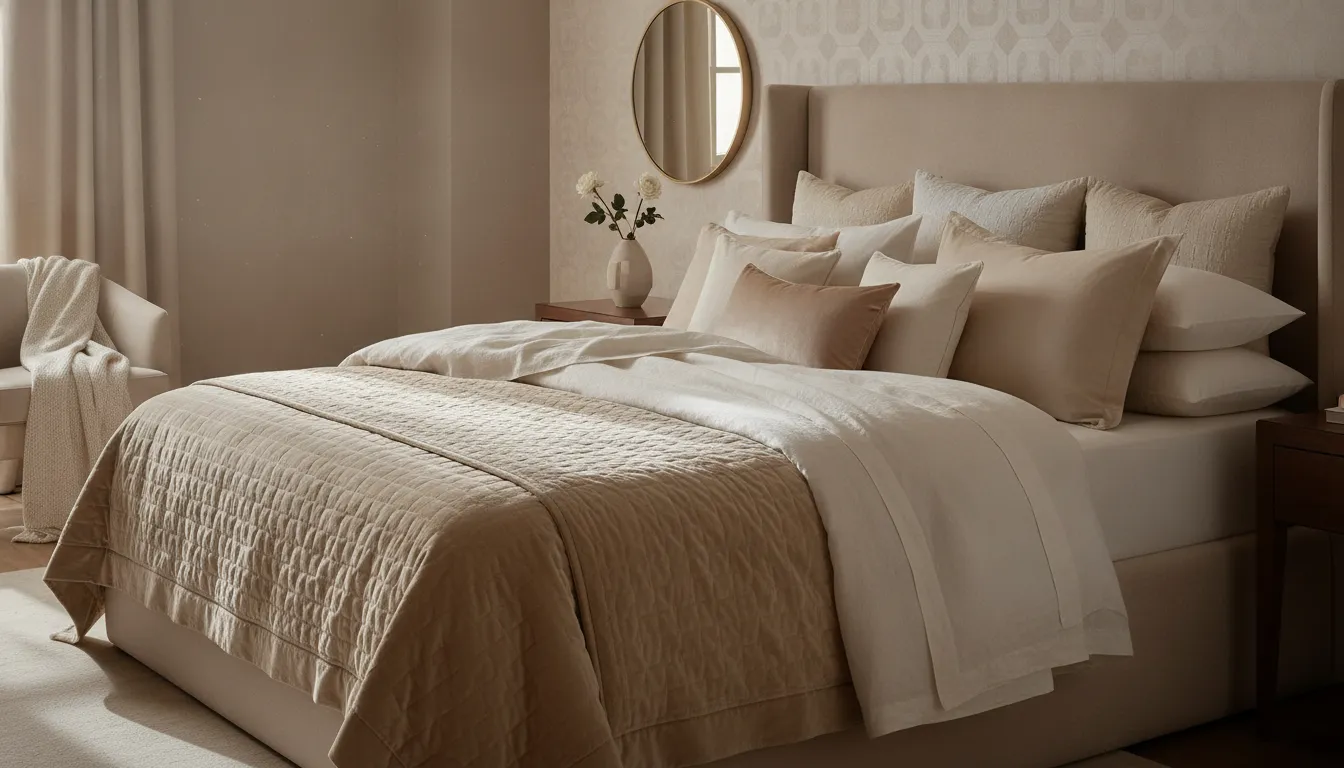
High-end romantic bedding sets combine a refined palette with tactile contrast and deliberate layering. Think a duvet paired with fine sheets, a coverlet that adds structure, handcrafted decorative pillows, and a finishing throw. Details such as quilting, embroidery, or subtle stone accents add character. Velvet can bring depth and sheen, while European linen or matelasse introduces a quieter, more relaxed dimension. The most polished arrangements balance Lili Alessandra's classic-modern sensibility with the personal way you want the bedroom to feel.
Shop the Lili Alessandra Bedding Collection
Begin by defining the qualities that make a layered ensemble feel luxurious, inviting, and distinctly your own. From there, the right palette and material balance can guide every finishing choice.
What Defines High-End Romantic Bedding Sets?
High-end romantic bedding sets are defined by composition, not by a single color or fabric. The most compelling arrangements bring together sheets, a duvet, a coverlet, decorative pillows, and a finishing throw so every layer contributes to the mood. The result feels considered from the first glance, yet never so matched that the room loses its personality.
Romance in a luxury bedroom is also more nuanced than a predictable excess of ruffles or bright pink. It can emerge through a quiet palette, a graceful silhouette, a subtle sheen, or the contrast between smooth and dimensional surfaces. Champagne, ivory, ecru, pale blue, sky, and light grey all offer sophisticated starting points. A blush accent can feel equally refined when it is balanced with tailored quilting, soft neutrals, or a restrained architectural form.
A coordinated bed with room for contrast
A high-end set should read as an ensemble while allowing each layer to have a distinct role. Fine sheets create a polished foundation. The duvet establishes the bed's principal volume. A coverlet adds structure and visual weight, while decorative pillows introduce scale, pattern, and craftsmanship. A throw placed with intention completes the composition without making it feel overly arranged.
This is where classic and modern design can meet beautifully. Traditional elements such as quilting, embroidery, and graceful borders gain a fresher character when paired with clean proportions and a disciplined palette. Lili Alessandra's luxury bedding collection reflects this approach by bringing duvets, shams, coverlets, and decorative elements into coordinated ensembles.
Tactile richness rather than visual excess
Texture gives romantic bedding its emotional depth. Silk velvet can bring a gentle sheen and a sense of intimacy. European linen, cotton sateen, bamboo viscose, organic hemp, or matelasse can temper that richness with a more relaxed dimension. The point is not to use every material at once. It is to create a tactile conversation between surfaces, so the bed invites both attention and rest.
Artisan details strengthen that sense of individuality. Hand embroidery, semi-precious stone applications, and custom applique can transform a finishing piece into a quiet focal point. Handcrafted decorative pillows are especially effective because their varied sizes, fabrics, and techniques allow the bed to feel expressive without becoming busy.
Ultimately, these sets treat the bedroom as a personal sanctuary rather than a collection of functional basics. The right combination should feel luxurious, livable, and distinctly yours, with enough visual calm to support rest and enough detail to make the room feel transformed. For a deeper look at material choices, read the guides to European linen bedding and sheet materials.
Which Color Palettes Create a Romantic Bedroom?
Romance in the bedroom does not depend on an abundance of pink. The most sophisticated palettes create atmosphere through softness, tonal variation, and carefully placed contrast. Begin with the light that already exists in the room, then choose a dominant neutral and one or two supporting shades. This keeps the bed composed while allowing the textures and decorative details to feel intentional.
- Ivory and ecru: A warm, quietly layered foundation that feels luminous rather than stark.
- Champagne and fawn: A softly gilded direction with enough depth for velvet and quilted surfaces.
- Blush and ivory: A restrained romantic pairing that avoids an overly bright or juvenile pink effect.
- Ice blue and sky: Airy color for a serene bedroom, especially when balanced with white or pale grey.
- Tonal white: White-on-white layers that rely on matte, sheen, quilting, and scale for visual interest.
- Neutrals with black: A small amount of black can sharpen a pale palette without overwhelming its softness.
Warm neutrals for a softly illuminated retreat
Ivory, ecru, champagne, and fawn create a romantic palette with a European-inspired sense of ease. Rather than matching every piece exactly, let the shades move gently from light to dark. An ivory duvet can sit over ecru or champagne layers, while a fawn velvet European pillow adds a polished note of depth. Lili Alessandra's champagne velvet bedding demonstrates how a warm, classic-modern color story can feel opulent without becoming ornate.
Cool color for a quieter expression of romance
Ice blue, sky, and pale blue offer a fresh alternative to warm neutrals. They are especially effective when the surrounding room has crisp white trim, silver accents, or soft grey upholstery. Keep the supporting pieces quiet so the color reads as an elegant wash across the bed. The ice-blue velvet bedding collection brings together coordinated coverlets and decorative pillows, while a sky velvet European pillow introduces color through quilted texture rather than visual excess.
Contrast that remains deliberately restrained
A tonal white scheme can be remarkably romantic when its interest comes from surface and proportion. The white matte velvet bedding collection is suited to this approach. If the room needs definition, use black as an accent in a pillow, trim, or small finishing layer instead of making it the dominant color. Lili Alessandra's Valentina Black collection shows how quilted black velvet can provide a dramatic counterpoint. For a softer color statement, an blush queen coverlet adds warmth while preserving the refined character expected from high-end romantic bedding sets.
How Should You Layer Velvet, Linen, and Matelasse?
The most compelling high-end romantic bedding sets rely on contrast. A bed can feel sumptuous without becoming visually heavy when each textile has a distinct role. Velvet contributes depth and a subtle sheen, while linen and matelasse introduce a quieter, more relaxed dimension. Cotton sateen, bamboo viscose, and organic hemp can support the composition with their own tactile character, allowing the finished bed to feel collected rather than overly matched.
| Material | Visual role | Tactile effect | Best placement |
|---|---|---|---|
| Silk velvet | Depth, sheen, and a richly framed focal point | Plush and visually opulent | Coverlet, duvet detail, or European pillows |
| European linen | Relaxed dimension that softens polished layers | Textured and naturally understated | Sheets, duvet cover, or a contrasting accent |
| Cotton sateen | Clean, refined foundation with a smooth finish | Silky and composed | Sheets or the quieter base of the bed |
| Bamboo viscose | Fluid softness within a layered, modern scheme | Smooth and gentle-looking | Sheets or a lightweight supporting layer |
| Organic hemp | Natural texture that gives richness a grounded counterpoint | Distinctive and tactile | Supporting textile or restrained accent |
| Matelasse | Dimensional pattern without reflective shine | Textured, softly structured, and relaxed | Coverlet or top layer |
Use one texture as the statement
Begin with the mood you want the bed to convey. A silk velvet coverlet can establish a glamorous focal point, then European linen or textured matelasse can temper its richness. For a more tonal composition, layer matte velvet with a quilted coverlet rather than adding several glossy surfaces. Lili Alessandra's quilted coverlets include cotton matelasse, bamboo, light grey matte velvet, and diamond-quilted silk-inspired designs, making it easier to build dimension without introducing competing patterns.
Balance sheen with quiet texture
Keep the supporting textiles close in color when the primary layer is richly tactile. Cotton sateen or bamboo viscose can create a polished foundation beneath a more expressive coverlet, while organic hemp or linen can make the arrangement feel less formal. The goal is not to use every material at once. Select two or three that create a deliberate conversation between luster, softness, and structure. Explore the silk and textured bedding collection for a refined starting point.
How Do You Build the Bed From Sheets to Finishing Throw?
A beautifully layered bed should feel composed, not crowded. Begin with the pieces closest to the body, then add structure, texture, and a final note of softness. This sequence lets each material contribute to the overall mood while keeping the bed comfortable and visually balanced.
- Begin with fine sheets. Fit the sheet smoothly across the mattress, then fold the top edge of the flat sheet or coverlet-height layer with a clean, generous turnback. Cotton sateen, European linen, bamboo viscose, and other refined textiles each create a different first impression. Keep this foundation calm and inviting, since it establishes the contrast for every layer that follows.
- Add the duvet for softness and volume. Place the duvet evenly over the bed and allow enough of its surface to remain visible to define the central field. A duvet gives the arrangement its plush, enveloping character. If the bed already includes a richly textured coverlet, choose a quieter duvet finish so the composition retains its elegance rather than becoming visually busy.
- Fold the coverlet as the architectural layer. Pull a quilted coverlet over the upper portion of the duvet, or fold it across the lower third for a tailored hotel-inspired finish. Coverlets add definition and a sense of proportion. Explore the quilted coverlets collection for options in cotton matelasse, bamboo, matte velvet, and diamond-quilted designs. An ice-blue quilted coverlet, for example, can serve as the principal decorative layer while keeping the palette serene.
- Build the pillow arrangement from largest to smallest. Set sleeping pillows behind the decorative composition, then layer Euro pillows, standard shams, and smaller accent pillows in descending scale. Mix shape, quilting, and restrained color rather than lining every pillow in an identical row. A fawn velvet European pillow can bring depth to a warm palette, while a sky velvet European pillow introduces a softer note of color and texture.
- Finish with the throw. Drape one throw casually across the foot or over a corner, allowing the edge to fall naturally. This last layer should soften the geometry of the bed without concealing the coverlet. Choose a complementary texture or a quiet tonal contrast, and let the throw read as an invitation to linger. Since decorative throws often use handcrafted or upholstery fabrics, follow the care instructions for the individual piece.
For the complete foundation and finishing pieces, browse the luxury bedding collection and edit the layers until the bed feels both sumptuous and restful.
Which Decorative Pillows and Details Make the Look Feel Romantic?
Romance comes into focus through the finishing pieces. Decorative pillows soften the geometry of a layered bed, introduce a touch of intimacy, and give the eye places to linger. Rather than filling every available space, choose a considered composition with varied scale, tactile contrast, and one or two details that feel distinctly artisanal.
Build the pillow arrangement in layers
Begin with European pillows to establish height and a generous backdrop. A fawn velvet European pillow brings depth and polish through its plush surface, while the sky velvet European pillow offers a softer color direction with quilted texture. These larger forms can sit behind standard pillows, shams, or a smaller accent pillow, creating a gradual transition rather than a crowded wall of cushions.
Keep the arrangement connected to the bed's principal layer. Champagne velvet can support a warm, enveloping mood, while ice blue or sky introduces a quieter, more ethereal expression. For a tonal room, white matte velvet keeps the composition elegant without relying on strong contrast. Explore champagne velvet bedding, ice-blue velvet bedding, or white matte velvet bedding as coordinated starting points.
Let craftsmanship provide the punctuation
Hand embroidery, semi-precious stone applications, custom applique, and refined trim can make a pillow feel collected rather than merely decorative. Use these elements as punctuation. One embellished accent can draw attention to the center of the bed, echo a detail in the room, or bring a fashion-house sensibility to otherwise quiet layers. Pair intricate work with unembellished velvet, European linen, cotton sateen, or matelasse so every surface remains visible.
Trim is especially effective when its line reinforces the shape of the bed. A narrow border can frame a pillow against a plain duvet, while applique can introduce movement without requiring a busy print. Semi-precious stone details work best when they are given visual space around them. Think of each accent as part of the room's composition, not as an invitation to layer another embellishment beside it.
For a gentle romantic effect, keep contrast close in value and let texture do the work. A blush coverlet with ivory pillows feels expressive without becoming sugary. A tonal ivory arrangement can feel equally intimate when quilted velvet, matte surfaces, and embroidery create subtle shifts in light. If you prefer drama, a controlled black accent can define pale layers, as shown in the dramatic black velvet layers collection.
- Vary scale: Place European pillows behind smaller forms to create depth and a relaxed, tailored silhouette.
- Repeat one material: Echo velvet in a pillow or coverlet, then temper its sheen with linen or matelasse.
- Choose restrained contrast: Use a blush, sky, champagne, or pale blue accent against ivory or ecru rather than introducing several competing colors.
- Reserve embellishment: Let embroidery, stone details, applique, or trim have a clear focal role.
- Edit before adding: Remove one piece if the bed begins to read as busy instead of inviting.
The result is romantic because it feels personal and tactile, not because it is overloaded. Handcrafted decorative pillows in varied fabrics and techniques can transform a coordinated bed into a composed retreat with quiet drama.
How Can You Keep a Romantic Bedding Set Refined Over Time?
The most enduring romantic bedroom is not preserved by leaving every layer in place indefinitely. It stays beautiful because each element is cared for according to its material, then edited as the room and the season change. Begin with the care instructions supplied for each duvet, coverlet, sheet, pillow, or throw. Material, construction, embellishment, and finish all affect the appropriate method, so a single routine should never be applied to the entire bed.
Care for Decorative Layers With Precision
Most decorative pillows and throws are not machine washable and may be spot cleaned, but this guidance does not apply to every product. Their fabrics may be handcrafted or upholstery fabrics, and details such as embroidery, quilting, or applied embellishment deserve a gentle, product-specific approach. Address marks promptly with the method recommended for that piece, and avoid introducing water, heat, or cleaning products unless the care instructions allow them.
Sheets and other washable bedding should be laundered according to their stated fiber and finish requirements. When storing a seasonal coverlet or throw, make sure it is clean and completely dry first. Fold it without compressing delicate texture, and choose a cool, dry storage area. Thoughtful handling protects the tactile qualities that give a romantic arrangement its depth.
Edit the Layers as the Season Changes
Seasonal editing keeps the composition fresh without requiring a completely new bedroom. In warmer months, let fine sheets and a lighter coverlet carry more of the visual presence. As the room becomes cozier, bring forward richer velvet, a quilted layer, or a tactile throw while allowing the palette to remain composed. Velvet can provide depth and soft sheen, while linen or matelasse can temper that richness with relaxed dimension.
Keep the most expressive piece as the focal point, then remove anything that competes with it. A romantic palette can shift subtly from ivory and ecru to champagne, blush, pale blue, or sky, yet still feel connected when the underlying tones remain restrained. Rotating decorative pillows is an especially effective way to refresh the mood while preserving the bed's established architecture.
Preserve Proportion, Not Just Appearance
Before adding a new layer, step back from the foot of the bed and assess scale. The duvet, coverlet, pillows, and finishing throw should create a deliberate progression rather than a crowded stack. Keep the largest shapes behind the smaller accents, repeat one color or texture to create continuity, and leave enough breathing room for each handcrafted detail to be seen. A composed arrangement will continue to look refined even when one seasonal layer is removed.
Interior designers and professional trade buyers can also explore the To The Trade Program for exclusive pricing and support when specifying coordinated textiles for a client project.
Continue refining the room with related guides on bamboo sheets, sheet materials, what a coverlet is, bamboo sheets and coverlets, decorative pillow shams, velvet throw pillows, velvet accent pillows, queen quilts and coverlets, and bed sheet care.
Connect with a Lili Alessandra Design Advisor
Frequently Asked Questions
What colors work best for a romantic bedroom?
Begin with a quiet palette that feels personal rather than predictable. Ivory, ecru, champagne, blush, pale blue, sky, and light grey create a softened foundation, while restrained black or deeper blue can add definition. Choose one dominant tone, then repeat it through the duvet, coverlet, and decorative pillows so the room feels composed instead of overly matched.
How do you balance velvet and linen on one bed?
Use velvet where you want depth, sheen, or a more enveloping focal point, such as a coverlet or European pillow. Temper its richness with European linen, cotton sateen, or textured matelasse in quieter layers. The contrast between plush and relaxed surfaces gives the bed dimension while preserving the classic-modern balance.
How many decorative pillows should a romantic bed have?
There is no universal number. Build from the bed size and the visual weight of the textiles, using larger European pillows behind standard pillows and a smaller accent shape in front. Select two or three related tones, then let one handcrafted fabric, quilted surface, embroidery, or trim provide the detail. The arrangement should invite rest, not overwhelm the bed.
How should decorative pillows and throws be cleaned?
Check the instructions for each piece before cleaning. Most decorative pillows and throws are not machine washable because they may use handcrafted or upholstery fabrics. They may be spot cleaned, but care varies by product, so treat the material and construction as the guide rather than applying one routine to every layer.
Ready to Refine Your Romantic Bedding Ensemble?
The right combination of palette, texture, and finishing layers can make a bedroom feel considered and distinctly personal. A design advisor can help you bring those elements together with the balance of classic elegance and modern softness that defines your space.


