





Interior Designer Bedding: How to Layer a Bed
A beautifully layered bed is both the visual anchor of a bedroom and a carefully resolved specification. For interior designers, the work extends beyond selecting attractive textiles. Proportion, material hand, pattern scale, maintenance, installation, and the client's sleeping preferences must all align. The result should photograph beautifully, perform comfortably, and remain practical after project handoff.
Apply to the To The Trade Program
A professional approach to interior designer bedding
A successful bedding specification connects visual composition with measurable fit, tactile contrast, and realistic care requirements. Establish the bed's proportions first, then coordinate sheets, coverlets, duvets, shams, decorative pillows, and throws as a unified textile scheme that supports the room concept and the client's daily routines.
Begin by defining the bed's role in the room. In a restrained primary suite, it may need to read as a quiet field of tonal texture. In a dramatic guest room, it may carry the strongest pattern or the most expressive handcrafted detail. That decision guides every subsequent choice, from the amount of visible coverlet to the scale of a front accent pillow.
Document the existing conditions before sourcing. Record the mattress width, length, and depth; the height from the floor to the top of the mattress; the headboard's visible height; and any obstruction created by side rails, footboards, benches, or adjustable bases. A beautiful textile can still fail the installation if its finished drop conflicts with the furniture.
Translate the room concept into a textile hierarchy
Treat each layer according to its visual responsibility. Sheets establish comfort and an understated foundation. A coverlet creates a tailored plane. A duvet introduces loft. Shams build the vertical composition, while decorative pillows and throws provide the most concentrated opportunities for color, embroidery, velvet, linen texture, or other statement finishes.
A useful hierarchy usually reserves the quietest surfaces for the largest expanses and places higher-contrast materials in smaller areas. This allows a handcrafted pillow or richly textured throw to command attention without making the entire bed feel overworked. Repeat one or two colors from the surrounding room so the composition feels integrated rather than added at the end.
Specify from samples and material character
Color is only one part of a textile specification. Review the hand, weave, finish, sheen, weight, and behavior of each fabric. Linen can introduce a relaxed, dry texture; cotton sateen contributes a smoother hand and subtle luster; velvet absorbs light and creates depth; quilting adds shadow and structure. Examine samples in the project's actual natural and artificial light whenever possible.
Consider adjacency as carefully as individual beauty. A softly reflective textile can become more compelling beside a matte weave. A heavily embroidered accent benefits from quieter neighboring surfaces. The objective is not to maximize the number of textures, but to create intentional contrast that remains legible from the doorway and rewarding at close range.
Resolve care before final approval
Confirm care expectations while the scheme is still being developed. Most decorative pillows and throws from Lili Alessandra are spot-clean only because they use handcrafted or upholstery fabrics. That makes them appropriate as considered decorative layers, while washable sheets and other frequently handled pieces can serve as the practical foundation.
Create a preliminary care matrix with the item name, location, cleaning instruction, and any handling note. Review it with the client before final approval. This protects specialty pieces from unrealistic maintenance expectations and gives the designer an opportunity to adjust the scheme for households with children, pets, frequent guests, or professional housekeeping.

How do interior designers layer a bed?
Interior designers layer a bed from functional base to expressive finish: fitted and flat sheets, a tailored coverlet, a duvet or insert for loft, a measured sham arrangement, selected decorative pillows, and a final throw. Each layer should have a clear role and preserve comfortable access for everyday use.
Start with the elements that touch the sleeper, then build outward. Confirm the client's preferred sheet material, sleeping temperature, and routine before specifying visible layers. The composition should be easy to turn down and restore, especially in a primary suite. In a guest room, a slightly more formal arrangement may be appropriate if the care instructions remain clear.
Establish a precise base
Measure mattress depth rather than relying only on a queen or king label. Include any topper in the total depth, and confirm that the fitted sheet pocket can accommodate the complete profile. For a bed skirt, measure the finished drop from the top of the foundation or attachment point to the desired point above the floor. Measure in several places because floors and bed frames are not always perfectly level.
Layer the flat sheet and coverlet so the reveal is deliberate. A narrow, consistent sheet return can frame the coverlet at the head of the bed. The coverlet may be tucked for a tailored look or allowed a controlled drop for a softer effect. Its lower edge should relate cleanly to the bed frame and any bench placed at the foot.
Add volume with the duvet
A duvet introduces loft, softness, and seasonal flexibility. It may cover the bed fully, fold back below the pillows, or rest in a broad fold near the foot. Select the treatment according to the room's architecture and the amount of coverlet that should remain visible. Keep the folds generous and consistent rather than tightly compressed.
Lili Alessandra down alternative duvet inserts are larger than the duvets to reduce shifting. They are also hypoallergenic and cleaner, making them a considered option when those qualities suit the client's priorities. The fuller insert supports an inviting silhouette without relying on unverified claims about down type or fill performance.
Build the pillow elevation
Use the headboard and mattress width to determine the pillow arrangement. Euro shams are typically 26 by 26 inches and create a strong square backdrop. Confirm how many fit across the actual mattress width, accounting for fullness and overlap, rather than following a universal count. Then add sleeping pillows or standard shams and a restrained foreground accent.
Keep the highest pillows comfortably below important headboard details. If the headboard has a shaped crest, decorative panel, or distinctive upholstery, preserve enough visibility for it to remain part of the composition. A lower, wider arrangement may be more appropriate than a tall stack when art, windows, or sconces also compete for attention.
Complete the composition with restraint
Decorative pillows and throws should complete the concept, not obscure it. A lumbar pillow can create a clean horizontal counterpoint to square shams. A pair of accents can reinforce symmetry, while one sculptural pillow can introduce a focal detail. Select a throw whose hand and finish contrast with the coverlet, then drape or fold it according to the room's level of formality.
- Check the full bed composition from the doorway and from both sides.
- Confirm that nightstand access and reading lights remain unobstructed.
- Test how easily the client can remove and store decorative layers.
- Photograph the approved arrangement for the installation and care record.
Choosing materials for comfort and visual depth
Material selection should balance tactile comfort, light response, climate, maintenance, and the room's design language. Evaluate each textile by its hand, weave, finish, weight, and intended placement. The most compelling beds combine contrasting surfaces while limiting the palette enough to preserve a calm, sophisticated whole.
Assess textiles as a group rather than choosing each piece independently. Place samples in the same order they will appear on the bed and view them from several distances. A subtle weave may be almost invisible across the room yet provide the precise tactile interest needed at the bedside. A reflective finish may change significantly under evening lighting.
Use hand and weave to create contrast
Hand describes how a textile feels and behaves: crisp or supple, smooth or nubby, structured or fluid. Weave influences that hand as well as the surface pattern and way light moves across the material. Finish can add luster, softness, dimension, or a more relaxed appearance. Record these attributes in the specification so substitutions can be evaluated intelligently.
A balanced composition might pair smooth sheets with a quilted coverlet, a lofty duvet, matte linen shams, and a silk velvet accent. The contrast is clear without depending on numerous colors. When patterns are included, vary their scale and provide enough solid or quietly textured area for the eye to rest.
Match materials to placement and use
Reserve easily maintained materials for the layers handled most often, and position delicate or highly embellished textiles where they can make an impact with less daily wear. For a primary suite, ask how the client makes the bed and where decorative pieces will go at night. For a guest suite, provide an arrangement that housekeeping or guests can reproduce confidently.
A useful specification distinguishes between sleep layers, everyday visible layers, and presentation accents:
- Sleep layers: prioritize tactile preference, fit, and practical laundering.
- Everyday visible layers: coordinate comfort, durability, and consistent appearance.
- Presentation accents: emphasize artistry, texture, and concentrated visual impact.
Coordinate seasonal flexibility
Design for adjustment without dismantling the visual concept. A coverlet can remain the stable central layer while a duvet and throw respond to seasonal comfort. If the project includes alternate accents, document the intended combinations so colors and proportions remain resolved throughout the year. Breathable storage and careful folding help protect textiles between uses.
Connect with the Complimentary Design Concierge
| Material | Specification role | Visual effect | Care planning |
|---|---|---|---|
| European linen | Sheets, duvets, and relaxed layers | Breathable, softly textured finish | Confirm the product care label |
| Cotton sateen | Smooth base layers and sheets | Refined surface with subtle luster | Confirm the product care label |
| Silk velvet | Decorative pillows and statement accents | Rich color depth and plush hand | Plan for careful spot cleaning |
| Quilted coverlet | Tailored middle layer | Controlled texture and definition | Confirm construction-specific care |
How many decorative pillows should a designer use?
There is no universal decorative pillow count. Determine the arrangement from mattress width, headboard height, pillow scale, desired formality, and the client's willingness to remove and store accents daily. A smaller selection of well-proportioned statement pieces often delivers greater clarity than a crowded row of similar pillows.
Begin with elevation and negative space. Euro shams, typically 26 by 26 inches, establish a substantial backdrop, but their quantity should be tested against the mattress and headboard. Standard or king shams can create a more horizontal layer. Decorative accents should then reinforce the palette or introduce a focal material without hiding the layers behind them.
Use proportion rather than a fixed formula
Map the arrangement with actual dimensions. Add the stated widths of the shams, then allow for fullness, overlap, and any visible space between them. Check the total height of the stack against the headboard. A slim upholstered headboard may call for a lower arrangement, while a broad architectural headboard may support a more generous elevation.
Odd-number arrangements can feel dynamic, and symmetrical pairs can create formality, but neither is mandatory. Let the room's balance determine the choice. If the bedroom already contains asymmetrical art or lighting, a composed symmetrical bed may provide calm. In a highly ordered room, one distinctive central accent can create an effective point of tension.
Plan nighttime storage
Every decorative pillow needs a practical destination when the bed is in use. Confirm whether a bench, chair, storage piece, or closet shelf can accommodate the accents without crushing them or placing them on the floor. If no suitable destination exists, simplify the arrangement. This single decision often improves the client's long-term satisfaction with the specification.
Because most decorative pillows and throws are spot-clean only, include handling instructions in the final documentation. Advise the client or housekeeping team to lift embellished pieces carefully, avoid pulling decorative details, and follow the individual product care label. Professional care planning preserves both the intended appearance and the investment in specialty textiles.
Explore decorative pillows as focal elements, then edit the selection against the complete room palette before approval.
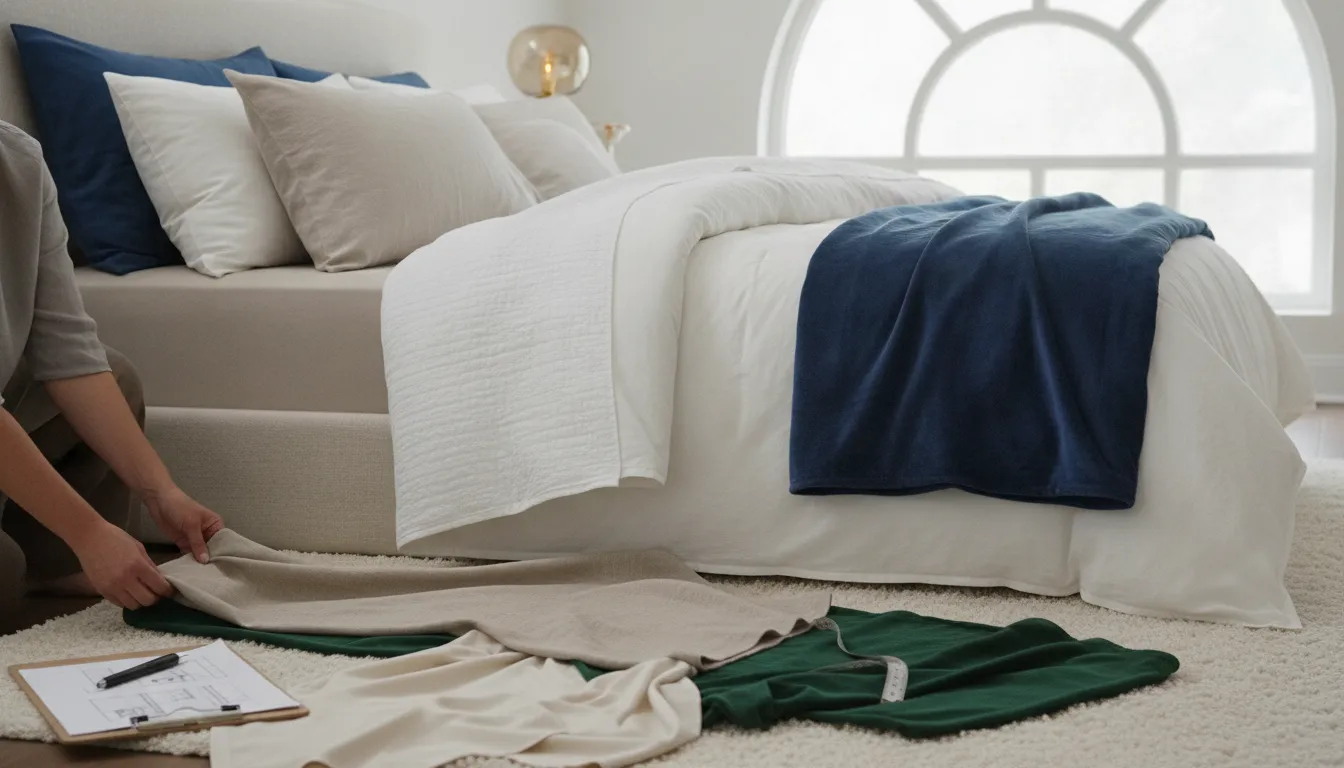
Specifying bedding for a client project
A professional bedding specification records dimensions, textile qualities, quantities, placement, care, and installation intent. It should make the approved design reproducible for procurement and installation teams while giving the client clear expectations. Verify product-specific details directly and avoid assumptions about availability, production schedules, or services.
Build the specification alongside the room design, not after furniture selections are complete. Bedding affects color balance, visual weight, and the perceived scale of the bed. Early coordination also provides time to review samples, confirm measurements, and resolve how specialty fabrics will be maintained.
Create a complete specification schedule
For each item, record the product name, color, size, quantity, intended location, layer order, and care direction. Attach an image or sample reference when useful. Note whether a sham requires an insert, whether a duvet cover requires a compatible insert, and how the finished piece should be oriented. Keep approvals linked to the latest schedule revision.
At minimum, document these project conditions:
- Mattress width, length, depth, and topper depth if present
- Foundation height and required finished drop for any bed skirt
- Headboard width, visible height, and important design details
- Bed-frame rails, footboard, adjustable-base movement, and bench clearance
- Client preferences for sleep temperature, hand, formality, and daily setup
Review samples in context
Assess samples beside upholstery, drapery, rugs, wall finishes, and wood tones. Photograph them in daylight and evening light, but use physical review for final color and hand decisions because screens can shift both. If a substitute is proposed, compare not only color but also weave, sheen, weight, drape, and how it affects the overall hierarchy.
The Lili Alessandra To The Trade Program is the appropriate destination for professional interior designers and trade buyers seeking program information. For design assistance, the Design Concierge is complimentary. Confirm project-specific options through the relevant program rather than assuming unverified services or terms.
Prepare installation and care documentation
Create a bed-elevation reference or annotated installation photograph showing every layer in order. Include fold depths, sham sequence, accent placement, and throw orientation. Provide the installation team with a packing list and identify which pieces require steaming or careful handling. Inspect all items according to the project's established receiving process before installation day.
Prepare a concise client care document that pairs every product with its verified care instruction. State clearly that most decorative pillows and throws are spot-clean only. Include the approved bed-making photograph, seasonal storage notes, and the contact route for product-specific questions. A clear handoff turns a styled installation into a maintainable design.
Balancing luxury with daily life
Luxury becomes livable when the visible composition respects the client's routines. Place practical, comfortable textiles at the core; use specialty materials where their effect is strongest; and limit the daily reset to an arrangement the household can sustain. Care planning is part of the design, not an afterthought.
Interview the client about how the room operates. Ask who makes the bed, whether pets enter the room, how often guests stay, where removed layers will be stored, and whether seasonal changes are desired. These answers influence the number of accents, the position of spot-clean-only textiles, and the amount of time a daily reset should require.
Adapt the composition by room type
A primary suite often benefits from fewer, highly considered decorative layers because the bed is used every day. A guest suite may carry a more formal presentation, but visitors should still understand which layers are intended for sleeping and where to place the others. A show house or photographed installation can support greater complexity because presentation is the principal objective.
Keep the design language consistent across these variations. The same palette can appear in a quieter primary-suite arrangement and a more expressive guest-room composition. Repeating a textile finish, embroidery detail, or color family creates continuity without duplicating every piece.
Make maintenance visible and specific
Avoid vague care directions such as "handle carefully." Instead, identify which pieces are spot-clean only, which should follow their sewn-in care labels, and which should be stored in a breathable environment. Do not promise that a material is washable unless the product's verified care instruction says so. Specific documentation helps prevent avoidable damage.
For clients who prioritize hypoallergenic bedding, explain the verified qualities of Lili Alessandra down alternative duvet inserts: they are hypoallergenic and cleaner, and their larger size relative to the duvets helps reduce shifting. This factual explanation supports an informed selection without overstating medical or performance benefits.
Design an achievable daily reset
During installation, demonstrate a simplified daily arrangement as well as the complete presentation arrangement if they differ. Mark the preferred duvet fold and photograph the order of shams and accents. If the client finds the process cumbersome, edit it before handoff. The strongest solution is the one that continues to look intentional in real use.
The final installation checklist
Final installation should confirm fit, alignment, textile condition, styling intent, and a complete care handoff. Use the approved schedule and reference images, measure visible drops, review the bed from every approach, and document the finished arrangement so the client and housekeeping team can reproduce it accurately.
Inspect and stage every component
Reconcile delivered items against the latest approved specification before styling. Confirm sizes, colors, quantities, inserts, and product condition. Follow verified product instructions for any preparation. Keep spot-clean-only decorative pieces protected from installation dust and tools until the room is ready for final styling.
Align proportions and finished drops
Center the fitted layers and check that visible edges are consistent. Measure the finished drop of the coverlet or bed skirt at the sides and foot, then adjust for the actual floor and frame. Align duvet folds with the mattress, not with a nearby object that may be off center. Check that the headboard remains appropriately visible.
Review from all sightlines
Step back to the doorway, the seating area, and both bedside approaches. Adjust the sham elevation, accent spacing, and throw placement so the composition reads clearly from each important view. Confirm that pillows do not interfere with sconces and that the finished bed relates comfortably to nightstands, artwork, windows, and a foot-of-bed bench.
Complete the professional handoff
Photograph the bed straight on and from useful detail angles. Deliver the final product schedule, approved styling image, and care document. Explain that most decorative pillows and throws are spot-clean only, and review the verified care directions for every other layer. Note any agreed seasonal arrangement so future changes preserve the original design intent.
Frequently Asked Questions
How do interior designers clean luxury decorative pillows and throws?
Most Lili Alessandra decorative pillows and throws are spot-clean only because they use handcrafted or upholstery fabrics. Designers should follow each product's verified care label, include the instructions in the client handoff, and make sure housekeeping understands which pieces should not be placed in a washing machine.
How long does the custom made to order bedding process take?
Production timing should be confirmed for the specific custom made-to-order selection and project. Designers should not assume a standard lead time. Request current information before finalizing the installation schedule, document the confirmed timing in the procurement plan, and allow appropriate time for receiving, inspection, and installation preparation.
Why do designers choose down alternative duvet inserts for client projects?
Lili Alessandra down alternative duvet inserts are hypoallergenic and cleaner. They are larger than the duvets to help reduce shifting and support a full presentation. Designers can consider these verified qualities alongside a client's comfort preferences and should avoid making unsupported claims about fill power, down type, or medical outcomes.
Can interior designers get exclusive pricing on luxury home textiles?
Professional interior designers and trade buyers can review program eligibility and current benefits through the Lili Alessandra To The Trade Program. Because terms can change, designers should confirm current pricing and program details directly rather than promise a particular discount or service before it has been verified for the project.
What size are Euro shams?
Euro shams are typically 26 by 26 inches. Designers should still confirm the listed dimensions for the selected product and test the arrangement against the actual mattress width and headboard height. Allow for fullness and overlap when calculating quantity, rather than dividing mattress width by nominal sham width alone.
Build a distinctive client bedroom with Lili Alessandra
A refined bed expresses the room concept through disciplined proportion, tactile contrast, and thoughtful craftsmanship. By documenting measurements, selecting materials in context, planning installation, and providing precise care guidance, interior designers can create a luxurious composition that remains beautiful, comfortable, and practical long after the final reveal.
Explore quilted coverlets, throws, and distinctive decorative textiles as you develop the scheme. Resolve every piece against the room's architecture and the client's routines, then preserve the approved composition with a clear installation and care record.


