





Red Velvet Comforter Set King Size Styling Guide
Red velvet can make a king-size bed feel richly composed rather than theatrically bold, but the difference lies in what surrounds it. Treat the saturated textile as the room's focal layer, then give the eye quieter places to rest through tonal neutrals, considered texture, and tailored proportions.
The most refined red velvet comforter set king size is one that fits the bed correctly and clearly distinguishes its comforter or duvet components. It also works with a restrained palette of ivory, champagne, taupe, or steel. Layering a quieter foundation underneath and repeating red only in measured accents keeps the finish elegant and livable.
Shop Luxury Bedding Collections
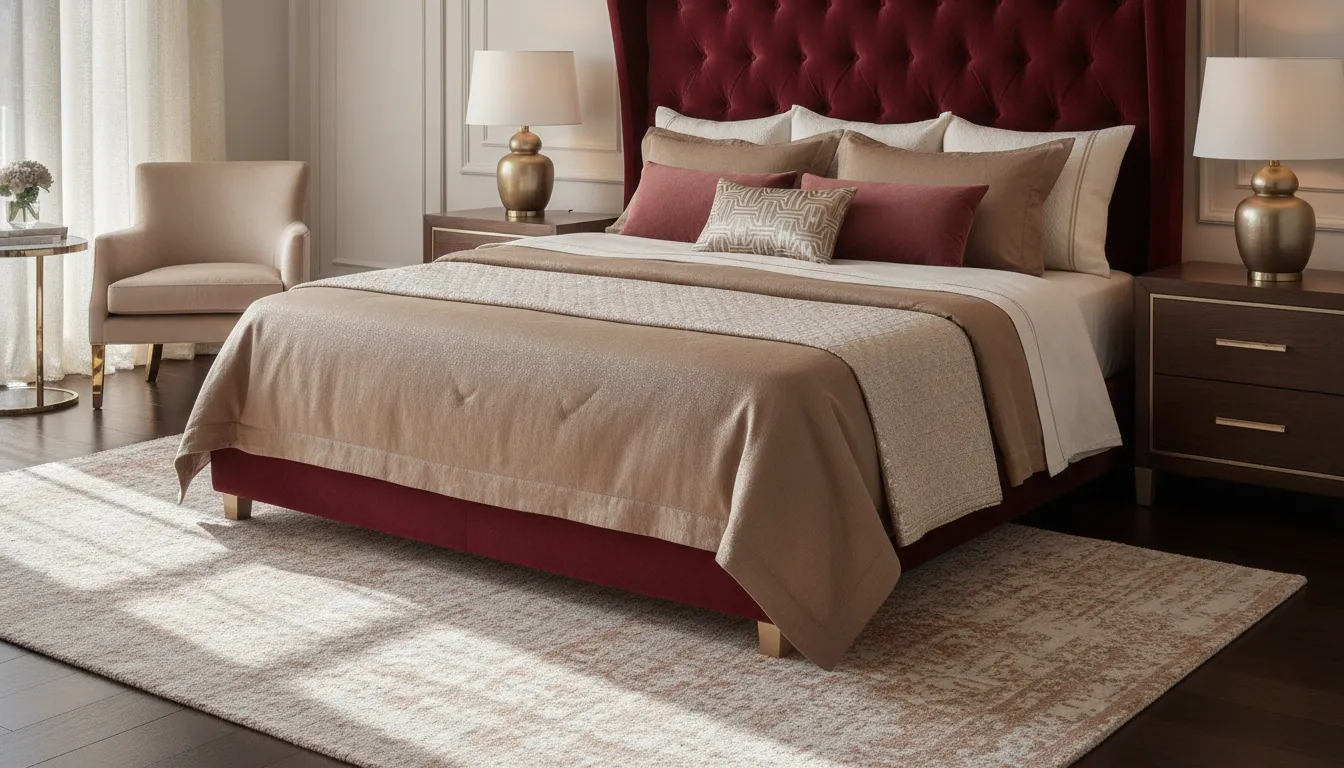
Before choosing a color story, look closely at construction, scale, and the role each piece will play. Understanding those details makes it easier to create a dramatic bed that still feels restful, polished, and unmistakably personal.
What to Look For in a Red Velvet Comforter Set King Size
A dramatic red velvet layer can give a bedroom the presence of a jewel box, but the most beautiful result begins with precise product language. Before choosing color, confirm what the set actually includes and how each piece is intended to function. A listing described as a comforter set should identify the comforter itself, while a duvet cover is a removable shell designed to encase a separate insert. Those pieces are not interchangeable, and a coverlet is a lighter decorative or foundational layer rather than a substitute for either.
This distinction matters at purchase because the visual effect, warmth, maintenance, and final bed height can all change with the construction. Lili Alessandra notes that oversized duvet inserts are sold separately from duvet covers, so shoppers should check whether an insert is included or must be selected independently. For a clear explanation of how these layers differ, review this guide to comforters, duvets, and coverlets before committing to a set.
Read the set contents line by line
Do not rely on the word "set" alone. It may refer to a comforter with shams, a duvet cover with matching shams, or a coordinated grouping that requires additional foundation pieces. Lili Alessandra presents bedding as layered ensembles of duvets, shams, coverlets, and decorative elements, making the contents list essential to a polished plan. If the listing does not specify the fill, quilting, closure, or construction, treat that information as unconfirmed rather than filling the gap with assumptions.
- Verify whether the centerpiece is a true comforter, a duvet cover, a coverlet, or another bed layer.
- Confirm whether the insert is included, sold separately, or not part of the offering.
- Check every included piece, such as shams, pillowcases, or coordinating accents.
- Look for the exact king dimensions and compare them with your mattress, topper, and desired drop.
- Review the listed fill and construction only when the product description supplies those details.
Assess king proportions and drape
King sizing is more than a label. Two pieces marked king can create noticeably different silhouettes depending on their finished dimensions, loft, and the amount of fabric that falls over the sides. Consider whether you want a tailored edge, a generous drape, or a layered look in which the lower foundation remains visible. Measure the mattress depth, including any topper, then compare it with the published dimensions. Do the same for shams and pillows so the bed does not feel visually crowded.
Finally, explore the luxury bedding collections with a precise checklist in hand. Lili Alessandra specializes in designer bedding and complementary textiles, but each current product page remains the authority for availability, dimensions, included pieces, and construction. That small pause transforms an expressive color choice into a considered investment.
How Can You Keep Red Velvet Bedding Feeling Refined?
Red velvet has presence, so the most elegant approach is to let it lead without asking every element in the room to compete. Treat the saturated color as a deliberate focal point, then surround it with tonal neutrals that soften the composition. Ivory, champagne, buff, and similarly quiet shades create visual space around deep red while preserving the bedroom's sense of rest.
Begin with the largest supporting layer beneath or around the red focal piece. An ivory king velvet coverlet introduces a light, enveloping counterpoint without creating a sharp black-and-white contrast. For a warmer, more luminous palette, consider a champagne velvet king coverlet. A buff velvet king coverlet offers another tonal direction, especially when the room already includes warm wood, cream upholstery, or softly aged finishes. These are neutral foundation options, not substitutes for a red comforter or duvet cover.
Texture is what keeps a restrained palette from feeling flat. Velvet supplies depth through its tactile surface and changing light, while European linen, cotton sateen, bamboo viscose, or matelasse can provide a quieter counterpoint. Vary the surface rather than adding more color. A smooth sheet, a subtly patterned foundation layer, and a plush red top layer can feel more considered than several competing prints. Lili Alessandra's design philosophy centers on mixing fabrics with handcrafted techniques, a useful principle when building a bed that feels collected rather than overly matched. Explore the Lili Alessandra design philosophy for more context on this approach.
Metallic details should function as punctuation. Champagne or antique-gold tones can echo warmth in the red and neutral palette. But use them in a few intentional places: a slender lamp base, a small frame, or a restrained accent on a decorative pillow. Avoid distributing shiny finishes across every surface. If the room leans cooler, a muted silver detail may provide contrast, but it should remain quieter than the bedding.
Finally, edit the surrounding color story. Keep walls, larger upholstered pieces, and window treatments close to the neutral family whenever possible. Use tailored shams and a small number of decorative pillows to frame the red rather than repeat it everywhere. For further guidance on combining rich surfaces without visual excess, read this luxury velvet bedding guide. The result is not a diminished version of red. It is a more sophisticated one, with tonal contrast, varied texture, and carefully measured shine giving the color room to feel luxurious.
Build the Bed from the Foundation Up
A memorable red velvet focal layer needs a composed setting beneath it. Begin with the sheets, then establish a quiet foundation, add the red statement layer, and finish with tailored shams and one considered throw. This sequence gives the eye a place to rest while allowing the richest color and texture to lead.
1. Start with the sheets
Choose the first layer for comfort and tonal clarity rather than drama. Ivory, soft white, or another restrained neutral keeps the bed luminous beneath deeper red. Cotton sateen can introduce a subtle sheen, while European linen brings a more relaxed texture. The sheet layer should feel intentional, but it does not need to compete with velvet.
2. Add a quiet foundation
Next, place a coverlet or comfortlet across the mattress and lower portion of the bed. A foundation layer creates visual separation between the sheets and the red focal layer, and it can remain visible at the foot or along the sides. Explore quilted coverlets and foundation layers for options that give the composition structure without flattening its tactile character.
For a pale foundation, the champagne velvet king coverlet adds warmth and a gentle metallic impression. The steel velvet king coverlet creates a cooler, more tailored contrast, while the buff velvet king coverlet keeps the palette softly grounded. If you want padded dimension rather than a traditional coverlet profile, consider the padded ivory king comfortlet. A comfortlet, coverlet, duvet cover, and insert are distinct bedding pieces, so confirm the product description and intended use before combining them.
| Foundation tone | Design mood | Best effect |
|---|---|---|
| Ivory | Light and classic | Sharp, luminous contrast |
| Champagne | Warm and polished | Soft metallic depth |
| Steel | Cool and tailored | Modern, grounded contrast |
| Buff | Quiet and tonal | Relaxed warmth |
3. Place the red focal layer
Fold the red velvet layer so its scale feels generous rather than crowded. Whether you are styling a verified comforter, a duvet cover with a separate insert, or another statement textile, let the foundation remain visible enough to frame the color. The goal is a curated color story, not a saturated wall of red.
4. Finish with shams and a throw
Set king-size shams behind the sleeping pillows, then add a smaller number of decorative pillows for shape and proportion. Finish with a throw folded across the foot or draped lightly over one corner. Lili Alessandra presents coordinated ensembles of duvets, shams, coverlets, and decorative elements, so the layers can feel collected rather than matched mechanically. For a visual walkthrough, read how to layer a luxury bed.
Caribbean Matelasse coverlets are currently described in the customer knowledge base as 100% premium cotton matelasse, naturally wrinkle-resistant, and machine washable. Treat those as current product-description details, not universal care advice, and check the label and product page before laundering.
Choose King-Size Shams and Decorative Accents with Intention
Once the primary bedding layer establishes the mood, the shams and accents determine whether the bed feels composed or visually crowded. King-size shams should read as a deliberate architectural frame behind the sleeping pillows, with enough presence to support a dramatic red velvet focal layer without competing with it. Begin by considering the silhouette you want. A tailored sham creates a crisp, edited profile, while a relaxed silhouette introduces softness and a more collected, inviting character. Neither approach is automatically better. The right choice depends on the room's architecture, the structure of the foundation layer, and how much movement you want across the bed.
Proportion matters because decorative pillows are handcrafted in multiple sizes, fabrics, and techniques. A king-size arrangement needs a clear hierarchy rather than a random assortment of beautiful pieces. Use the guidance in this guide to decorative pillow sizing when deciding how the shams will anchor smaller accents. The goal is a graduated composition: substantial pieces at the back, medium-scale forms through the center, and a finishing accent that adds personality without obscuring the bedding.
Let texture create distinction
Red velvet already carries depth through its directional nap and saturated color. Balance that intensity with materials that offer a different kind of surface interest. Linen can temper the sheen with a relaxed, tactile note. Cotton sateen introduces a refined surface that catches light more quietly. Matelasse contributes dimensional pattern without requiring another strong color. Embroidery and trim can bring handcrafted character to the arrangement, especially when their scale is restrained. Velvet, linen, sateen, matelasse, embroidery, and trim can coexist beautifully when each has a defined role in the composition.
Think in terms of contrast, not accumulation. If the shams have an expressive border, keep the front accents more textural and less ornamental. If a decorative pillow features elaborate embroidery or trim, allow the surrounding pieces to support it with quieter surfaces. Lili Alessandra presents bedding as coordinated ensembles that bring together duvets, shams, coverlets, and decorative elements, making this layered approach consistent with the brand's design language. For additional ideas, explore how to mix and match decorative pillows without losing cohesion.
A practical editing checklist
- Choose whether the back row should feel tailored, relaxed, or intentionally balanced between the two.
- Confirm that the king-size shams support the bed's focal layer rather than creating a second focal point.
- Assign each material a purpose, such as sheen, softness, dimension, embroidery, or a controlled edge.
- Repeat one quiet color or finish to connect the accents without matching every surface.
- Remove one piece if competing borders, embellishments, or high-contrast colors pull attention in several directions.
Interior designers and trade professionals can also use the To The Trade Program when sourcing a more considered bedroom composition for a client. A restrained arrangement allows the red velvet layer to remain memorable, while the shams and accents provide the polish that makes the entire bed feel finished.
Is Velvet Practical for a Primary Bedroom?
Yes, provided you treat velvet as a specialty textile rather than a basic washable layer. Its practicality depends less on the word "velvet" and more on the exact fiber content, fabric construction, and finish. A silk velvet surface, a cotton-backed velvet, and a quilted velvet layer may have very different care requirements. Before purchasing or laundering a red velvet comforter set king size, read the care label and hang tags for the specific piece. That documentation should take precedence over general bedding advice.
Let the care label lead
Do not assume that a velvet comforter can go into a household washer, and do not apply laundering directions intended for cotton sheets or a different velvet construction. Specialty fabrics can require specific cleaning considerations. If the label calls for professional cleaning, follow that instruction. If home washing is permitted, confirm that your washer has enough capacity for the item to move freely without compressing the filling or stressing the fabric. General comforter guidance notes that washer capacity determines whether cleaning is suitable at home or better handled at a laundromat. Read the complete care instruction before adding water, detergent, or heat.
When a care label permits machine drying, use low heat rather than assuming a high-temperature cycle is safe. If the instructions call for air drying, lay the piece flat as directed and support its weight. Never return bedding to the bed or place it in storage while it is still damp. Complete drying helps reduce the risk of mildew, particularly in a substantial king-size layer. For complementary pieces, such as a coverlet, use the instructions for that item rather than treating a coverlet, duvet cover, insert, or comforter as interchangeable. Lili Alessandra's guide to caring for luxury bedding offers useful context for maintaining a refined bedding collection.
Protect the finish between cleanings
Light is one of the greatest long-term threats to textiles. Ultraviolet exposure can cause rapid damage, while the broader light spectrum can fade dyes and make fibers brittle. This matters especially when a saturated red layer is the visual focal point. Use window shades or shutters during the sunniest periods, and avoid positioning the bed where direct daylight falls across the velvet for hours each day. Heat and humidity also accelerate textile deterioration and create conditions favorable to mold and mildew. Aim for a stable bedroom environment, with minimal fluctuations, rather than relying on occasional corrective care.
Handle the piece thoughtfully when removing it for cleaning or seasonal storage. Wash your hands first, remove rings and other jewelry that could catch loose threads, and support the textile's weight as you pleat, fold, or roll it. Store it in a clean, dark, dry environment with room to breathe. These small habits preserve the surface, color, and structure that make velvet compelling in a primary bedroom.
Three Red Velvet Bedroom Palettes to Consider
A red velvet focal layer can feel richly tailored when the surrounding palette gives it room to breathe. Treat the color as the expressive note in a composed bedroom, then use quieter textiles, considered proportions, and a restrained number of accents to keep the atmosphere restful. Lili Alessandra's approach to mixing fabrics and handcrafted techniques offers a useful styling framework, even when you are sourcing a red piece elsewhere. Explore the brand's luxury velvet bedding guide for more on texture and finish.
Ruby red, ivory, and warm taupe
This is the most inviting of the three combinations. Use ruby red on the primary focal layer, such as a comforter or duvet cover, while ivory anchors the pillows and visible sheet line. Warm taupe can occupy the bench, drapery, rug, or a low-contrast coverlet. The result tempers red's intensity with creamy light and an earthy middle tone.
Distribute the palette rather than concentrating all the red at the center of the bed. Repeat a small amount of the red in one decorative pillow or a subtle accessory, then let ivory remain the dominant supporting shade. A neutral foundation, such as a buff velvet king coverlet, can help create tonal depth without competing with the focal layer. The ivory king velvet coverlet is another way to study the effect of a pale velvet foundation. Keep patterns spare and choose warm lighting for a bedroom that feels intimate, not theatrical.
Garnet, champagne, and restrained metallic accents
Choose this palette when you want a more polished, evening-inspired mood. Garnet provides depth, while champagne softens the contrast and introduces luminosity without relying on bright white. Use metallic accents selectively: a brushed brass lamp, a muted gold frame, or a small decorative detail is enough. Too many reflective surfaces can turn an otherwise elegant room into a display.
Let champagne occupy one substantial layer rather than scattering it through every accessory. A champagne velvet king coverlet demonstrates how a light, tactile tone can sit beside a deeper red story. Balance velvet with European linen, cotton sateen, or matelasse so the bed has visual pause and varied hand feel. For additional context on coordinated layers, browse the luxury bedding collections.
Deep red, steel, and soft gray
This cooler palette suits a bedroom with architectural lines, blue-gray daylight, or a preference for quiet contrast. Deep red supplies warmth and drama, while steel and soft gray pull the composition toward a calmer, more contemporary register. Keep the red on one principal layer. Use gray for upholstery, walls, or a restrained throw, and reserve steel for a coverlet or a pair of carefully chosen accents.
The steel velvet king coverlet offers a relevant reference for the cooler side of this palette. Repeat steel once or twice, then stop. The bedroom will feel more restful if the remaining surfaces stay matte and the lighting remains warm. Across all three schemes, the goal is not to make every element coordinate perfectly. It is to give a dramatic red layer a refined setting through tonal balance, tactile variation, and deliberate restraint.
Frequently Asked Questions
What should I check before buying a king-size velvet comforter set?
Confirm the finished dimensions, the included pieces, and whether you are buying a comforter, duvet cover, insert, or coverlet. These layers perform differently and should not be treated as interchangeable. Check the care instructions, fiber content, closure details, and return policy before committing to a dramatic focal layer.
How can I make red velvet bedding feel sophisticated rather than theatrical?
Let the red velvet remain the statement, then quiet the surrounding palette with ivory, buff, taupe, or soft gray. Add one restrained metallic note, such as champagne, rather than repeating shine throughout the room. Cotton sateen, European linen, and matelasse can temper the velvet's visual intensity with a calmer surface.
Are velvet comforters practical for a primary bedroom?
They can be, provided you are comfortable following the product's care requirements. Specialty textiles require label-led care because cleaning needs vary with fiber content, construction, and finish. Keep the bed away from prolonged direct light, and make sure any washed bedding is completely dry before use or storage. Source: New Mexico State University textile-care guidance.
Should I use a coverlet beneath a velvet comforter?
A coverlet can provide a quieter foundation and make the red layer easier to fold back at bedtime. Choose a neutral texture with enough visual structure to complement, not compete with, the velvet. A cotton matelasse option may be especially useful, but verify the current product page for its exact fiber content and care instructions before purchase. Source: Lili Alessandra matelasse coverlet collection.
Connect with a Design Advisor
A considered conversation can help you coordinate a red velvet king-size bed with refined foundation layers and decorative accents, so every element feels intentional.


